
Keel Crossing
On 22 August 2025, England's women rugby team beat the United States 69-7 in the opening match of the Rugby World Cup at Sunderland's Stadium of Light. Most of the 42,000 in the crowd walked over the brand-new Keel Crossing to get there. The bridge wasn't actually finished. The city council had opened it for exactly one day. Then they closed it again for nearly two months. The Conservative opposition called it a stunt. The Labour leader said it was the single biggest free advertisement Sunderland had ever bought.
Named for What Used to Be Here
Sunderland was once the largest shipbuilding port in the world. The keel is the backbone of a ship - the longitudinal beam laid first, around which everything else is built. When Sunderland City Council asked the public to name the new pedestrian bridge over the River Wear, the winning entry honoured a craft that left the city in 1988 and never came back. Keel Crossing took fifty-five per cent of the public vote. The name announced on 11 June 2025 connects deliberately to the Keel Line - the historic art trail that traces the length of a typical Wearside ship through the city centre - and to a riverbank that until very recently produced something other than residential development opportunities.
Lego Pieces from Belgium
The bridge arrived in sections by sea. Box-steel segments were fabricated in Belgium, shipped to the mouth of the Wear, and barged upriver to the construction site. The heavy-lift specialist Mammoet hoisted each piece into place using strand-jack hydraulic systems - the same family of equipment that lifts oil rig topsides and stadium roofs. On 16 September 2024, the final and largest section, 105 metres of steel, was lowered into the gap between the two halves. The Sunderland Echo described the process as slotting together like Lego. By December the strand jacks had been removed and crews were casting concrete deck panels over the steel skeleton. The contractor was VolkerStevin, working for the city council, on a project that totalled around £31 million.
Better Than Wembley Way
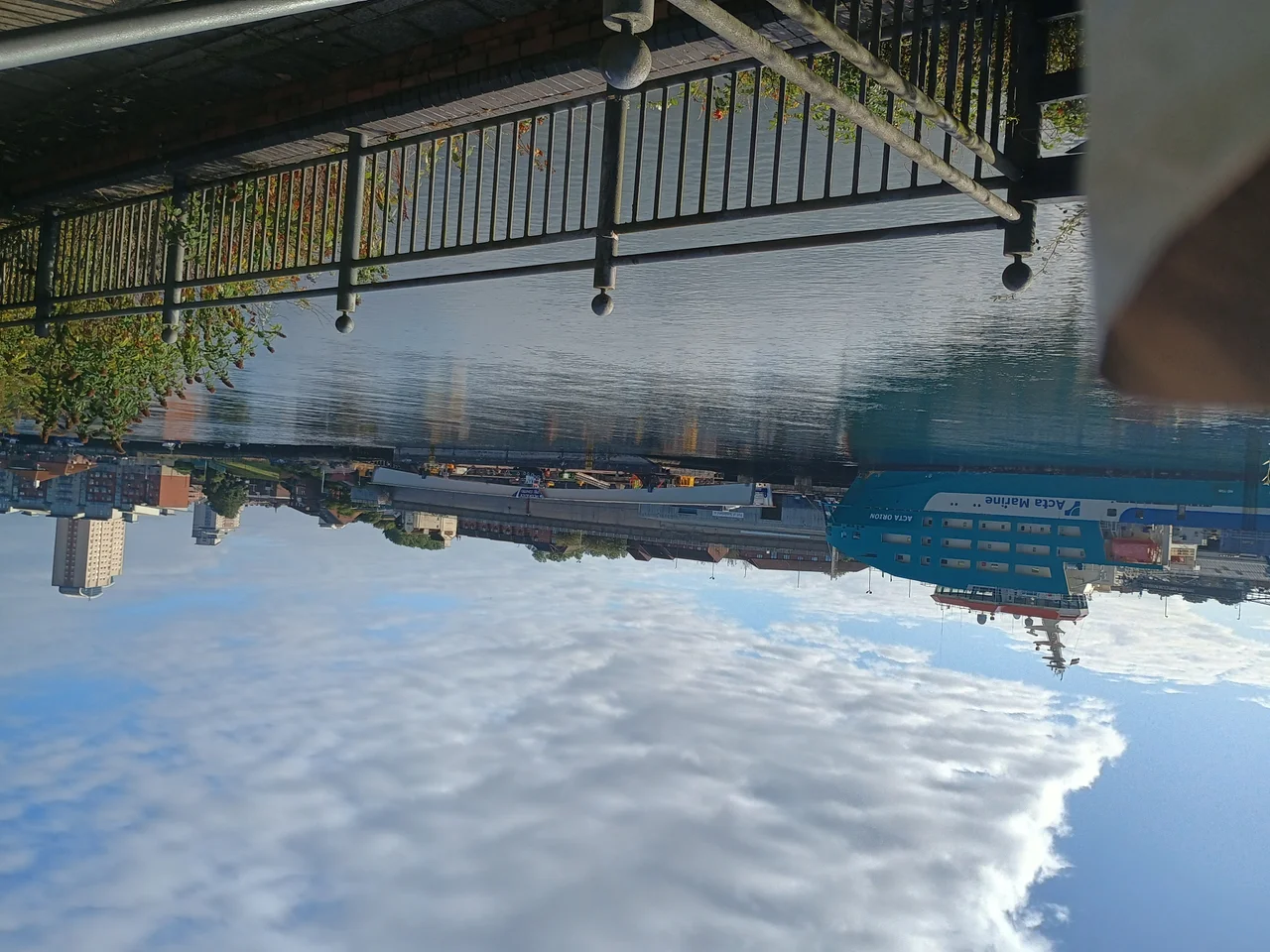
The bridge is 260 metres long, ten metres wide, and stands roughly thirty metres above the River Wear. It connects Keel Square in the city centre - near City Hall and the Keel Line itself - to the Sheepfolds neighbourhood on the north bank, immediately adjacent to the Stadium of Light. Officials hoped the route would replicate the procession ritual of Wembley Way, the broad approach to England's national football stadium where supporters parade for cup finals. The Sunderland-born architect and television presenter George Clarke said the experience of crossing it for the World Cup opener was better than Wembley Way. The Mayor of Sunderland, councillor Ehthesham Haque, led the August opening ceremony with former Sunderland AFC goalkeeper Jimmy Montgomery - winner of the 1973 FA Cup final, and arguably the most beloved Sunderland sportsman alive.
Permanent at Last
The bridge reopened permanently on 18 October 2025, the day Sunderland AFC played Wolverhampton Wanderers in the Premier League - the club's first top-flight match at home since promotion. Former players returned for a fan meet-and-greet. The Sunderland fan media outlet This Is Wearside led a parade across the bridge before kickoff. The wider Riverside Sunderland regeneration scheme that the bridge anchors aims to unlock 32 hectares of riverside land for housing, offices, and leisure. The promise is to extend the city centre footprint across the Wear, knitting together a city that the river itself once divided into shipbuilding south and colliery north. On a match day the bridge will carry tens of thousands of supporters in red and white. On every other day it will carry whoever decides to walk.
From the Air
Keel Crossing spans the River Wear at 54.910 N, 1.387 W, immediately west of the Wearmouth Bridge in central Sunderland. Cruise at 2,500-3,500 feet to see the bridge's box-steel span in context with the Stadium of Light to the north-west and Keel Square to the south. The Stadium of Light's distinctive double-cantilever roof is the easiest visual anchor in central Sunderland - the bridge connects to its near side. Newcastle International (EGNT) is 17 nautical miles north-north-west; Durham Tees Valley (EGNV) 22 nautical miles south. Best aerial views come at low tide when the muddy banks of the Wear reveal the river's full width.
Nearby Stories
- Seaton Carew 2.7 km away
- HMS Unity (N66) 6 km away
- George Stephenson's Birthplace 6.1 km away
- Raby Castle 9 km away
- Cragside 15 km away
- Whitby Abbey 21 km away
- German submarine U-2367 46 km away
- Alexander L. Kielland (Platform) 277 km away