
Kelso Abbey
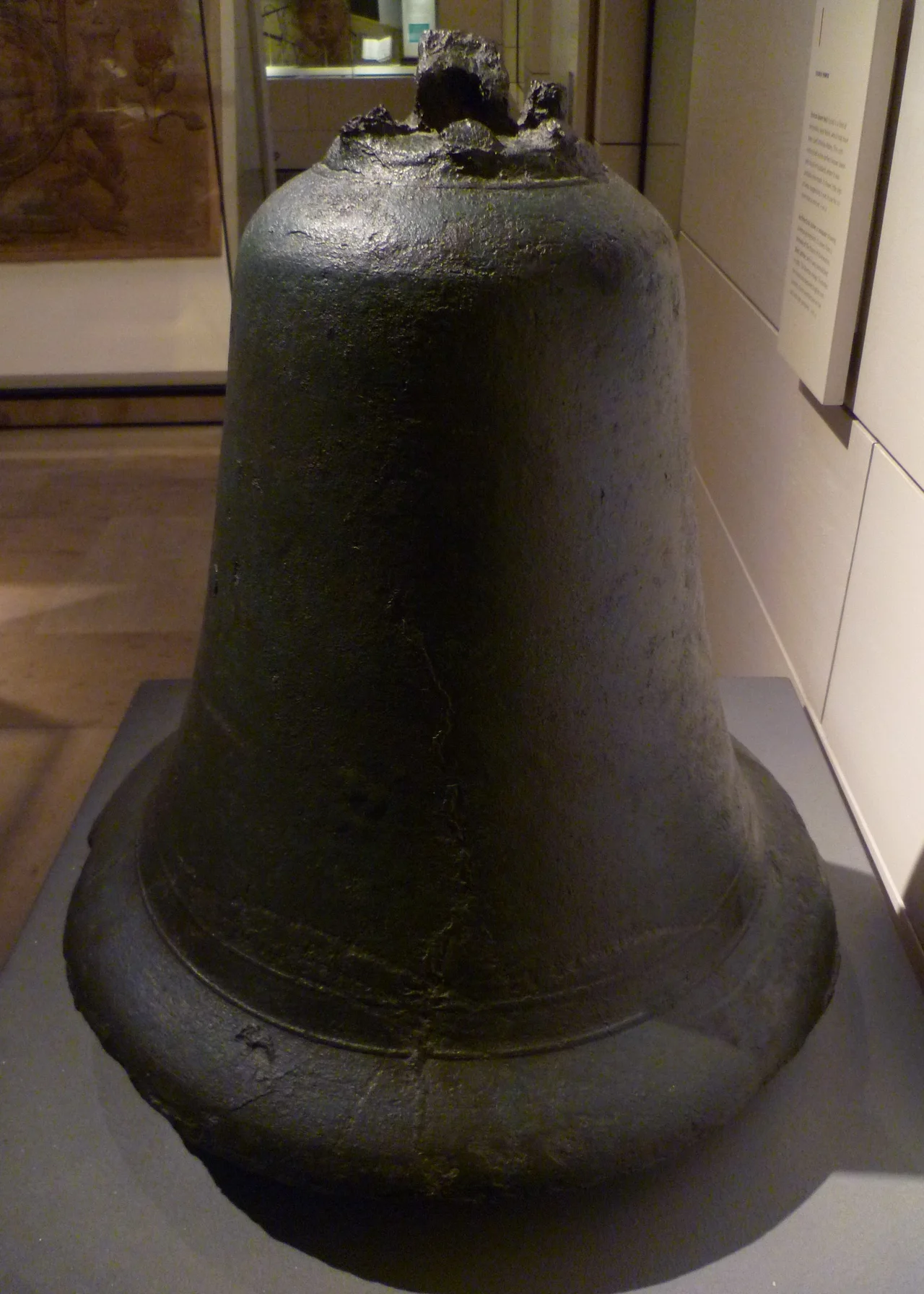
In August 1460, James II of Scotland was killed in front of these walls. He had been inspecting his artillery during the siege of Roxburgh Castle, across the Tweed, when one of the great iron bombards exploded and tore him apart. His army still took the castle, but his queen, Mary of Guelders, was left with a kingdom and a nine-year-old heir. Within days, James III was crowned at Kelso Abbey, in a hurried ceremony performed inside walls that had already begun to feel like a refuge. The abbey had been founded in 1128 by French monks of the Tironensian order, brought to Scotland from a community near Chartres. By the time it crowned a child king, it had grown into one of the wealthiest religious houses in the country, a romanesque fortress of stone whose west tower, the only major surviving piece, still suggests the formidable, semi-military presence the abbey once had.
A French Order Plants Itself in Scotland
The Tironensian monks first arrived in Scotland around 1113 under the patronage of David I, who was then Prince of the Cumbrians during the reign of his brother Alexander I. They were given a site near Selkirk, but in 1128, by then a king, David moved them to Roxburgh, which he was developing as a major economic and administrative centre for southern Scotland. Construction began at once. By 1143 the building was advanced enough to be dedicated to the Blessed Virgin Mary and Saint John. The king's son Henry, Earl of Northumbria, who died before his father, was buried in the new church in 1152. Within a generation Kelso had become Scotland's grandest and wealthiest abbey, drawing income from estates scattered across the Border country. In 1160 John, abbot of Kelso, was the first abbot in Scotland to be granted the mitre, the bishop-like insignia that signalled how powerful the abbacy had become.
Holding the Line
Standing within sight of Roxburgh Castle across the Tweed, Kelso Abbey sat in the line of fire of every Anglo-Scottish war that mattered. During the Wars of Scottish Independence, Berwick-upon-Tweed and Roxburgh were frequently held by the English, and Kelso lay uncomfortably close to both. In 1299 the abbot of Kelso was an English appointee, Thomas de Durham, but the abbey defended its Scottish identity through the political weather. When the buildings were damaged, the monks rebuilt them. The abbey survived more by stubbornness than by force. Between 1460 and 1513, in the relative calm that followed Roxburgh's destruction, life at Kelso settled. The English attacks resumed after 1517, and from then on the abbey was caught in a slowly tightening vice.
Rough Wooing and Ruin
In the 1540s, Henry VIII of England, frustrated by Scottish refusal to betroth the infant Mary, Queen of Scots, to his son Edward, launched the punitive campaigns known as the Rough Wooing. The Earl of Hertford led English forces in a methodical campaign of destruction against the southern Scottish abbeys: Melrose, Dryburgh, Jedburgh, and Kelso were all targeted. Plans were drawn up by the Italian engineer Archangelo Arcano to convert Kelso Abbey into a bastion fort, the kind of star-shaped artillery fortress that was reshaping European warfare. Mary of Guise, as Regent of Scotland, sent building lime to Kelso from Cousland in 1554, stored in the monks' vaults, possibly intended to repair the fort rather than the church. The Scottish Reformation of 1560 brought the monastic community to its formal end, though a small contingent may have lingered for a time. The abbey was officially declared derelict in 1587.
A Tower That Refused to Fall
Between 1647 and 1771, part of the abbey ruins housed a parish kirk, and the rest of the structure was steadily quarried by townspeople for building stone. In 1805 a vigorous clearance swept away the parish church and a vaulted gaol that had been built into the surviving fabric, leaving only the west tower crossing and part of the infirmary standing. What remains is impressive precisely because it is so deliberately fortress-like. The gable of the north transept still presents its most intact surviving face. The earliest stones, the two bays of the south arcade with their rounded arches, date to about 1128, and above them rise a late twelfth-century triforium and a continuous-arcade clerestory. There is no regular vertical pattern between the three levels, an architectural oddity unique in Scotland or England. Vatican archives dated 1517 suggest the complete building had two crossings, west and east, each with a tower, a double-cruciform plan that was rare anywhere in medieval Europe. Most of it is gone now. What is left still feels too massive for a church, and that is the point.
From the Air
Located at 55.596°N, 2.431°W in the town of Kelso, near the confluence of the River Tweed and River Teviot. Best viewed at 1,500-3,000 ft AGL with the surviving west tower of the abbey prominent against the town centre and Floors Castle visible on the high ground 1 nm to the north-west. The ruined mound of Roxburgh Castle lies just across the Tweed to the west. The abbey is one of five sites on the Borders Abbeys Way walking route. Nearest major airports: Edinburgh (EGPH) approximately 38 nm to the north-west and Newcastle (EGNT) approximately 47 nm to the south-east.
Nearby Stories
- Otterburn Training Area 1.3 km away
- Galashiels 1.6 km away
- Battle of Piperdean 2.7 km away
- Bamburgh Castle Lifeboat Station 3.7 km away
- Warkworth Hermitage 9.1 km away
- Seton Palace 11 km away
- Battle of Arkinholm 27 km away
- German submarine U-58 (1938) 260 km away