
Seton Palace
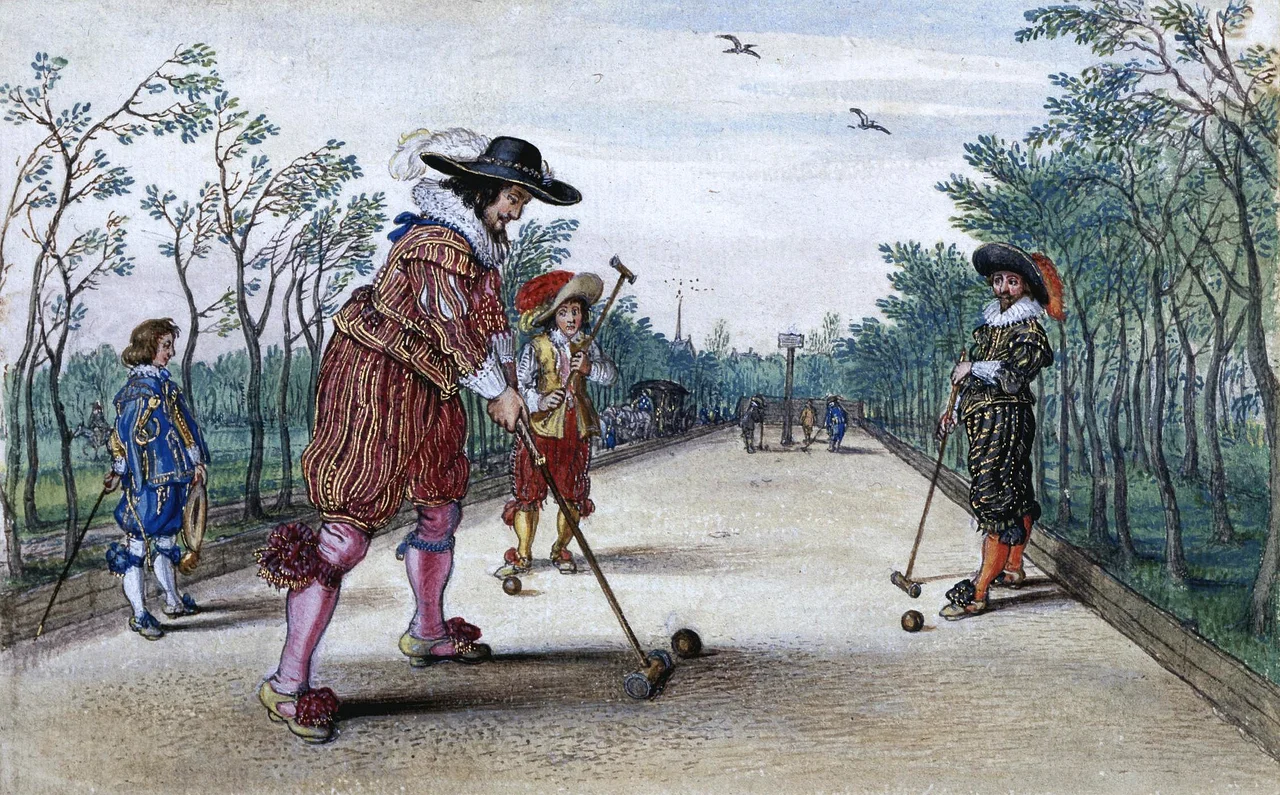
In February 1567, days after the murder of her husband Lord Darnley at Kirk o' Field in Edinburgh, Mary, Queen of Scots rode to Seton Palace and played golf. Or so the articles drawn up against her later alleged. The accusation - whether scandal or fact - tells you what Seton was. It was the place she went when she needed to be somewhere else. She had spent her honeymoon there with Darnley two years earlier. She came back after his death. Whatever Seton Palace witnessed in those months ended the rule of the Stuart queen and changed the course of Scottish history.
A Dainty Seat Placed by Sea
The palace stood a few miles southeast of Edinburgh near Prestonpans, looking out over the Firth of Forth. George, 4th Lord Seton erected it in the 15th century, and the family extended it across generations. George Seton, 5th Lord Seton, who died in 1513, completed the jemmay house - a wing his grandfather had begun. The 5th Lord's widow Janet Hepburn built the forework or gatehouse. In May 1544 the English army burned the palace as part of the Rough Wooing, while Lord Seton watched from a distance with his horsemen, ordered to do nothing. The English commander Lord Hertford wrote that Seton was kept nearby so that he might well see his own house and town on fire. The Setons rebuilt. By 1636 the completed palace was triangular in plan, with three wings around a courtyard, and a visitor described it as a dainty seat placed by sea.
Mary's Refuge
Mary of Guise stayed at Seton for Christmas 1559. Her daughter Mary, Queen of Scots became a frequent visitor in the early 1560s. In January 1562, New Year's Day was marked at Seton with a poem by Alexander Scott - Ane New Yeir Gift to Quene Mary - filled with advice for princes on just rule. In July 1565 Mary rode from Edinburgh to Seton at night and stayed two days. She returned in February 1567 after Darnley was killed. William Drury's spy reports describe gates straightly kept, Mary's movement restricted, allegations that Bothwell - whom she would marry that May - was lodged in an obscure chamber beneath her room with access by a secret turnpike stair. Mary's four companions Mary Seton, Mary Beaton, Mary Livingston and Mary Fleming joined her here. The marriage contract with Bothwell, supposedly signed at Seton on 5 April 1567 and produced as evidence against her at the Hampton Court conference in December 1568, was probably a forgery. The actual contract was made in Edinburgh on 14 May.
Hall of Heraldry
The palace reached its peak in the 17th century. Alexander Nisbet described what was inside. Above the Great Hall fireplace the Seton heraldry was quartered with the arms of the Earl of Buchan, encircled with a collar Nisbet identified as representing the Order of the Thistle. The ceiling of Samson's Hall carried twenty-eight armorial achievements of families of France, Scotland, and Lorraine - curiously embossed and illuminated. Viscount Kingston recalled a mural in the Long Gallery showing the 7th Lord Seton driving a wagon during his exile in France after Mary's abdication. Anne of Denmark travelled to Seton in a litter despite the rain on 31 May 1597. King James VI stayed in May 1617 and was welcomed back from England with William Drummond of Hawthornden's poem Forth Feasting. Strawberries grew in the gardens. A sycamore and walnut grove flourished despite the sea air. One of the sixteenth-century gardeners had a son who became a pirate, came home, and gave the Earl of Winton a rare West Indian sea shell that George Heriot mounted as a silver-lidded snuff box.
Lost After 1715
The Setons backed the wrong side. The 5th Earl of Winton was among the Jacobites attainted after the 1715 rising; the family lost everything. The palace was burned during the rising and by 1780 it was described as being in ruins. In 1789 it was demolished. Lt Col Alexander Mackenzie commissioned Robert Adam that summer to design a new house on the site, and Seton Castle rose using stone salvaged from the old palace. Some walls of the 16th- and 17th-century formal gardens still stand, with rounded lookout turrets at the corners. The adjacent Seton Collegiate Church, the family chapel, survived intact and is in the care of Historic Environment Scotland. Alexander Keirincx's 1638 painting of the palace, commissioned by Charles I and now held by the National Galleries of Scotland, is the closest we can come to seeing what stood here - the dainty seat by the sea, where queens played golf and conspiracies were sealed in obscure chambers beneath the royal apartments.
From the Air
Seton Palace stood at 55.97N, 2.93W, on the East Lothian coast near Longniddry, just inland from the Firth of Forth. Today only the foundations beneath Seton Castle and the surviving garden walls mark the site. Best viewed at 1,500-2,500 feet to see both Seton Castle (built on the palace site) and Seton Collegiate Church to the south. Edinburgh Airport (EGPH) lies 16 miles to the west. The Bass Rock and Berwick Law are visible to the east along the Forth.
Nearby Stories
- Blackness Castle 2.2 km away
- Skateraw Lifeboat Station 2.8 km away
- RAF Charterhall 5.6 km away
- Ochil Hills 6.3 km away
- Innerleithen 12 km away
- Falkland Palace 14 km away
- New Lanark 18 km away
- Bell Rock Lighthouse 21 km away