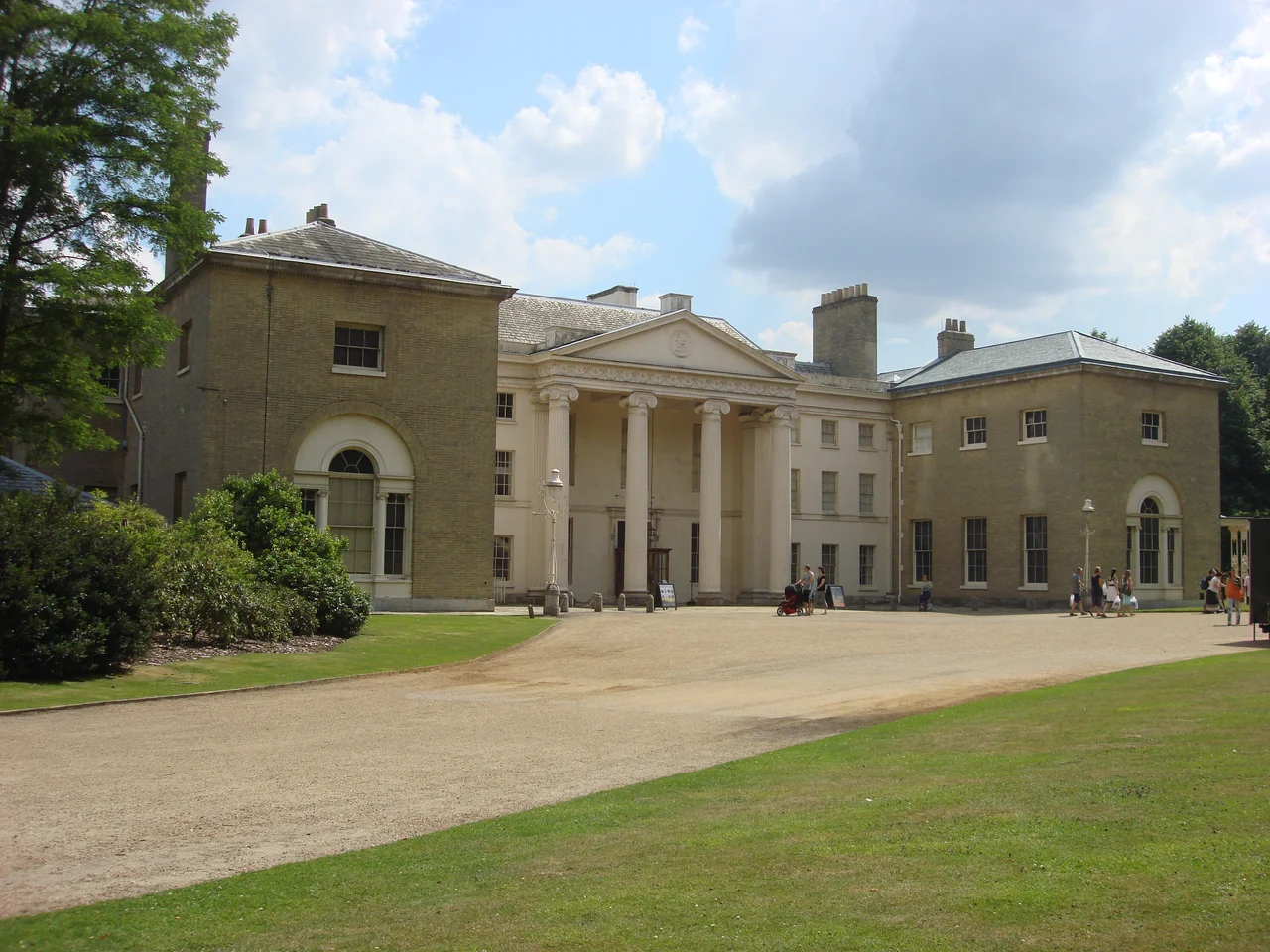

Kenwood House
In 1925, Edward Guinness, the 1st Earl of Iveagh, bought Kenwood House and its remaining 74 acres of grounds from the 6th Earl of Mansfield. Two years later, Iveagh died and left the whole estate to the nation. The paintings he had assembled — 63 Old Masters, acquired in the 1880s and 1890s when the art market offered such things at prices that now seem fantastical — came with it. Vermeer's 'The Guitar Player,' a late Rembrandt self-portrait, portraits by Gainsborough and Frans Hals: all of them now hang in a house at the edge of Hampstead Heath, free to enter, open to anyone who climbs the hill.
Three Hundred Years of Occupation
The original house on the Kenwood estate is thought to have been built around 1616 by John Bill, the King's Printer. By 1694 it had been rebuilt by William Bridges, Surveyor-General of the Ordnance, and an orangery was added around 1700. The house changed hands several times before 1754, when it was bought by William Murray — the future 1st Earl of Mansfield, who was then Lord Chief Justice of England. Murray commissioned Robert Adam to remodel the house in 1764, giving him complete freedom to design as he chose. Adam added the library — one of his most celebrated interiors, its barrel-vaulted ceiling decorated in pastel blues and greens — to balance the existing orangery. He also designed the Ionic portico at the entrance. The Mansfields kept the house for generations but preferred their Scottish seat at Scone Palace, and by 1922 the 6th Earl had sold the contents. The building's future was uncertain. Preservation campaigners bought part of the grounds in 1922; the house itself followed in 1925.
Royal Visitors and Russian Exiles
The history of Kenwood's tenants is unlikely. In 1794, King George III visited the 2nd Earl of Mansfield there — Queen Charlotte noted the king was curious about Robert Adam's architectural improvements. In July 1835, William IV and Queen Adelaide arrived with 800 members of the nobility and gentry. The Marchioness of Salisbury wrote that 'the King trotted about with Lord M. in the most active manner.' Then, in 1910, with the 6th Earl looking for income, the house was leased to the exiled Grand Duke Michael Mikhailovich of Russia and his morganatic wife, Countess Sophie of Merenberg. In 1914 they hosted a dinner and ball attended by European royalty including George V and Queen Mary — a gathering of an old world that would be obliterated by war within months. The Grand Duke stayed until 1917. American millionaire Nancy Leeds moved in next, and out again in 1920.
The Collection
The paintings that hang at Kenwood today came from Iveagh's collecting in the 1880s and 1890s, when he assembled Old Master portraits, landscapes, and 17th-century Dutch and Flemish works alongside British painters. The Vermeer — 'The Guitar Player,' one of only about 37 authenticated works by the artist — is among the most significant paintings in any publicly accessible collection in Britain. Rembrandt's 'Self Portrait with Two Circles,' painted late in his career, is another. Thomas Gainsborough's 'Portrait of Countess Howe' hangs nearby. Frans Hals's 'Portrait of Pieter van den Broecke' completes a group of works that would, in any major metropolitan museum, draw dedicated rooms and significant entrance fees. At Kenwood they hang in house rooms, accessible without charge, in a setting that still feels domestic rather than institutional.
Heath, Concerts, and Sculpture
Kenwood House sits at the northern edge of Hampstead Heath, and the relationship between the house and the landscape around it is one of the pleasures of the place. The estate has a designed landscape near the house — probably originally by Humphry Repton — that grades into woodland and then the open heathland of Hampstead Heath to the south. Sculptures by Barbara Hepworth, Henry Moore, and Eugène Dodeigne are placed in the gardens near the house. For 55 years — from 1951 to 2006 — summer concerts were held by the lake on Saturday evenings, drawing Londoners to picnic on the hillside while listening to music with fireworks overhead. The concerts were suspended after protests from local residents and eventually returned in a modified form. One third of the estate is designated a Site of Special Scientific Interest, and the ancient woodlands here host the largest Pipistrelle bat roost in London.
From the Air
Kenwood House is located at 51.5714°N, 0.1675°W on the northern boundary of Hampstead Heath in north London. From the air, the white stucco facade of the house is visible against the woodland of the estate, immediately north of the open expanse of Hampstead Heath. The lake in the grounds catches the light and is a useful navigation reference. Nearest Underground station is Hampstead (Northern line). Nearest airport is London City (LCY), approximately 16km southeast. Recommended viewing altitude: 1,500–2,000 feet.
Nearby Stories
- Stevenage 5.7 km away
- Malling Abbey 5.7 km away
- 1952 Farnborough Airshow Crash 7.7 km away
- Ingatestone Hall 8.2 km away
- Hellfire Caves 9.1 km away
- The Carrington Event: The Solar Storm That Could Happen Again 9.8 km away
- Bletchley Park 16 km away
- Castle Hedingham 23 km away