
Kett's Rebellion
On a Monday in early July 1549, a small crowd in Wymondham finished tearing down the hedges of a local lawyer named Sir John Flowerdew and turned their attention to the next landlord on the list: a 57-year-old yeoman farmer called Robert Kett. Kett owned more land than most of his neighbors, and he had recently enclosed some of his fields - one of the many ways the gentry of Norfolk were quietly fencing off the commons that ordinary people depended on. When the crowd arrived at his gate, Kett heard them out. Then he picked up his own tools and helped them pull down his own fences. By that night he had agreed to lead them. Within five weeks he commanded an army of 16,000 people, held England's second city, and had sent the king a list of 29 demands that asked - among many other things - that every bondman in England be made free, 'for God made all free, with his precious blood shedding.'
What the Commoners Wanted
The 1540s were terrible years to be poor in England. Inflation chewed up wages. Landlords were forcing tenants off arable land so they could run sheep instead - wool paid better than wheat - and the enclosures that resulted left peasants with nowhere to graze a cow or cut firewood. The historian Julian Cornwall put it plainly: the people 'could scarcely doubt that the state had been taken over by a breed of men whose policy was to rob the poor for the benefit of the rich.' Kett's followers were not anarchists. They believed they were acting legally, because the Duke of Somerset, then Lord Protector to the boy-king Edward VI, had issued proclamations against illegal enclosures. They thought they were enforcing the law that the gentry was ignoring. The 29 articles they drew up at Mousehold - signed by Kett, by the Mayor of Norwich himself, and by representatives from each of the Hundreds of Norfolk - were not the demands of a mob. They were a coherent program. Limit the gentry's grip on village life. Stop the engrossing of holdings. Reduce rents. Punish corrupt officials. Replace clergy who would not preach. And free the people who were still, in 1549, legally enslaved as bondmen on English estates.
The Camp on Mousehold
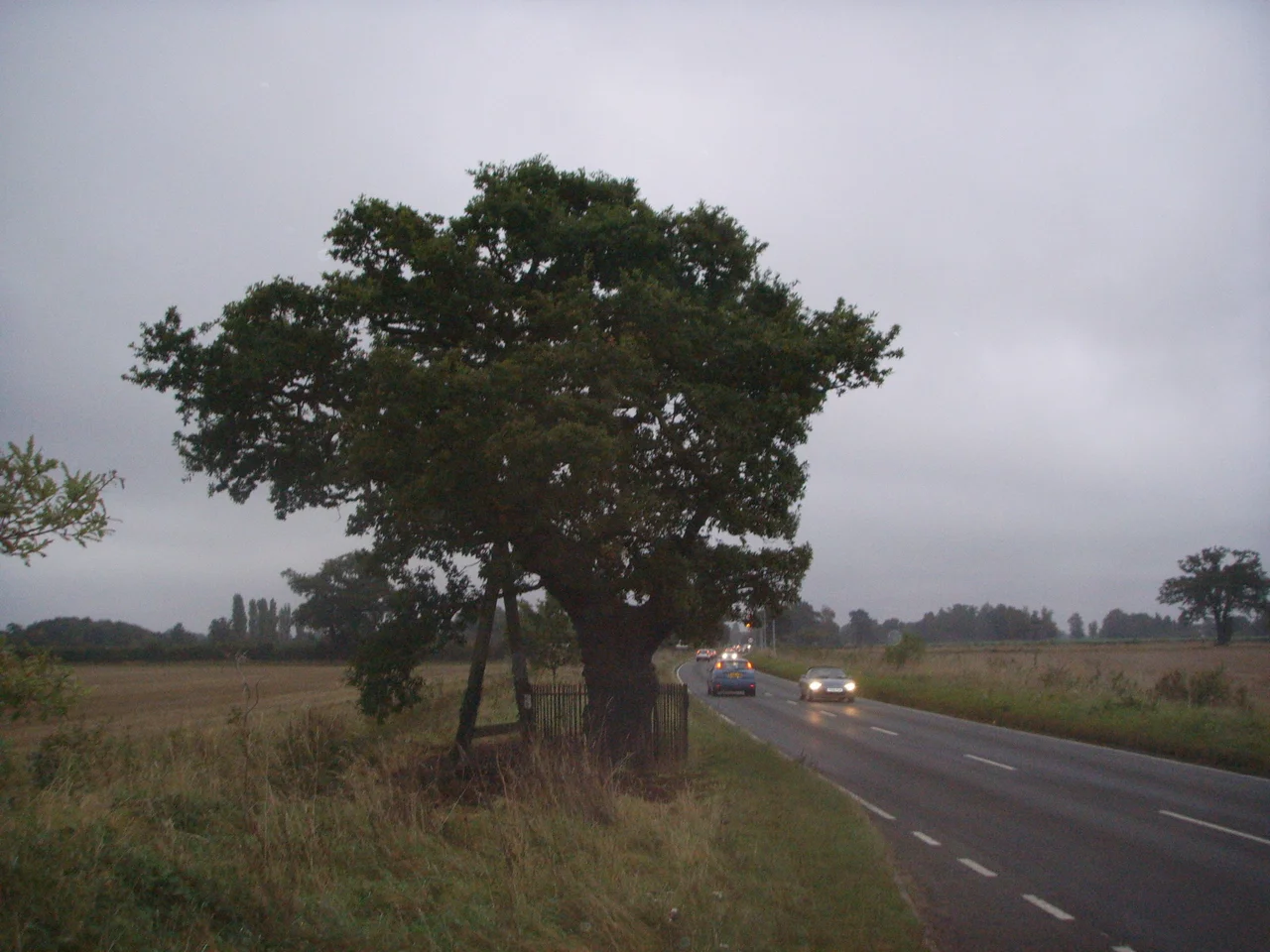
On 12 July the rebel host reached Mousehold Heath, the high ground rising above Norwich from the north-east, and pitched camp. They stayed six and a half weeks. The camp was larger than the city it overlooked - and Norwich, with around 12,000 people, was the second-largest city in England. Kett ran the camp from St Michael's Chapel, whose ruins are still called Kett's Castle. Captured gentlemen went into Mount Surrey, the empty mansion built on the site of the despoiled St Leonard's Priory. A council met under an oak tree that became known as the Oak of Reformation, where Matthew Parker, future Archbishop of Canterbury, came to preach at them and failed to persuade them to disperse. They called themselves the camp men. They called the rising the camping time. For nearly two months Norfolk worked under a kind of parallel government, with the rebels issuing warrants, taking provisions, and arresting members of the gentry while the city authorities sat below and negotiated.
The Fall and the Fight
When the York Herald arrived from London on 21 July and proclaimed the gathering a rebellion, Kett refused the offered pardon. He had committed no treason, he said; he needed no pardon. On 22 July his army charged down off Mousehold and swam the Wensum between Cow Tower and Bishop Bridge, taking arrows as they crossed, and within hours England's second city had fallen to its own farmers and weavers. They did not run riot. The civic leaders were carried up to Mousehold and held in Surrey House. The Mayor was set loose to come back to camp. Order continued. The Marquess of Northampton came north with 1,400 royal troops and Italian mercenaries on 31 July; the rebels fought him in the streets through the night and the next morning, killed Lord Sheffield in a ditch in Bishopsgate Street, and drove the royal force out. The king then sent the Earl of Warwick with 14,000 men, including German Landsknechts - musketeers and zweihander-swordsmen - and a much heavier hand. On 24 August Warwick forced his way into the city. The rebels set the houses on fire as they retreated.
Dussindale
On the night of 26 August Kett moved his people off Mousehold Heath down to lower ground - exactly where remains uncertain, but a place the records call Dussindale, possibly Long Valley north-east of the city, possibly farther east near Great Plumstead. They were not soldiers. They had no answer to professional infantry. On 27 August Warwick's army broke them in the open. About 3,000 rebels were killed. Warwick's force lost some 250. The morning after the battle the executions began at the Oak of Reformation and the Magdalen Gate; estimates of the number hanged run from 30 to 300, on top of the 49 Warwick had already killed when he first entered the city. Kett was caught at Swannington the night after Dussindale. He and his brother William were taken to the Tower of London, tried for treason, found guilty, and brought back to Norwich for the public part. On 7 December 1549 Robert Kett was hanged in chains from the walls of Norwich Castle. On the same day William was hanged from the west tower of Wymondham Abbey, where the rising had begun five months before. They were not granted the cut-down hangings that other prisoners got. They were left up there as warnings.
From Traitor to Folk Hero
The official Norwich line, for over a century, was that 27 August should be remembered as the city's 'deliverance' from rebellion. Sermons were paid for. Lectures were given on the sin of resisting authority. The first surviving eyewitness account, by Nicholas Sotherton, son of a Norwich mayor, was hostile. Alexander Neville's 1575 Latin history of the rising - he was secretary to that same Matthew Parker who had preached to the rebels - was hostile. So was Francis Blomefield's 18th-century account. Then in the 19th century the story turned. New readers found in the 29 articles a careful and humane program rather than the howl of a mob. A clergyman named Frederic Russell, after digging through the archives in 1859, concluded that 'though Kett is commonly considered a rebel, yet the cause he advocated is so just, that one cannot but feel he deserved a better name and a better fate.' In 1948 Fred Henderson, a former Norwich mayor who had himself been jailed for his part in the food riots of 1885, proposed a memorial. The plaque went up on the walls of Norwich Castle in 1949, four hundred years on, where Kett had hung. The people of Norwich now lay wreaths there each December. The dead at Dussindale do not have a marker. But the rebellion has its name back, and the demands its makers signed are no longer treated as folly.
From the Air
The rebel camp at Mousehold Heath sits north-east of Norwich centered roughly on 52.6500N, 1.3300E - the modern heath survives as a public common about 1.5 nm from the cathedral. The Battle of Dussindale was probably fought somewhere in the Long Valley area north-east of the city around 52.6500N, 1.3700E (the precise site is disputed). Norwich Castle, where Robert Kett was hanged on 7 December 1549, stands on its mound at 52.6285N, 1.2960E. Norwich International (EGSH) is about 3 nm north-west of all three sites. From 2,500 ft AGL the relationship is clear: the city in its river valley, Mousehold rising above it to the north-east, and the broad open ground where the rebels were finally caught in the open.
Nearby Stories
- Sheringham 2.7 km away
- Wingfield Castle 4.4 km away
- Castle Acre Castle and Town Walls 6.3 km away
- Brancaster 7.1 km away
- West Stow Anglo-Saxon Village 9.3 km away
- Four Days' Battle 80 km away
- Battle of Lowestoft 80 km away
- SM U-97 110 km away