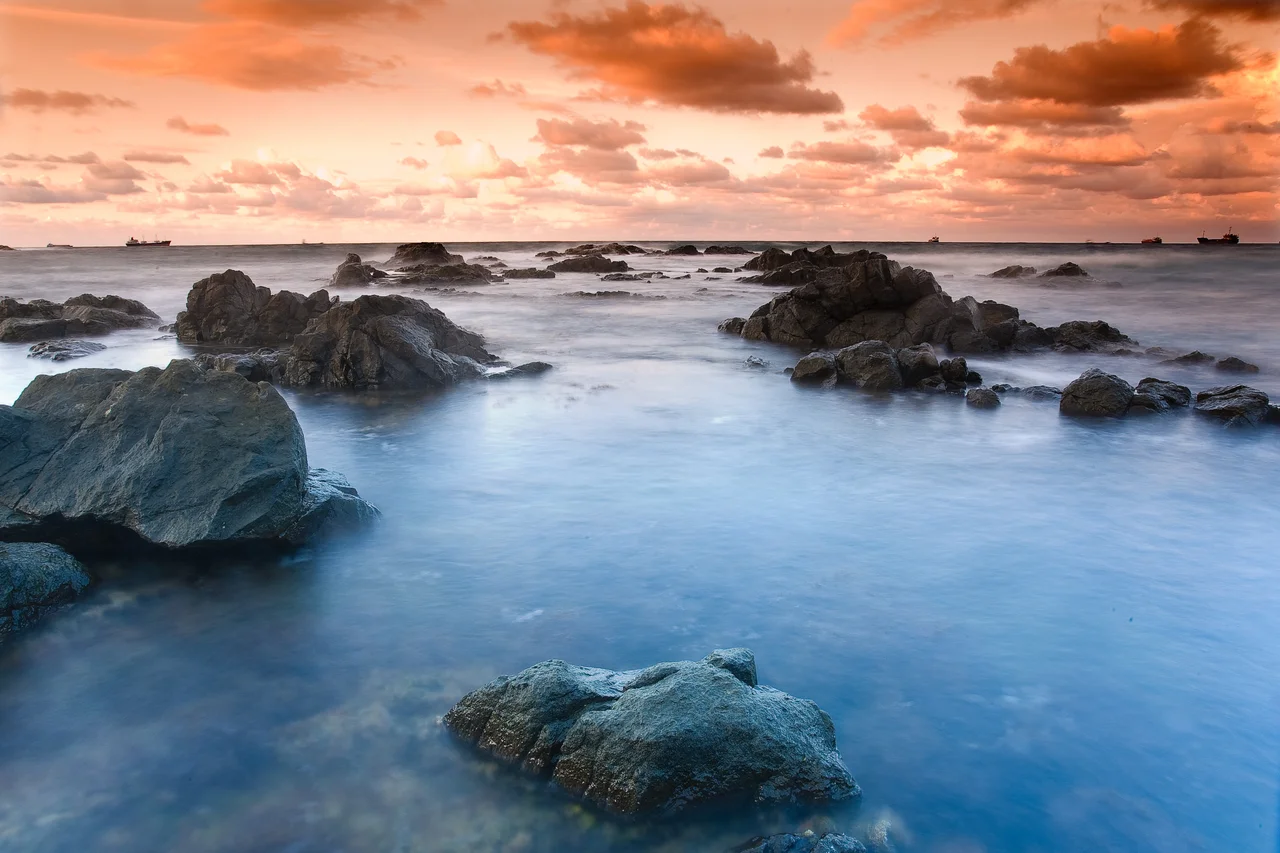

Kilyos
Most people think of Istanbul as a city of straits — the Bosphorus threading between Europe and Asia, the Marmara glittering to the south. But climb to the northern edge of the European shore and the Black Sea opens up without warning, immense and steel-gray, nothing between you and Ukraine but open water. Kilyos sits exactly at this hinge point, a small neighborhood of 3,860 people where the city's roar fades into the sound of surf and the scent of salt-laden wind off the Black Sea.
Where the City Ends
Forty kilometers north of the Grand Bazaar, the Belgrade Forest gives way to sand dunes, and the dunes give way to wide beaches that feel nothing like the crowded shores of the Marmara. Kilyos — also known as Kumköy, meaning "sand village" — occupies this unlikely position: part of Istanbul Province administratively, yet cut off from the city's density by forest and geography. In summer, Istanbullus make the drive north to escape. The beaches here are broad and clean, the water cold and direct from the open Black Sea rather than the warmer, enclosed waters to the south. Families set up under umbrellas. Teenagers sprint into the waves. For a few hours, Istanbul's 15 million people become irrelevant.
The Castle That Commands the Hill
Above the beach, on a promontory overlooking the sea, stands a Genoese castle dating to the 14th century. Genoa maintained a network of trading posts and fortifications across the Black Sea coast during the medieval period — Caffa in Crimea, Sinop and Amasra along the Anatolian shore — and Kilyos was one node in that commercial web. The castle here was restored during the reign of the Ottoman sultan Mahmud II in the early 19th century, a sultan known for sweeping military and administrative reforms. Today the castle is not open to the public; it sits within a military zone, and its crenellated outline visible from the beach below carries the quiet authority of something that has watched the horizon for six hundred years. Genoese merchants once looked out from these walls for incoming ships. Now the view is the same, but the merchants are long gone.
A Sea Apart from the Rest of Istanbul
The Black Sea has a different character than the Bosphorus and Marmara. It is less saline — rivers from across Eastern Europe and Anatolia pour fresh water into a nearly landlocked basin — and its moods are distinct: sudden storms can roll in from the north with little warning, the water turning from blue-gray to deep green before whitecaps appear. Local fishermen know these rhythms well. Kilyos has long had a fishing tradition alongside its resort identity, and the two co-exist in the way of villages that have served multiple masters simultaneously. The beach, the castle, the fish market at the harbor's edge: each tells a different version of the same story about a place that sits at the far edge of an enormous city without being consumed by it.
The Long Road North
Getting to Kilyos from the historic center of Istanbul involves navigating through the Sarıyer district and then following a winding road through the Belgrade Forest — a forested water-catchment area that has supplied Istanbul with fresh water since Byzantine times. The drive itself is part of the experience, the urban fabric giving way to pine and oak and the occasional reservoir glimpsed through the trees. Arriving at Kilyos feels, for a moment, like arriving somewhere genuinely remote, even though the city boundary never actually ended. That spatial illusion — of escape within the metropolis — is exactly what draws people here summer after summer.
From the Air
Kilyos sits at approximately 41.249°N, 29.036°E on the Black Sea coast of Istanbul's European shore. Flying north from Istanbul along the European side of the Bosphorus, the Belgrade Forest appears as a dense green band before giving way to the beach and the village. The Genoese castle is visible on the elevated promontory above the beach. Nearest major airport is Istanbul Airport (LTFM), approximately 25 km to the southwest. Recommended viewing altitude 3,000–5,000 feet for the coastal panorama; the contrast between the forested hills and the open Black Sea is striking from the air.
Nearby Stories
- Kınalıada 6.2 km away
- Şile Castle 7.8 km away
- Second Battle of Çatalca 8.9 km away
- Hereke 20 km away
- 2025 Istanbul Earthquake 25 km away
- Battle of Constantinople (922) 61 km away
- Januarius MacGahan 87 km away
- Edirne 160 km away