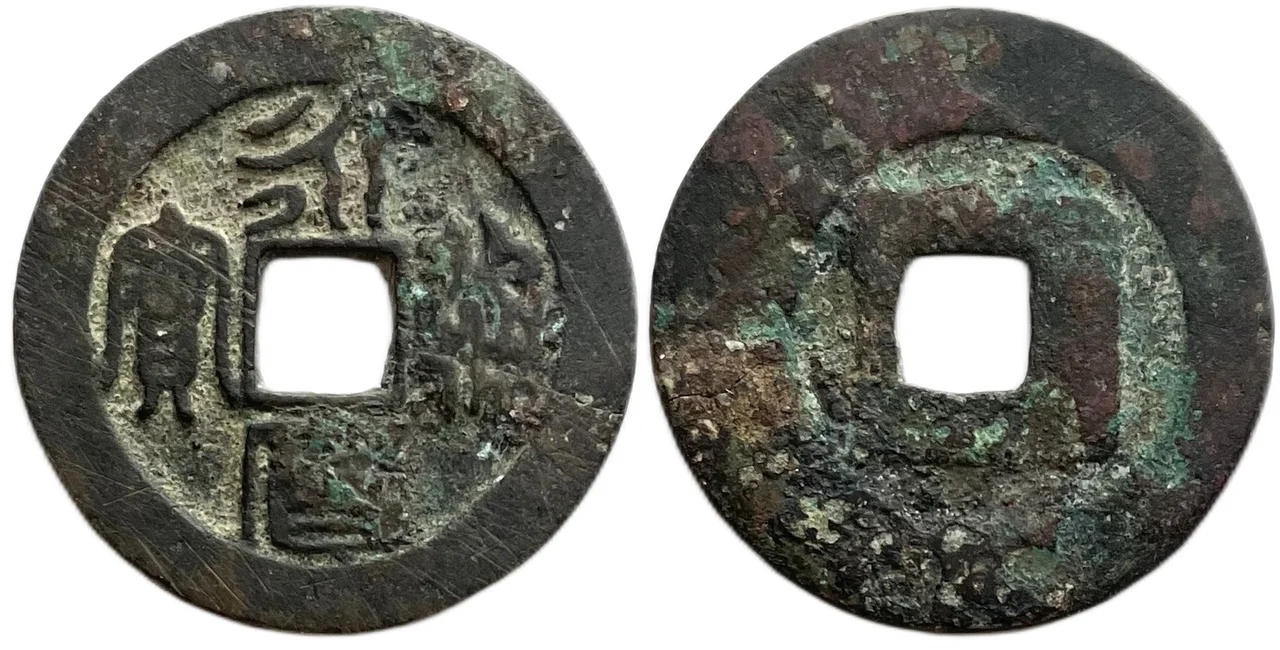

Kingdom of Tungning
A man named He Bin changed the history of Taiwan with a map. He had worked for the Dutch East India Company, knew the defenses of Fort Zeelandia intimately, and in 1661 he fled to Xiamen and handed everything he knew to Zheng Chenggong, the Ming loyalist warlord the Europeans called Koxinga. Within weeks, Koxinga set sail from Kinmen with four hundred ships and twenty-five thousand soldiers. He was not coming to trade. He was coming to build a kingdom.
The Lord of the Imperial Surname
Zheng Chenggong spent his first seven years in Japan with his mother, Tagawa Matsu, before moving to Fujian Province to study. He earned a county-level licentiate at fifteen and later attended the Imperial Academy in Nanjing. When the Manchu-led Qing dynasty overwhelmed the Ming in 1644, Chenggong pledged his loyalty to the fallen dynasty. The Ming court bestowed upon him the title Guoxingye, Lord of the Imperial Surname, pronounced Kok seng ia in southern Fujianese and Westernized as Koxinga. His father, Zheng Zhilong, chose a different path, surrendering to the Qing in 1646 and spending the rest of his life under house arrest in Beijing. From his base in Xiamen, Koxinga waged a decade-long guerrilla war against the Qing, seizing and losing Quanzhou, planning offensives that storms derailed, and in 1659 encircling Nanjing itself before Qing reinforcements shattered his army. The mainland was slipping away. Taiwan offered a second chance.
The Fall of Fort Zeelandia
Koxinga's fleet arrived at Tayouan on April 2, 1661. His forces routed 240 Dutch soldiers on Baxemboy Island, and when the Dutch warship Hector exploded after a cannon ignited its powder magazine, the remaining two vessels could not hold the harbor. Fort Provintia surrendered on April 4. Fort Zeelandia proved harder. Twenty-eight cannons battered the walls, but a direct assault cost Koxinga many of his best soldiers, and he settled into a siege. Dutch reinforcements from Jakarta arrived in the summer but failed to break through after months of fighting, losing several ships and 130 men. The breakthrough came in January 1662, when a German sergeant named Hans Jurgen Radis defected and revealed a weakness in the fort's defenses. On February 1, the Dutch governor Frederick Coyett surrendered. The Dutch left behind all Company property, ending thirty-eight years of colonial rule. Koxinga detained some Dutch women, children, and priests as prisoners before touring his new domain.
Building Dongning
Koxinga transformed Taiwan into a seat of power modeled on Ming institutions. He established a government based on the Six Ministries and imposed Confucian order with rigid conviction. According to accounts, he held banquets where ministers reminisced about the fall of the Ming, referred to the Manchus in derogatory terms, and once threatened to execute a Chinese Christian simply for wearing his hair in the Manchu style. He died on June 23, 1662, just four months after his victory, possibly from malaria, though one account claims he died in a rage when his officers refused to execute his son Zheng Jing over a scandalous affair. Zheng Jing inherited the kingdom and, realizing the mainland was lost for now, poured energy into building Taiwan. His advisor Chen Yonghua introduced water-storage for dry seasons, sugarcane cultivation for European trade, and mass salt production by evaporation. By 1666, harvests fed both soldiers and civilians. An Imperial Academy and Confucian Shrine were built, civil service examinations instituted, and Chinese-language schools opened to replace Dutch and indigenous influences.
A Maritime Power
Tungning was no isolated island backwater. Zheng merchant fleets plied the routes between Japan and Southeast Asia, extracting tributary taxes from private traders for safe passage through the Taiwan Strait. The kingdom held monopolies on sugarcane and deer skin, commodities that fetched high prices in Japanese markets. By the end of Zheng rule in 1683, the government extracted an annual income equivalent to 4,033 kilograms of silver, more than a thirty percent increase over Dutch revenues in 1655. Sugar exports reached nearly 1.2 million kilograms per year, exceeding the Dutch peak. Zheng Jing even signed a trade agreement with the English East India Company in 1670, though the English found little room to profit under the Zheng monopoly system. Areas under cultivation tripled from about 12,500 hectares in 1660 to nearly 43,700 hectares by 1684. The poet Wang Zhongxiao captured the transformation in a 1665 inscription: in Anping of Dongning, he wrote, he saw and heard only Chinese. The people were people of the Middle Kingdom, and the soil was soil of the Middle Kingdom.
The End of the Zheng Dynasty
The Qing never forgot about Taiwan. Admiral Shi Lang, a former Zheng officer whose father and brother Koxinga had executed in 1651, spent decades advocating for an invasion. After Zheng Jing died in 1681 and a coup placed his young son Zheng Keshuang on the throne, the kingdom fractured. Political turmoil, heavy taxes, an epidemic, and a devastating fire drove waves of defections to the Qing. Shi Lang finally launched his campaign in 1683, defeating the Zheng navy at the Battle of Penghu with superior numbers and tactics. Zheng Keshuang surrendered, and the kingdom that Koxinga had carved from Dutch Formosa vanished after twenty-two years. The Qing absorbed Taiwan as a prefecture of Fujian Province. But the legacy endured. Koxinga became a folk hero whose image was honored even by the Kangxi Emperor, who relabeled him from sea bandit to loyal subject of a fallen dynasty. Chinese nationalists in the twentieth century invoked him as a symbol of patriotism. The first ethnic Han Chinese state in Taiwan had been brief, but it bent the island's trajectory permanently toward the mainland.
From the Air
Coordinates: 23.00N, 120.22E, centered on the Tainan area in southwestern Taiwan where Fort Zeelandia and Fort Provintia stood. The kingdom's core territory stretched along the coastal plain from modern Tainan south to Pingtung. Nearest major airport: RCNN (Tainan Airport). Viewing altitude: 5,000-8,000 ft for the broad coastal plain and harbor geography.
Nearby Stories
- Battle of Penghu 1.2 km away
- Xiaolin Village Memorial Park 7.1 km away
- Maolin National Scenic Area 12 km away
- Fenqihu 18 km away
- Republic of China Air Force Academy 23 km away
- Southern Branch of the National Palace Museum 26 km away
- Penghu Air Raids 42 km away
- Daya Bay 512 km away