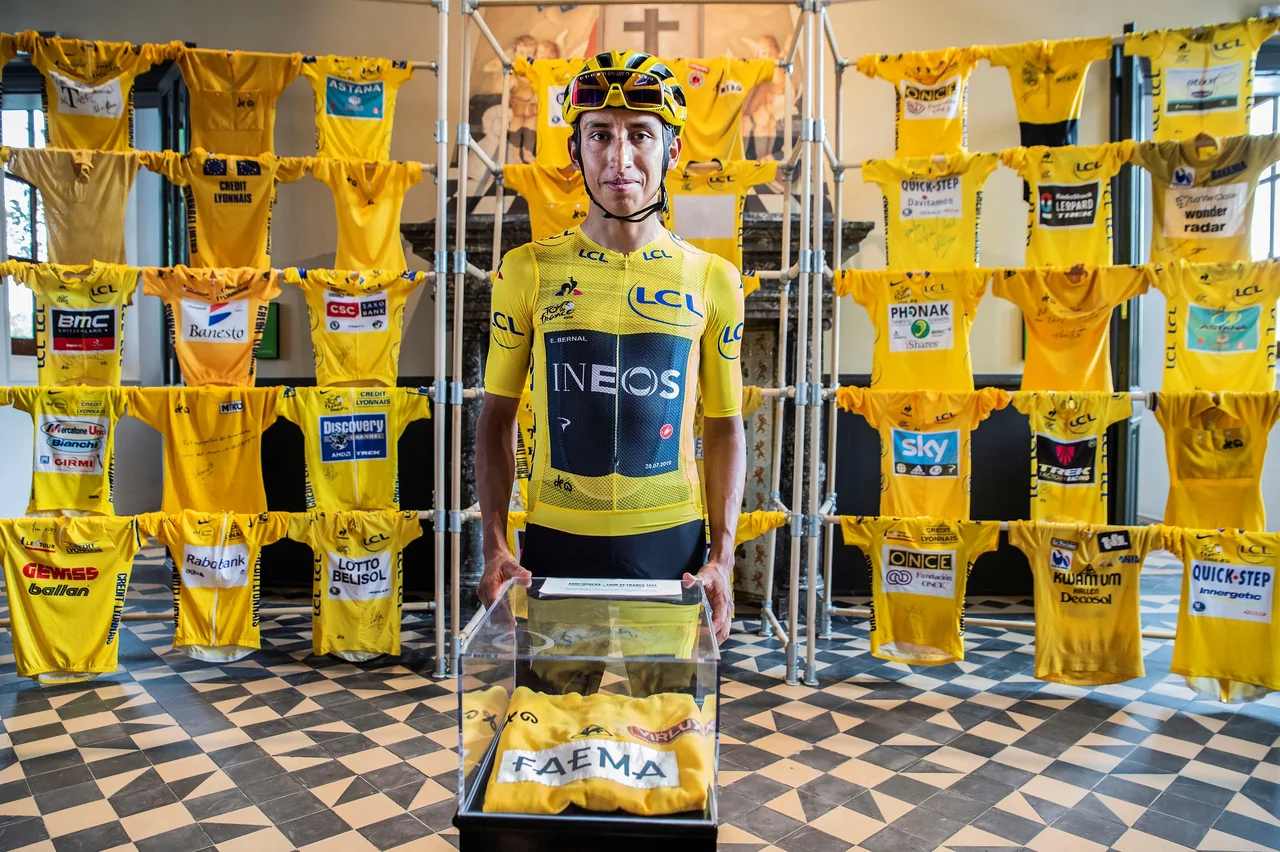

KOERS Museum
There is a Dutch word, koers, that the rest of cycling has had to borrow because nothing in any other language is quite the same. It means "race," yes, but really it means the Belgian thing: the long, miserable, joyous, cobbled, rainy, half-religious ritual of road cycling that takes over Flanders for half the year. A koers fan is not someone who follows the sport. A koers fan is someone whose entire week bends around Sunday's race. The national museum of all this lives in a renovated firehouse on the Polenplein in Roeselare, and it is called, with characteristic Flemish directness, KOERS.
The Cradle of the Flandriens
Roeselare didn't get this museum by accident. The villages around the city have a startlingly dense list of native sons who learned to ride a bicycle very fast in the rain. Odiel Defraeye, born just south of here, was the first Belgian ever to win the Tour de France, in 1912. Jean-Pierre Monsere, Roeselare-born, won the road World Championship in 1970 at age 21. Benoni Beheyt won the road Worlds in 1963. Patrick Sercu, the velodrome king of the 1960s and 70s, was born here. Freddy Maertens, sprint world champion in 1976 and 1981 and once the fastest finisher in the peloton, grew up nearby. The locals call this kind of rider a flandrien - a person who races in conditions that would send anyone else home. The museum exists because the city decided in 1985 that it ought to be properly remembered.
From Folklore Cabinet to National Museum
The collection started small - a few old bicycles tucked into the corner of the Municipal Museum of Roeselare in 1985, a summer exhibition once a year. By 1998 it had grown enough to take over the whole building, replacing the old folklore museum entirely, and the National Cycling Museum opened on the Polenplein on March 27. Ferdy Callewaert ran it as conservator until 2006. Freddy Maertens himself worked at the museum from 2000 to 2007, often standing at the door to greet visitors - a former world champion handing out tickets. King Albert II of Belgium came in 2005. After a renovation begun in 2014, the museum reopened on September 8, 2018 with the shorter, sharper name it carries today: KOERS. Museum van de wielersport.
Bicycles, 1760 to Now
The collection traces the bicycle as a machine from its earliest forms in the 18th century right through to modern carbon-fiber Tour bikes. Wooden hobbyhorses without pedals, boneshakers, penny-farthings, the safety bicycle, the first racing frames - they're all here, in roughly chronological flow. One hall reconstructs the old workshop of a local bicycle-maker named Hallaert, so you can see how the technical evolution played out in the hands of one small shop. Jerseys, podium photographs, race numbers, trophies, the actual bikes ridden in specific Tours - the place is dense with things that mean something to someone who has watched Belgian cycling for thirty years, and dense in a different way for someone discovering the sport for the first time.
Jean-Pierre Monsere's Hall
One room belongs entirely to Jean-Pierre Monsere, and it is the saddest room in the museum. Monsere won the World Championship at 21 on a wet, dangerous course in Leicester in 1970 - the youngest road champion in the modern era at the time. He never reached 22. On March 15, 1971, while wearing the rainbow jersey of the reigning world champion at the Grote Jaarmarktprijs in Retie, Belgium, he collided with a car that had driven onto the race route on the road from Lille to Gierle and died at the scene. His son Giovanni was killed in a separate cycling accident in 1976 at the age of seven. The room has Monsere's rainbow jersey, his bikes, the photographs - and visitors stand in front of it longer than they expect to.
Why the Building Has Scorch Marks
The museum sits inside a building that was constructed between 1899 and 1902 as the city fire station, and it served that purpose until 1962. During World War I, German soldiers were billeted in the station, which is why on July 21, 1917, British aircraft bombed it. After the war it was rebuilt and used for a rotating cast of public functions - festive hall, school, sports venue, folklore museum. It is now a classified monument in its own right. Between exhibition rooms the museum keeps a working pub called the Koerskaffee, on the theory that the proper way to end a visit to a Belgian cycling museum is the same way the cyclists themselves end most things: with a glass of beer and an argument about the next race.
From the Air
KOERS Museum stands at 50.944°N, 3.127°E in central Roeselare, on the Polenplein. The nearest airfield is EBKT (Wevelgem-Kortrijk) about 17 km south; EBOS (Ostend-Bruges) is 35 km north. From the air, central Roeselare is recognizable by the white-stone belfry rising above the red roofs of the market square, with the Polenplein and the museum building one block south.
Nearby Stories
- Battle of the Lys and the Escaut 7.3 km away
- Abbey of Saint Winnoc 9 km away
- Ostend 9.5 km away
- Courrieres Mine Disaster 24 km away
- MV Tricolor 30 km away
- Battle of Schooneveld 31 km away
- Belgium 71 km away
- Royaumont Abbey 164 km away