
Lai Chi Wo
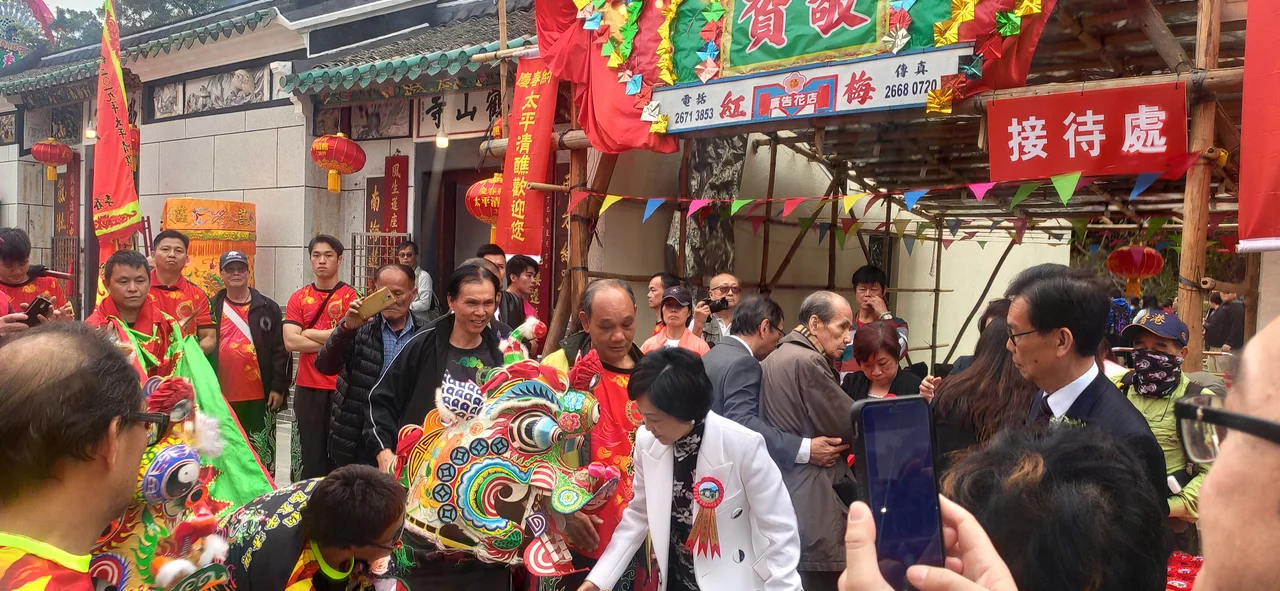
Somewhere in the village records, there is a metal plaque listing names and donation amounts — the overseas-based members of the Tsang family who sent money back to restore the place their ancestors built. The plaque hangs at the gate of Lai Chi Wo, and it says something important: this village, remoter than almost anywhere else in Hong Kong, has never been entirely abandoned. People left, yes — for Fanling, for Tai Po, for the United Kingdom — but the connection held. They still come back for the Tai Ping Ching Chiu festival, celebrated once every ten years. And the walled village they return to looks much as it did when their grandparents lived in it.
Two Clans, One Village
Lai Chi Wo was founded more than 300 years ago by two Hakka families: the Tsangs and the Wongs. Their histories arrived from different directions. The Tsangs' ancestors had migrated south from Shandong, the long journey that Hakka families made over centuries as they moved through China's interior toward its southern coasts. The Wongs came by a more dramatic route — a military commander among their ancestors had fled the fall of the Ming Dynasty, bringing his household to this northeastern corner of the New Territories when the Qing swept into power. The two clans built 211 houses arranged in a precise grid: three rows, nine columns. They built ancestral halls for each family — the Tsang Ancestral Hall, the Wong Ancestral Hall, the Wong's Weixing Ancestral Hall — where spirit tablets are still arranged by seniority, eldest ancestors on the highest shelves. At its peak, the village held around 1,000 people. Today, only a handful of Tsang family members remain as regular residents.
The Forest That Protects the Village
A hundred years or so ago, Lai Chi Wo fell into poverty. A feng shui master was consulted and prescribed a remedy: three feng shui walls, and a forest to embrace the village from behind. The villagers planted what grew into the Lai Chi Wo Fung Shui Wood, a 5-to-7-hectare arc of dense trees and shrubs on the hillside above. Most of the trees now stand 10 to 20 metres tall. The forest works on practical as well as cosmological levels: it deflects the strong winds that blow across Mirs Bay, slows mudflows during heavy rainstorms, and prevents hillfire from spreading down toward the houses. Over 100 plant species have been recorded inside it, including the rarely found Sampson Macaranga and the Lankok Fig. Masked Palm Civets and Chinese Porcupines make their home in its undergrowth. The villagers who planted this forest also enforced strict rules about its use — limiting the days when fuel wood could be gathered, imposing penalties for damage — so that what they created might outlast them.
Trees That Remember
Two particular trees carry the weight of Lai Chi Wo's history. The Five-Finger Camphor stands 25 metres tall and 3 metres in diameter, named for five branches that spread like fingers from the trunk — though today only four remain. During the Japanese occupation of Hong Kong, soldiers moved through Lai Chi Wo and began cutting trees to deny cover to potential attackers. When they moved to fell the Five-Finger Camphor, the villagers refused to step aside, shielding the tree with their bodies. The soldiers took one finger and left. Not far away, the Hollow Tree — an Autumn Maple estimated at around one hundred years old, 17 metres high — has a gaping void at its centre where the inner wood contracted and hollowed out over decades. The living outer trunk continued to thicken around the emptiness. It is a tree that has survived by building its life around a wound.
At the Water's Edge
The shore at Lai Chi Wo is as ecologically significant as the village above it. Hong Kong's only significant beds of seagrass — specifically Zostera japonica, a dwarf eelgrass first recorded in Hong Kong at this location in 1979 — spread across more than 2 hectares of open mudflat at the coast. The sand flat at Lai Chi Wo in Starling Inlet was designated a Site of Special Scientific Interest in 1979. The mangrove forest along the shore includes Looking-glass mangrove (Heritiera littoralis), whose plank buttress roots grip the tidal mud like giant wooden fingers. In April and May the trees blossom; fruit ripens from June through October. The whole coastal zone — mangrove, mudflat, seagrass — functions as a nursery and feeding ground for the marine life of Mirs Bay, the kind of ecosystem that does invisible, essential work until it disappears.
Reaching the Forgotten Village
Lai Chi Wo does not give itself up easily. On weekends and holidays, a ferry runs from Ma Liu Shui pier near the Chinese University of Hong Kong. Hikers can walk in from Wu Kau Tang to the west, threading through Kau Tam Tso and Miu Tin before descending to the coast, or approach from Luk Keng to the northwest via Tai Wan and Kuk Po. Both routes take the better part of a day. At the village gate, the Siu Ying School stands silent — closed since 1980, it once served children from seven surrounding villages, and plans exist to convert it into an environmental education centre. Inside the walled enclosure, the Hip Tin Temple and Hok Shan Monastery still hold their Grade III historic building status. A restaurant near the main gate serves tofu fa and instant noodles to arriving hikers. Simple pleasures, after a long walk in, to a place that has held on to itself across three centuries.
From the Air
Lai Chi Wo sits at approximately 22.53°N, 114.26°E at the northeastern edge of Hong Kong's New Territories, facing Kat O across the water. The village is tucked into a valley where the hillside meets Starling Inlet, with the C-shaped feng shui woodland visible on the slope above the clustered rooftops. From 3,000–5,000 feet, the inlet's distinctive geometry and the village's grid layout are discernible in clear weather. Primary airport: VHHH (Hong Kong International Airport), approximately 55 km to the southwest. The Sha Tau Kok border crossing and the Shenzhen shore (ZGSZ) are visible to the north. Plover Cove Reservoir to the west and the open waters of Mirs Bay to the east provide reliable orientation.
Nearby Stories
- Basalt Island 7.1 km away
- Ngong Ping 360 7.5 km away
- China Southern Airlines Flight 3456 11 km away
- Huizhou (Guangdong) 27 km away
- Dongguan 27 km away
- Battle of Penghu 471 km away
- Penghu Air Raids 477 km away
- Checheng Fu'an Temple 593 km away