
Lake Pinaroo
For nearly ten years, this was just a pale clay pan in the red corner of New South Wales, cracked and bone-dry, indistinguishable from the dunes around it. Then, in March 2021, a single tropical downpour dumped close to a hundred millimetres on the catchment in a day, and within a week Lake Pinaroo was water again. Brolgas arrived. Ducks arrived. A lake that the desert had erased came back to life, exactly as it has done, unpredictably, for thousands of years.
A Lake That Comes and Goes
Lake Pinaroo is the largest terminal basin in the New South Wales dunefields, the lowest point in a closed system where water flows in but never flows out. It is ephemeral by nature: it fills during rare flood events, then evaporates over months and years until the clay floor reappears. Once full, it can hold water for as long as six or seven years. The lake filled in 1974 and had dried completely by 1981. When the rains finally returned in 2021, after almost a decade of drought, it was the first time the basin had brimmed in ten years. At Fort Grey, average annual rainfall is only around 177 millimetres, so a flooding downpour can deliver half a year's rain in a single afternoon. The lake exists at the mercy of the sky.
When the Water Comes, So Do the Birds
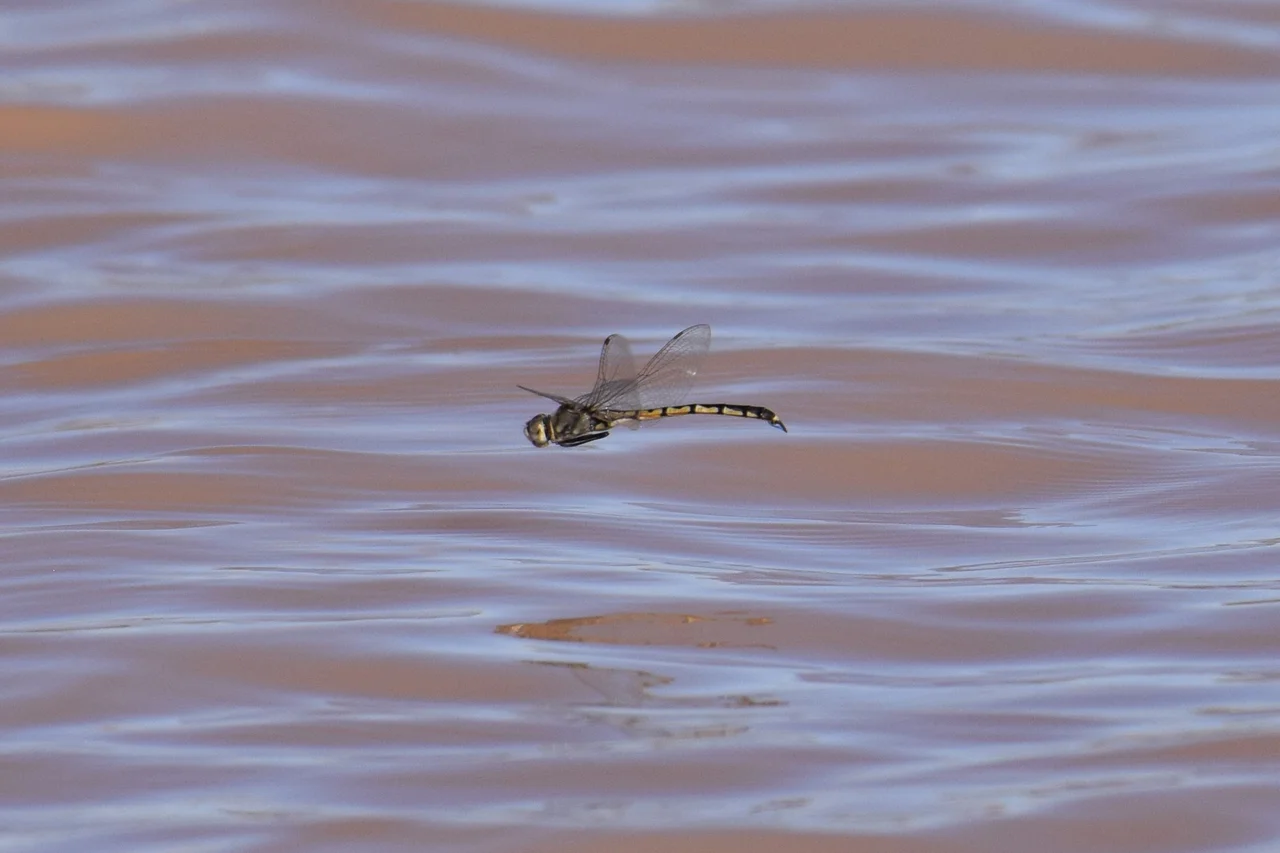
Part of the vast Lake Eyre drainage system, Lake Pinaroo holds water longer than any other wetland for hundreds of kilometres around. That endurance makes it a lifeline. When the basin floods, it becomes a breeding ground for tens of thousands of waterbirds, supporting up to sixty-one species, including international migratory shorebirds that navigate here across continents. Freckled ducks and blue-billed ducks paddle the shallows. Brolgas stalk the margins. The rare grey falcon, one of Australia's least-seen raptors, hunts the surrounding watercourses and nests along them even when the creek beds run dry. Beneath the surface, the engine of all this life is invisible: crustaceans and aquatic insects whose eggs survive years of desiccation in the dust, then hatch in a frenzy of productivity the moment the water returns.
Where Sturt Built His Fort
In 1845, the explorer Charles Sturt raised a timber stockade on the edge of this lake and named it Fort Grey. Convinced an inland sea lay at the heart of the continent, he had set out from Adelaide the year before with fifteen men, two hundred sheep, six drays, and a whaleboat to sail upon water that did not exist. Fort Grey became his forward base while he pushed smaller parties into the dunes of the Simpson Desert to the north and west. A box tree near the stockade still carries the blaze "Sturt 1845," cut to mark a message bottle buried by one of his men. When Sturt returned to the fort on the thirteenth of November, ill and beaten by the country, he finally understood there was no sea to find.
Country Long Before the Fort
Sturt's stockade was a brief disturbance on a landscape that had sustained people for countless generations. The shores of Lake Pinaroo hold a deep record of Aboriginal life: hearths, grinding stones, scarred trees, quarries, and scatters of stone tools spread across vast areas. This is the Country of the Wadigali, the Wangkumara, and the Malyangapa peoples, who shared its resources, languages, and ceremonies and passed its knowledge down through kinship. The lake was a place of water, food, and meaning long before any European arrived to map it, and it remains so. The artefacts here record not a vanished culture but a living one, adapting through the upheavals of the contact era and enduring. Today the Tibooburra Local Aboriginal Land Council and local elders continue to hold this land as part of their traditional Country.
From the Air
Lake Pinaroo sits at roughly 29.10 degrees south, 141.23 degrees east, in the northwest corner of Sturt National Park, about 24 km southeast of Cameron Corner and 80 km northwest of Tibooburra. When full it is an unmistakable sheet of water against red dunes and pale gibber; when dry it reads as a bright clay pan ringed by dunefields. Best appreciated from 2,000 to 4,000 feet AGL for the full contrast of basin and desert. Nearest airstrip is Tibooburra (YTIB), roughly 80 km southeast; Broken Hill (YBHI) lies about 340 km to the south. Expect intense heat haze and shimmer over the gibber on summer afternoons; clear, sharp visibility and low sun in the cooler months reveal the lake's shape best.
Nearby Stories
- Albert Goldfield Ruins 31 km away
- Sturt National Park 31 km away
- Lake Callabonna 67 km away
- Tibooburra 84 km away
- Strzelecki Creek 85 km away
- Strzelecki Desert 128 km away
- Strzelecki Track 129 km away
- Wilson River (Queensland) 132 km away