.jpg)
LAPA Flight 3142
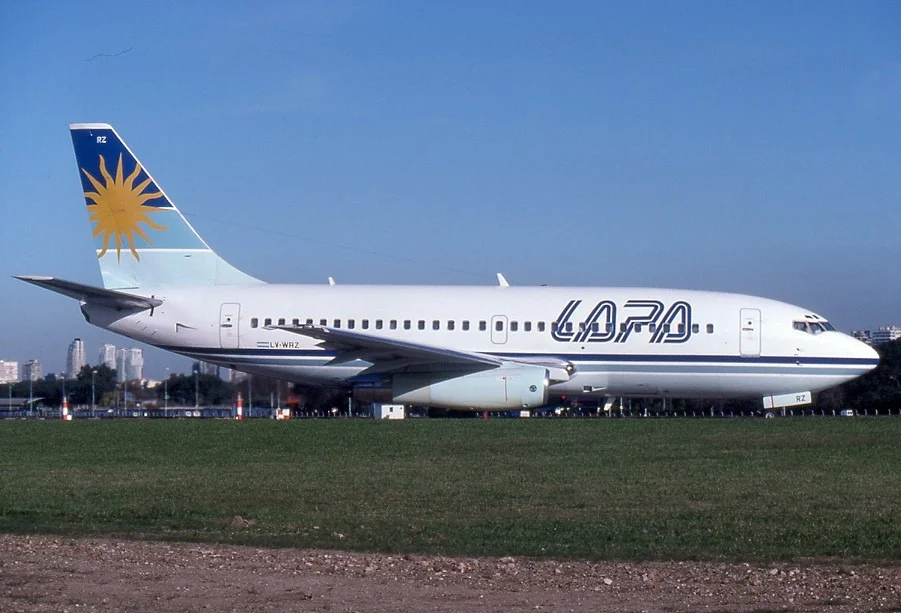
The alarm was sounding the whole time. From the moment the engines spooled up on the evening of 31 August 1999, a horn in the cockpit of LAPA Flight 3142 blared a warning that the Boeing 737 was not configured to fly. The two pilots heard it. The cockpit voice recorder caught their voices, relaxed and distracted, talking over the noise about things that had nothing to do with the takeoff they were attempting. The jet accelerated down the runway at Buenos Aires city airport, never lifted off, and tore through the perimeter fence into a busy road. Sixty-five people died. The cause was as simple and as devastating as it gets: nobody had lowered the flaps.
The People on Board
Flight 3142 was an ordinary domestic hop from Buenos Aires to Córdoba, the kind of flight Argentines took without a second thought. One hundred passengers and crew settled into their seats on a winter evening, expecting to be home or at their destinations within the hour. Of them, sixty died, along with three crew members and two people on the ground who happened to be near the road the aircraft crossed. The wreck and the fire that followed injured at least thirty-four more. These were commuters, families, business travelers, people whose only mistake was trusting that the professionals in the front of the airplane would do the small, routine things correctly. Years later, the children of the dead would still be speaking publicly about the grief and the sense of injustice that never fully resolved.
What Went Wrong in the Cockpit
Captain Gustavo Weigel, forty-five, had logged 6,500 flying hours. His first officer, Luis Etcheverry, thirty-one, had around 4,000. On paper they were experienced men. In practice, the investigation found something darker. The cockpit voice recorder revealed a conversation drifting through personal matters and moments of emotional intensity, the checklist read in a distracted blur. Somewhere in that haze, the single step that mattered most, extending the wing flaps, was simply skipped. Flaps are what let a heavy jet generate enough lift to leave the ground at takeoff speed; without them, there is effectively no runway in the world long enough for a 737 to fly. When the takeoff warning horn began to scream, the crew did the unthinkable. They ignored it, never connected the sound to the danger, and kept the throttles forward as the runway ran out beneath them. A later lawsuit revealed that Weigel's license had, in fact, expired.
A Failure Larger Than Two Men
It would be easy to lay the disaster entirely on the dead pilots, and the first official report largely did, prompting protests from those who saw a deeper rot. The investigation that followed widened the lens. Judge Gustavo Literas called more than five hundred LAPA employees to testify, heard some 1,500 witnesses, and filled 1,600 pages with findings. What emerged was a portrait of an airline cutting corners and a regulatory system that let it. LAPA had been nicknamed, bitterly, as the country's first low-cost carrier, and investigators found sloppy procedures in safety and personnel selection, pilots flying past mandated rest periods, and Air Force oversight that failed to catch any of it. In time, four LAPA executives, including company president Gustavo Deutsch, and three senior Air Force officers were charged. Yet the legal saga dragged on for years, and the case ultimately dissolved through the expiration of statutes of limitation. To the victims' families, the date became a symbol of impunity.
The Warning Made Into Art
One man saw it coming. Enrique Piñeyro had flown for LAPA from 1988 until June 1999, when he resigned in protest over the airline's safety culture, just two months before the crash. He later turned the tragedy into the feature film Whisky Romeo Zulu, named for the aircraft's radio call sign, a dramatized indictment of the negligence he had warned about and walked away from. The film ensured the disaster would not fade quietly into a footnote. The crash site sits at the very edge of Aeroparque Jorge Newbery, hard against the city and the river, a place where the runway, the fence, and the road run almost into one another, and where the smallest of forgotten gestures cost sixty-five lives.
From the Air
LAPA Flight 3142 crashed on 31 August 1999 at the edge of Aeroparque Jorge Newbery (ICAO: SABE), Buenos Aires' downtown airport, near 34.567°S, 58.402°W. The single runway, 13/31, runs roughly parallel to the Río de la Plata shoreline at an elevation of just 18 ft; the airport sits only about 2 km northwest of the city center, its perimeter pressed close to busy avenues, which is why the overrun proved catastrophic. From the air the site reads as the northern end of the runway where it meets the Costanera roadway and the river's edge. The dense Palermo and Belgrano neighborhoods spread inland to the west. Buenos Aires' international gateway, Ministro Pistarini at Ezeiza (ICAO: SAEZ), lies roughly 30 km to the southwest. Clear, calm winter evenings, like the night of the accident, are common here; pilots note the runway's tight margins and proximity to traffic.
Nearby Stories
- Ezeiza Massacre 1.9 km away
- Luján, Buenos Aires 5.1 km away
- Curutchet House 13 km away
- Colonia del Sacramento 17 km away
- Martín García Island 28 km away
- Atucha Nuclear Power Plant 37 km away
- Lobos 43 km away
- Cry of Asencio 87 km away