
The Parliament That Answers to One
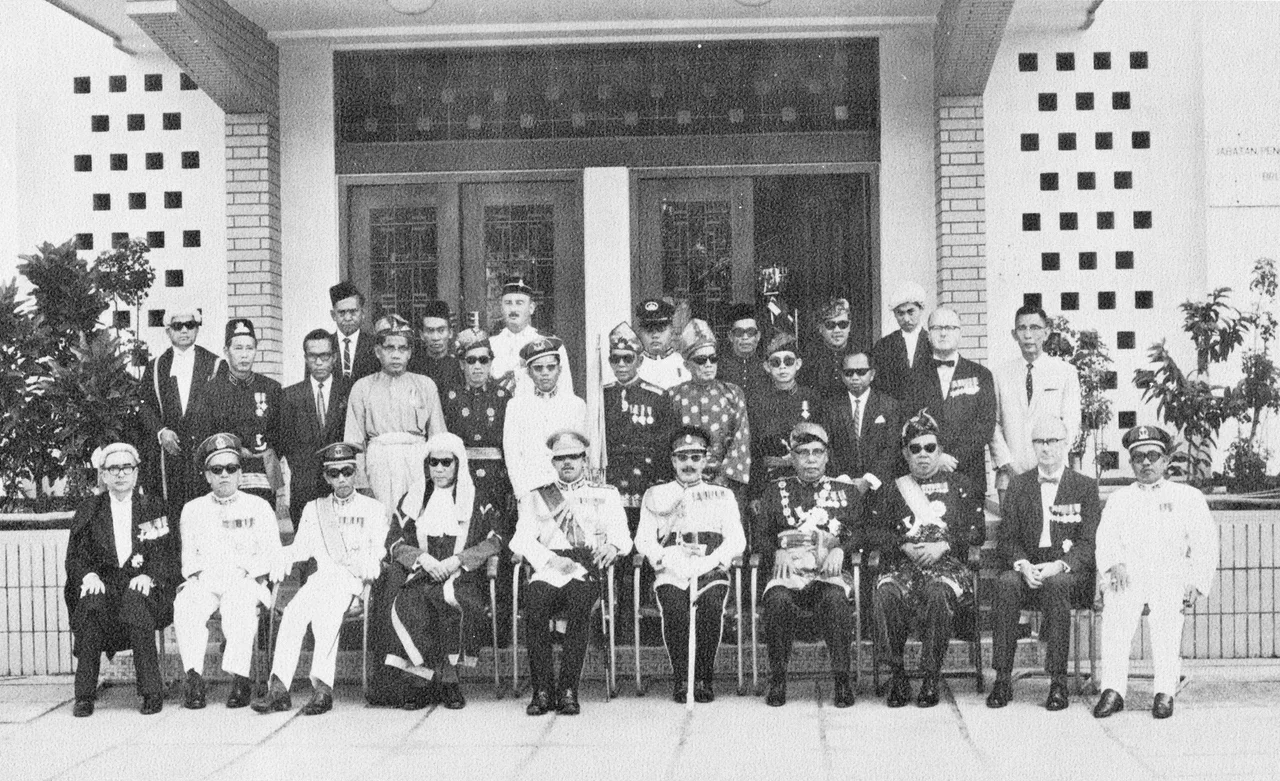
On 22 December 1977, Sultan Hassanal Bolkiah reconvened Brunei's Legislative Council. The following day, he dissolved it. That single-day parliament captures something essential about the Majlis Mesyuarat Negara -- the body that functions as Brunei's legislature while operating entirely at the pleasure of its monarch. Every member is appointed by the Sultan. Every bill requires his Royal Assent. The Speaker, ranked fourth in the national order of precedence, is his choice as well. The Council is real, it convenes annually in March, and it reviews budgets and passes laws. It is also, by constitutional design, a consultative body within an absolute monarchy -- a legislature whose existence depends, session by session, on the continuing will of the man who also serves as Prime Minister.
Born in a Constitution, Tested by an Election
The Legislative Council was created in 1959, embedded in Article 23 of Brunei's first codified constitution. For three years it functioned as one of five advisory bodies under Sultan Omar Ali Saifuddien III. Then came the elections of August 1962 -- the nation's first -- and the left-wing Brunei People's Party swept all ten elected seats. The BPP wanted to block Brunei's incorporation into the proposed Malaysian federation and, more fundamentally, sought to transform the sultanate into a constitutional monarchy. Sultan Omar invalidated the results. On 8 December 1962, the BPP's armed wing launched an uprising, attempting to seize the Sultan and key government buildings. British Gurkha forces, airlifted from Singapore, crushed the revolt within days. The Sultan declared a state of emergency -- one that has never been lifted. Constitutional provisions for elected seats were suspended, and from August 1963 onward, all members were filled by royal appointment.
Twenty-One Years of Silence
The Council limped on through the 1960s and 1970s in appointed form. In May 1968, Zainal Abidin Puteh of the Brunei People's Independence Party stood in the chamber and called for democratic governance and a public referendum on independence. His motion went nowhere, but the fact that he made it at all suggests the Council retained some capacity for dissent, however constrained. The 1970 council served its five-year term and was dissolved on schedule. Its 1977 successor lasted two days. When a new council convened on 27 December 1983, Brunei was weeks from full independence -- gained on 1 January 1984 -- and the body was disbanded on 13 February. Legislative power reverted entirely to the Sultan. For the next twenty-one years, Brunei had no legislature at all.
The Return, on Different Terms
Sultan Hassanal Bolkiah revived the Council on 25 September 2004, placing constitutional amendments at the top of the agenda. The body approved a proposal to expand to 45 seats, 15 of which would be elected -- the first elected representation since 1962. But the elections never materialized. The Sultan dissolved the Council again on 1 September 2005 and reconstituted it the next day under the amended constitution. Since then, the Council has met annually in a pattern that now stretches over twenty consecutive sessions. It currently comprises 34 members: cabinet ministers serving ex officio, titled persons selected by the Sultan, district representatives drawn from community leaders, and individuals chosen for distinguished service. Since 2015, local penghulu -- township heads -- have been elected by their communities, introducing a sliver of democratic participation at the grassroots level.
From Wig to Songkok
The Council's symbolic evolution tells its own story. From 1965 to 1983, the Speaker wore a white wig -- a direct inheritance from British parliamentary tradition. When the Council returned in 2004, the wig was gone. In its place: a specially adorned Malay songkok, encircled with intricate woven patterns featuring motifs of Bunga Paku-Paku, Tadas, Bunga Akar Linggayong, and Belah Rotan. The ornamentation measures precisely 3.8 centimeters in width. It is a small detail that signals a large shift -- from colonial procedural theater to a distinctly Bruneian institutional identity. The legislative procedure itself still follows Commonwealth parliamentary form: three readings per bill, cabinet approval before tabling, publication in the official gazette after Royal Assent. The framework is familiar. The power dynamics are not.
A Building of Columns and Numbers
The Dewan Majlis building, where the Council has met since 4 March 2008, sits on 26 acres along Jalan Kebangsaan, fifteen minutes from the city center. Sultan Hassanal Bolkiah approved its construction at a cost of B$62.2 million. The architecture blends Greco-Roman columns with Malay and Islamic motifs, and numerology runs through the design like a structural code: five and nine columns at the porte-cochere reference the 1959 constitution, eight and four columns leading to the chamber mark 1984 independence, and 29 windows encircle the dome for the 29th Sultan. The central block houses the legislative chamber and a banquet hall. The right wing contains the Speaker's office, a library, and a gymnasium. The left wing holds administrative offices, a parade ground, a canteen, and a mosque. The building is, like the institution it houses, both substantial and subordinate -- an impressive structure built for a body that exists because one man decided it should.
From the Air
Located at 4.913N, 114.948E along Jalan Kebangsaan in Bandar Seri Begawan. The Dewan Majlis building covers 26 acres including a 3-acre lake, visible from the air as a distinctive domed structure with Greco-Roman columns. Nearest airport is Brunei International Airport (WBSB), approximately 7 km northeast. The building sits roughly 2 km north of the city center. Recommended viewing altitude: 2,000-3,000 feet to appreciate the building's layout and its lake against the surrounding landscape.
Nearby Stories
- From Residency to Memory 28 km away
- Twenty Years on the Seattle Run 30 km away
- The Abode of Peace on Borrowed Coastline 31 km away
- USS Salute: The Minesweeper That Found the Last Mine 33 km away
- The Ants of Borneo 50 km away
- Sabah State Railway 55 km away
- Starcevich Monument 74 km away
- Luconia Shoals 209 km away