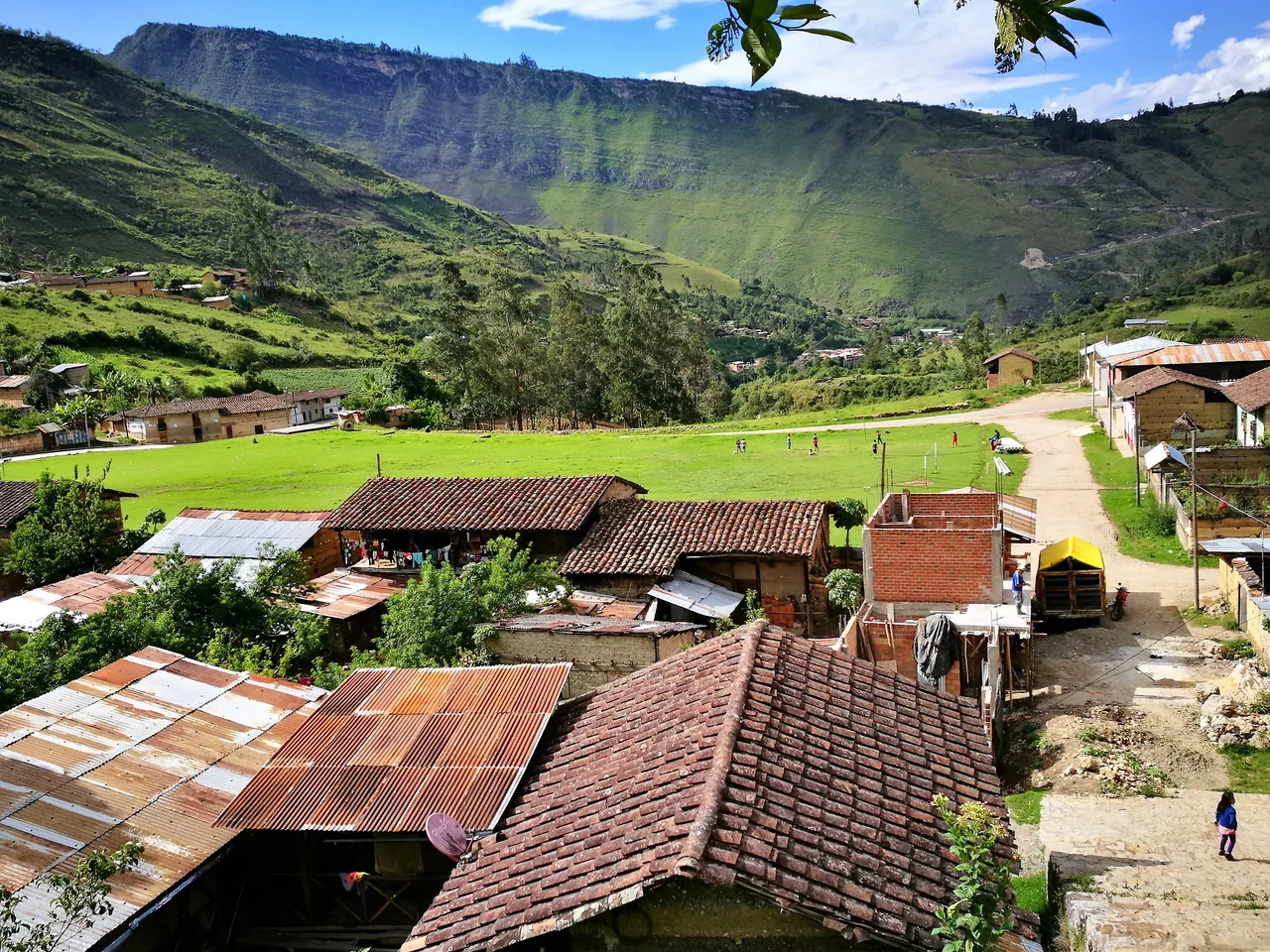

Leimebamba District
In 1996, a group of farmers cutting trees on a cliff above Laguna de los Cóndores found a ledge, and on the ledge, a chamber, and in the chamber, the dead. More than two hundred mummified bodies, wrapped in textiles and tied in a fetal crouch, had sat undisturbed in the Chachapoya burial house for roughly five centuries. Looters began working the site within weeks. To save what remained, archaeologists and the people of Leimebamba built a museum that now holds one of the largest collections of pre-Columbian mummies in the world - in a town most outsiders have never heard of.
Raymipampa, the Sun Festival Plain
The name itself carries history. When the armies of the Inca emperor Tupac Yupanqui reached this valley in the 15th century, they celebrated Inti Raymi - the great sun festival - in the local meadows and called the place Raymipampa, the plain of Raymi. Over generations Raymipampa softened to Leimebamba, Leymebamba in some spellings. The district is tucked into the Utcubamba River valley at around 2,000 meters elevation, lush and warm, ringed by mountains where the cloud forest begins. Sixty kilometers separate it from Chachapoyas to the north, the nearest provincial capital.
The Lake of the Condors
Laguna de los Cóndores lies a day's hike or horseback ride east of town, a long narrow lake cradled in cloud forest so steep that for centuries no one knew the Chachapoya had built anything there. The burial chullpas - little stone houses perched on a limestone cliff above the water - hid in plain sight behind the mist. The Chachapoya, sometimes called the warriors of the clouds, had placed their dead where only the living who knew the way could find them. The farmers of 1996 unlocked the secret. What they started, the looters continued, until archaeologist Sonia Guillén and a team from the Mallqui Center organized the emergency recovery.
The Museum on the Mountain
The Leymebamba Museum opened in 2000 in a modest building on the edge of town, built in colonial style with a long inner courtyard. Its climate-controlled mummy room holds over two hundred bundles - men, women, children - each wrapped in textiles, tied into the crouched position the Chachapoya used for their dead, and accompanied by the objects they had sent into the next world. Ceramics. Gourds. Tools. The collection also displays quipus, the knotted-cord records used throughout the Andes for accounting and possibly narrative, whose full grammar remains only partly deciphered. For the people of Leimebamba, the museum is not just a tourist attraction. It is the ancestors, come home.
The Road That Climbs and Falls
Getting here is its own story. From Cajamarca, the journey takes about eight hours by bus. The road climbs to a pass near Celendín at 3,200 meters, then plunges down switchbacks to the Marañón River at Balsas, only 850 meters above sea level. Then it climbs again, this time to the Barro Negro pass at 3,678 meters, before dropping to Leimebamba at 2,200 meters. The route crosses three completely different ecosystems in a single day: puna grassland, inter-Andean dry forest along the Marañón, and finally the humid cloud forest of the Utcubamba valley. The road is now paved, which is more recent than it sounds. Chachapoyas itself still has no commercial airport. The nearest is in Jaén, four hours away by bus.
A Constellation of Ruins
Leimebamba sits at the heart of the old Chachapoya heartland, and the district holds dozens of pre-Inca sites that remain lightly studied. Congona, Petaca, Diablo Wasi - each reachable only on foot, over one-day or multi-day hikes. Further afield lie the district's most famous neighbors: Kuelap, the great fortress-citadel on its ridge to the north; Revash, the cliff tombs with their miniature painted houses; and Gocta Falls, one of the tallest waterfalls in the Americas. Most visitors use Leimebamba as a base. The town has a handful of inns, a plaza with a colonial church, and enough quiet streets to remind you this is not yet Cuzco.
The Virgin of the Carmen
Every July 16, the town celebrates the feast of Our Lady of Mount Carmel, the patron saint. There is a morning mass, a procession carrying her image through the streets, and the kind of all-day eating, drumming, and fireworks that Andean towns have perfected over centuries of grafting Catholic calendar onto pre-Columbian celebration. Saint Augustine gets his day on August 28. When the last fireworks end, Leimebamba goes back to being what it usually is: a quiet cloud-forest town above a river, guarding mountains that still hold more secrets than anyone has yet counted.
From the Air
Located at 6.71°S, 77.80°W in the Amazonas Region of northern Peru, in the valley of the Utcubamba River at about 2,200 meters elevation. The town sits between the Marañón River valley to the west and the Amazon basin to the east. Nearest commercial airport is Jaén (JAE/SPJE) about 4 hours by road, with smaller airfields at Chachapoyas (CHH/SPPY) 60 km north. Recommended viewing altitude 11,000-14,000 feet AGL. Cloud cover in the valley can be heavy; mornings are generally clearer.
Nearby Stories
- Pirca Pirca 12 km away
- Battle of Cajamarca 19 km away
- Pueblo de Los Muertos 44 km away
- Gran Pajatén 50 km away
- 1990-91 Alto Mayo Earthquakes 57 km away
- Marañón Dry Forests 70 km away
- Department of San Martín 77 km away
- Otuzco 128 km away