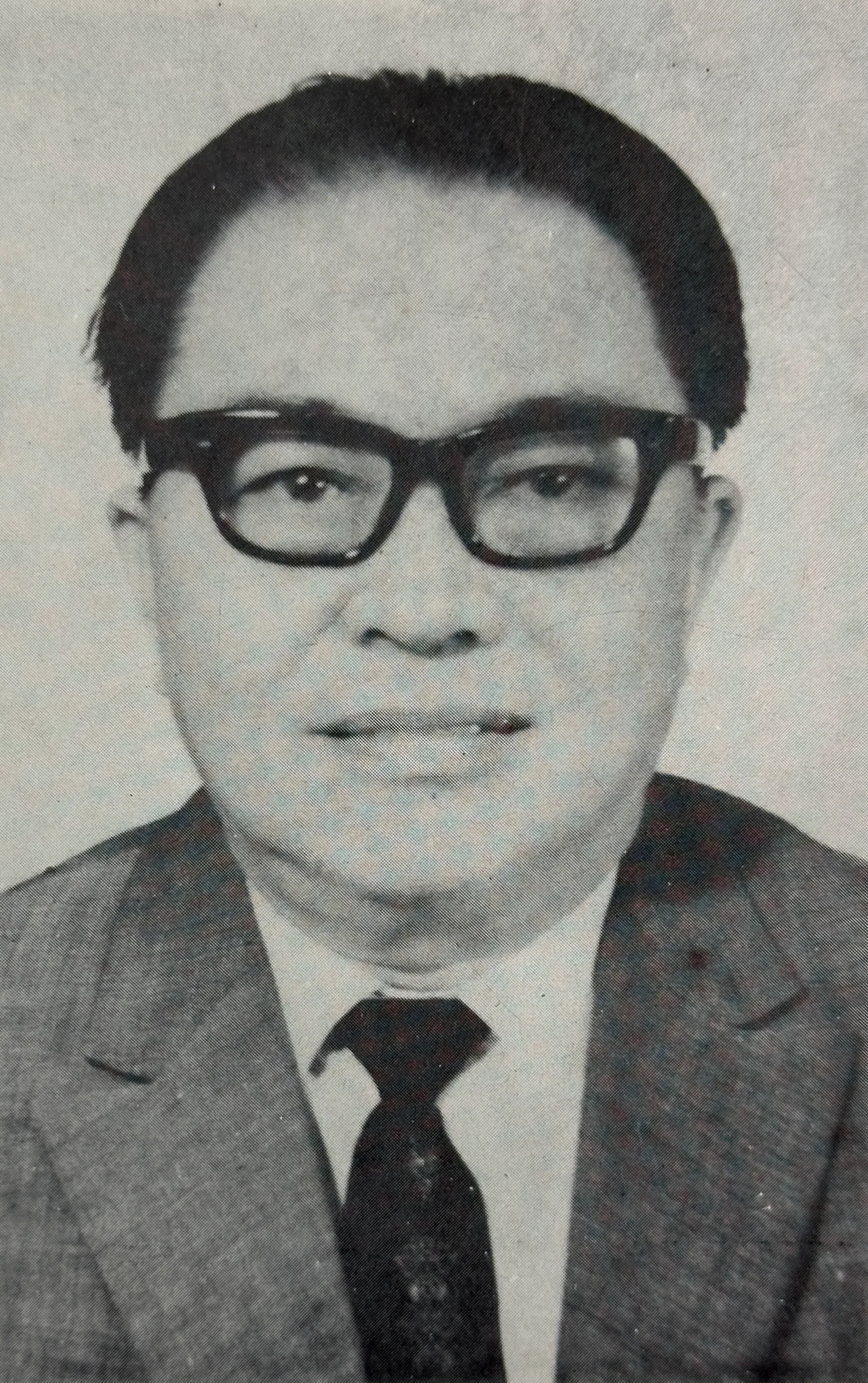

The Brick Maker Who Built a Nation's Schools
Twelve dollars a month. That was what seventeen-year-old Lim Teck Hoo earned when he arrived in Brunei Town in 1927, a laborer stacking goods at a relative's shop called Chop Leong Soon. He had crossed the sea from Kinmen, a windswept island off the coast of Taiwan, where his mother Tan Poi had raised him and his sister alone after his father died when Lim was nine. She made clothes and shoes to survive; he sold them by day and studied by night. Nothing about those early years suggested that this quiet, determined boy would one day hold the title Pehin Kapitan China -- the Sultan's chosen leader of Brunei's entire Chinese community -- or that his name would appear on the largest Chinese school in the country.
From Rubble, Bricks
When Allied bombers struck Brunei Town during the Borneo campaign of 1945, much of the waterfront capital was reduced to ruins. Lim Teck Hoo saw opportunity in the wreckage. He founded Soon Lee Brickworks, the first clay brick manufacturer in the sultanate, and imported the first cargo of cement from Taiwan for the reconstruction of what would become Bandar Seri Begawan. The bricks his factory produced helped rebuild the city block by block. That factory still operates today under the name Hup Soon Brickworks Ceramic -- a remarkable continuity in a nation that has transformed almost beyond recognition since those postwar years. By 1958, Lim had established Bee Seng Shipping, Brunei's first local shipping company, connecting the small sultanate to the wider commercial world through Hong Kong and beyond.
A Commercial Empire Across Four Countries
Lim's business instincts extended far beyond bricks and mortar. In 1962 he founded You Li Hong in Singapore, becoming the Brunei distributor for Yeo's tinned foods and drinks, a brand that became ubiquitous across Southeast Asia. Eight years later he opened a share trading company in Taiwan, importing everything from raw materials to artwork, steel to food products. Through Bee Seng Shipping in Hong Kong he exported ready-made garments to international markets, and he co-founded the World Overseas Chinese Banking Corporation in Taiwan, chairing its subsidiary, the Overseas Chinese Trust Group. His family's former rubber estates, once the source of latex for export, eventually became valuable real estate for development. The commercial network he built spanned Brunei, Singapore, Hong Kong, and Taiwan -- a remarkable reach for someone who had arrived in the country with nothing.
Forty-Three Years at the Blackboard's Service
Ask Brunei's Chinese community what Lim Teck Hoo's greatest legacy is, and the answer comes quickly: the schools. For forty-three years he served as chairman of Chung Hwa Middle School in Bandar Seri Begawan, personally funding its expansion from a primary school into a full preschool-through-pre-university institution -- the largest Chinese school in the country. But his reach went further. He championed and donated to Chinese schools across every district of Brunei: Chung Ching Middle School in Seria, Chung Hua Middle School in Kuala Belait, Pai Yuek School in Temburong, schools in Tutong, Labi, Sungai Liang, and Kiudang. He established the Lim Teck Hoo Scholarships for local students and made generous donations to ancestral temples in his native Lieyu. The Pehin Temenggung Dato Lim Teck Hoo Building, completed and dedicated on 6 January 2008, stands as a physical monument to those decades of investment in other people's futures.
The Sultan's Kapitan
The Brunei Sultanate has a centuries-old tradition of designating Chinese officials to serve as intermediaries between the royal household and the Chinese community. Lim Teck Hoo held the title Pehin Kapitan China Kornia Diraja, conferred on 12 August 1958, making him the Sultan's primary advisor on matters concerning the Chinese population. It was a role that carried real weight: he was responsible for ensuring the community followed the laws of the nation while advocating for their interests to the throne. Over the decades, the Sultan honored him repeatedly -- the Omar Ali Saifuddin Medal in 1961, the Sultan Hassanal Bolkiah Medal First Class in 1969, the Order of Seri Paduka Mahkota Brunei Third Class in 1982, the Second Class in 1989, and the Meritorious Service Medal in 1998, just a year before his death.
A Legacy That Keeps Giving
Lim Teck Hoo died on 13 March 1999, leaving behind his wife Datin Ang Moi Tee, five sons, and nine daughters. He is buried at his own memorial park along Jalan Kasat. But the story did not end there. His son Dato Paduka Lim Beng Thai took over the family business, and the entire family has continued their father's tradition of philanthropy. In 2018 and again in 2022, the family made substantial donations to the same Chinese schools their father had supported for decades. When Chinese Ambassador Wang Haitao attended Lim's qingming ceremony on 6 April 2022, it was a measure of how far-reaching one immigrant boy's influence had become -- not just within Brunei, but across the diplomatic ties between nations. On 6 December 1994, Lim had established Lim Teck Hoo Holdings and named his children and grandchildren as the board of directors, ensuring that the enterprise he built from twelve dollars a month would endure for generations.
From the Air
Coordinates: 4.8642N, 114.9440E. Located in Bandar Seri Begawan, Brunei's compact capital on the northern coast of Borneo. From the air, look for the distinctive golden dome of the Omar Ali Saifuddien Mosque and the sprawling stilted village of Kampong Ayer along the Brunei River. Brunei International Airport (WBSB) lies approximately 10 km northeast. Recommended viewing altitude: 3,000-5,000 feet for city context. The equatorial climate means frequent afternoon thunderstorms; morning approaches offer the clearest visibility.
Nearby Stories
- From Residency to Memory 28 km away
- Twenty Years on the Seattle Run 30 km away
- The Abode of Peace on Borrowed Coastline 31 km away
- USS Salute: The Minesweeper That Found the Last Mine 33 km away
- The Ants of Borneo 50 km away
- Sabah State Railway 55 km away
- Starcevich Monument 74 km away
- Luconia Shoals 209 km away