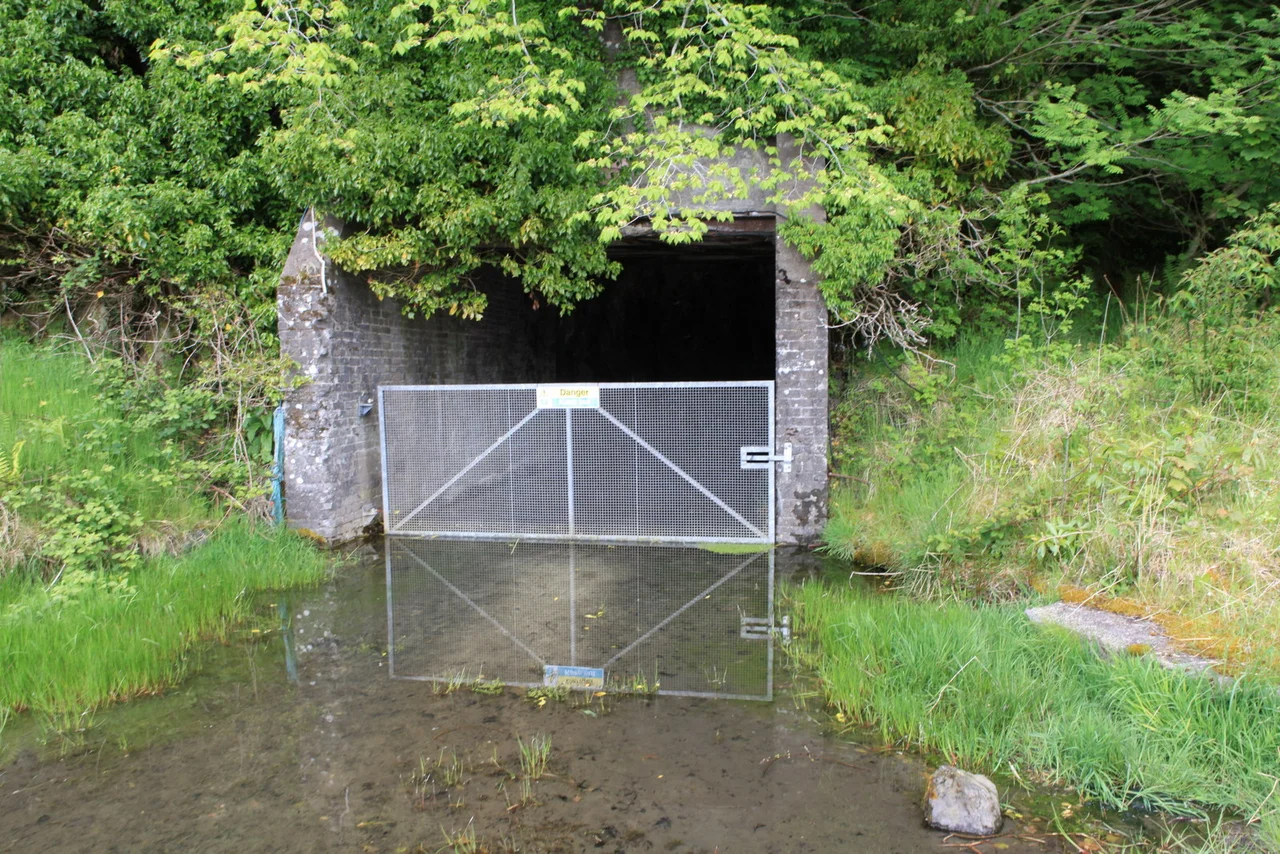

Lochaline Mine
When France fell to Germany in 1940, Britain lost more than an ally - it lost the sand that made its submarine periscopes see. The purest optical-grade silica in Europe had come from a quarry near Fontainebleau, just outside Paris, and now that supply had stopped. The Admiralty needed a replacement, and quickly, because bomb sights and periscopes were useless without crystal-clear glass. A geologist turned to a half-forgotten survey from 1895. There was sand, white as snow, on a peninsula in the Scottish Highlands called Morvern. Within months, miners were burrowing under a Hebridean hillside.
A Beach Beneath a Volcano
The sand at Lochaline was 135 million years old by the time anyone tried to dig it up. It had been deposited on the shore of a tropical Cretaceous sea, the same warm shallow ocean that was simultaneously laying down the chalk that would become the White Cliffs of Dover. Frequent changes in sea level winnowed the grains, sorting quartz from impurities and grading the deposit into something almost laboratory-pure. Then the Mull Volcano erupted. Lava poured over the sand and cooled into a basalt cap roughly 150 metres thick - a stone lid that locked the deposit away from sixty million years of erosion. To get at it, miners cannot quarry from above; the basalt is too hard. Instead they tunnel sideways into the seam, working a room-and-pillar pattern that leaves two metres of sand standing as natural columns supporting the volcanic ceiling overhead.
The Purest Glass in Britain
Lochaline silica is the cleanest sand in the United Kingdom. Tests have measured iron content at 0.0085 percent ferric oxide - so low that the glass made from it is almost colourless. During the Second World War, that purity went into instruments of survival: the lenses through which submariners scanned the horizon and the prismatic sights that lined up bombs over German cities. Today the same sand serves quieter wars. Most of it travels south by ship from the mine's own loch-side pier to Runcorn in Cheshire, where it becomes the front glass of solar panels - a 135-million-year-old beach reborn as a sheet of light. The rest goes to Scunthorpe for industrial use, or across the Channel to European glassmakers. Production now runs between 100,000 and 140,000 tonnes per year through 48 kilometres of tunnels under the Morvern hillsides.
The Only Underground Sand Mine in Europe
Two underground mines still operate in Scotland. Lochaline is one of them, and it is the only underground sand mine on the entire continent. The work has not been continuous. In December 2008 the mine closed and eleven men lost their jobs - a serious blow to a peninsula of just a few hundred people. The village fought for itself: lobbying, organising, refusing to fold. In September 2012 a joint venture between Italy's Minerali Industriali and the Japanese glassmaker NSG Pilkington bought the workings and brought them back online. In 2022 the operators announced a new public trail above ground, complete with the history of the narrow-gauge railway that once carried sand from the rock face to the pier. The mine is no longer just an industrial site. It is a story Morvern tells itself about a village that refused to disappear when its work did.
From the Air
Located at 56.54N, 5.77W on the Morvern peninsula in the Scottish Highlands, on the north shore of the Sound of Mull. Nearest airport: Oban (EGEO), about 15 nm south-southeast across the sound. Glasgow (EGPF) lies roughly 80 nm south. Recommended viewing altitude 2,000-4,000 ft to see the mine pier on the loch, the dark basalt cap of the surrounding hills, and the Isle of Mull rising across the sound.
Nearby Stories
- Castle Tioram 1.9 km away
- Cairnburgh Castle 3.3 km away
- Lunga, Firth of Lorn 7.2 km away
- Bonawe Iron Furnace 8.8 km away
- West Highland Museum 11 km away
- Inveraray Castle 12 km away
- Bullough Mausoleum 22 km away
- Dubh Artach 23 km away