
London bid for the 2012 Summer Olympics
Singapore, 6 July 2005. The International Olympic Committee chair, Jacques Rogge, stood at a lectern and opened an envelope. There were five candidate cities: Paris, London, Madrid, New York, Moscow. Paris had been the favourite throughout — better infrastructure ratings, broader popular support, the polished feel of a city that had bid before and learned from losing. London had come from behind. The vote went to four rounds. On the final ballot, London beat Paris 54 to 50. Tony Blair, watching from Singapore on his way back from the G8 summit in Scotland, allowed himself a rare uncomplicated smile. Twenty-four hours later, four bombs would explode on London's transport network. The Olympic celebration lasted exactly one day.
The Three That Lost
Britain had been here before, and lost. Birmingham bid for the 1992 Games — defeated. Manchester bid for 1996 — defeated. Manchester bid again for 2000 — defeated. After three consecutive failures, the British Olympic Association concluded what was unpopular but obviously true: only London had a serious chance of being chosen by the IOC when measured against world cities. The bid was formally launched in 1997 and presented to government ministers in December 2000. The first chair was Barbara Cassani, an airline executive (she had built Go Airlines for British Airways); in May 2004 she handed over to Sebastian Coe, the double Olympic gold-medallist middle-distance runner and former Conservative MP, who could speak the IOC's language as an athlete and a politician at once. Coe brought in Daley Thompson, Kelly Holmes, Steve Redgrave. The bid stopped being a planning document and became a movement.
Stratford Was Industrial Wasteland
The site chosen for the Olympic Park was a 500-acre stretch of the Lower Lea Valley in Stratford, east London — derelict industrial land, the kind that had once made things and now made nothing. Approximately 60 percent of the venues already existed at the time of the bid: Wembley for football, Wimbledon for tennis, Lord's for archery, Greenwich Park for equestrian, the ExCeL centre for combat sports, Hyde Park for the triathlon. The new builds clustered in Stratford: the Olympic Stadium itself, the Aquatics Centre, the Velopark, the Riverbank Arena, the Olympic Village. The regeneration argument carried weight with the IOC and with the British government alike. East London had been one of the most deprived parts of the country since the docks closed. The Olympics would, in theory, change that. The athletes' village would become 3,600 apartments, most of them affordable housing. The stadium would become a public sporting venue. There would be no white elephants, the planners promised. (Some of those promises held; others did not.) The original budget projection of around £2 billion ended up at £8.8 billion.
7 July
The morning after the IOC vote, four bombs were detonated on the London transport network within an hour of each other. Three exploded on Underground trains: at Aldgate, at Edgware Road, and on a Piccadilly line train between King's Cross and Russell Square. The fourth went off on a number 30 bus at Tavistock Square. Fifty-two people were killed; 784 were injured. The four bombers — Mohammad Sidique Khan, Shehzad Tanweer, Hasib Hussain, and Germaine Lindsay — were Islamist extremists motivated by opposition to British foreign policy, particularly the Iraq War. There was no confirmed connection between the IOC announcement in Singapore and the attack the following day, though the timing coincided with the G8 summit. The Olympic celebration ended abruptly. London became, very briefly, the subject of a different kind of attention. Blair flew home from Gleneagles. The bid team in Singapore was told to keep working. The Games would still happen seven years later.
Building It
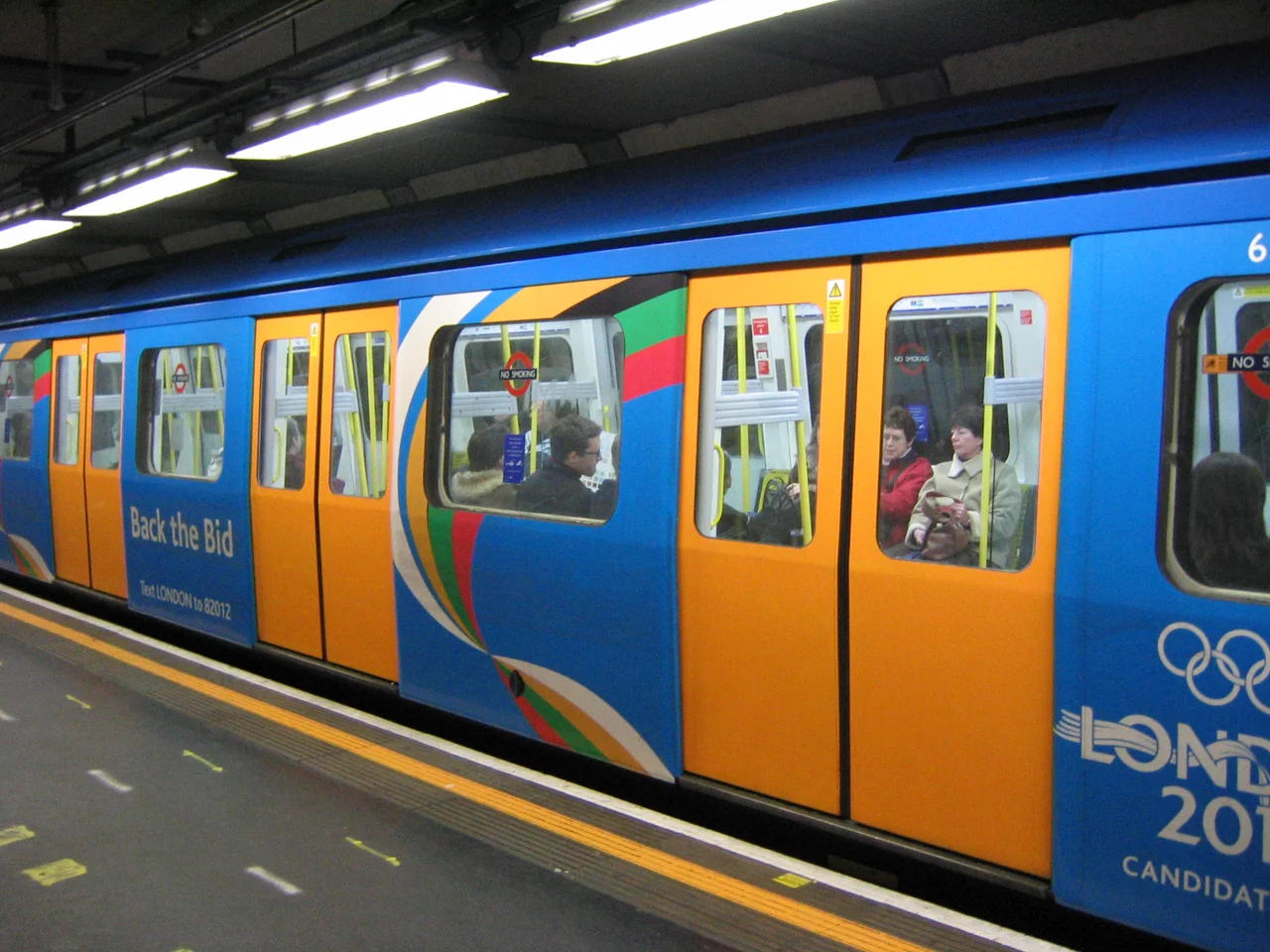
Once the bid was won, the London Organising Committee for the Olympic Games and Paralympic Games (LOCOG) took over. The compulsory purchase of businesses on the Stratford site became one of the early controversies — some owners complained that the compensation was inadequate, that the regeneration argument had been used to override their property rights. The transport infrastructure required massive investment. The Channel Tunnel rail link, the Stratford rail link, the East London line extension, the Olympic Javelin service — together with upgrades to the Docklands Light Railway, all the rail and tube services were planned to deliver around 240 trains per hour during the Games. Public transport had been one of the weakest scores in the IOC's initial evaluation. By 2012, it was one of the strongest features of the operation. The 'Back the Bid' campaign hung posters across the city in the months before the vote; the supportive opinion polls reached 70 percent in the UK and 68 percent in London. The Daily Mail griped. The Manchester press grumbled. The British public, on balance, was on board.
What the Games Left Behind
The 80,000-seat Olympic Stadium was eventually leased to West Ham United and downsized to around 60,000 seats for football, retaining a usable athletics track that hosts the annual London Diamond League meeting. The Aquatics Centre, designed by Zaha Hadid, became a public swimming venue. The Velopark serves recreational cyclists and competitive track riders. The Olympic Village — built by the Australian firm Lend Lease at a project cost of £5.3 billion — became the East Village neighbourhood, the affordable housing component reduced from the original promises but real. Queen Elizabeth Olympic Park, named for the monarch who opened the Games, is now a public park with playgrounds and waterways. The Press and Broadcast Centre became Here East, a tech and education campus. Some of the legacy held. The torch relay had been redesigned in 2012 to be a UK-only 70-day, 8,000-mile journey, with a single excursion to Dublin. The Games themselves, when they came, sold 81 percent of their 8 million tickets. London became, in 2012, the first city to host the Summer Olympics three times — after 1908 and 1948 — three editions of the Games separated by two world wars.
From the Air
The Olympic Park sits at 51.5462°N, 0.0127°W in the Stratford district of east London, on land that was formerly Bow Back Rivers industrial wasteland. From the air, look for the distinctive curved roof of the London Stadium, the wavy hyperbolic-paraboloid roofline of the Aquatics Centre, the ArcelorMittal Orbit observation tower, and the long curving Aquatics rooflines. The park sits between the A12 to the west and the River Lea waterways. Nearest airport: London City (EGLC), about 6 miles south. Stansted (EGSS) sits 30 miles to the north-northeast. Best viewed in clear conditions from approaches into either.
Nearby Stories
- Stevenage 5.7 km away
- Malling Abbey 5.7 km away
- 1952 Farnborough Airshow Crash 7.7 km away
- Ingatestone Hall 8.2 km away
- Hellfire Caves 9.1 km away
- The Carrington Event: The Solar Storm That Could Happen Again 9.8 km away
- Bletchley Park 16 km away
- Castle Hedingham 23 km away