
London Zoo
Stamford Raffles wanted a place to study animals, not exhibit them. The man who had founded Singapore returned to London in 1824 with a head full of tropical fauna and a conviction that Britain needed somewhere serious to examine living creatures. He gathered Sir Humphry Davy and a circle of naturalists, drew up plans for the Zoological Society of London in 1826, and chose a slice of Regent's Park for the gardens. Raffles never saw what he started. He died in July 1826, two years before the Zoological Gardens opened to Fellows on 27 April 1828. The animals he had hoped to study scientifically would, before long, become the most famous menagerie in the world.
The First Scientific Zoo
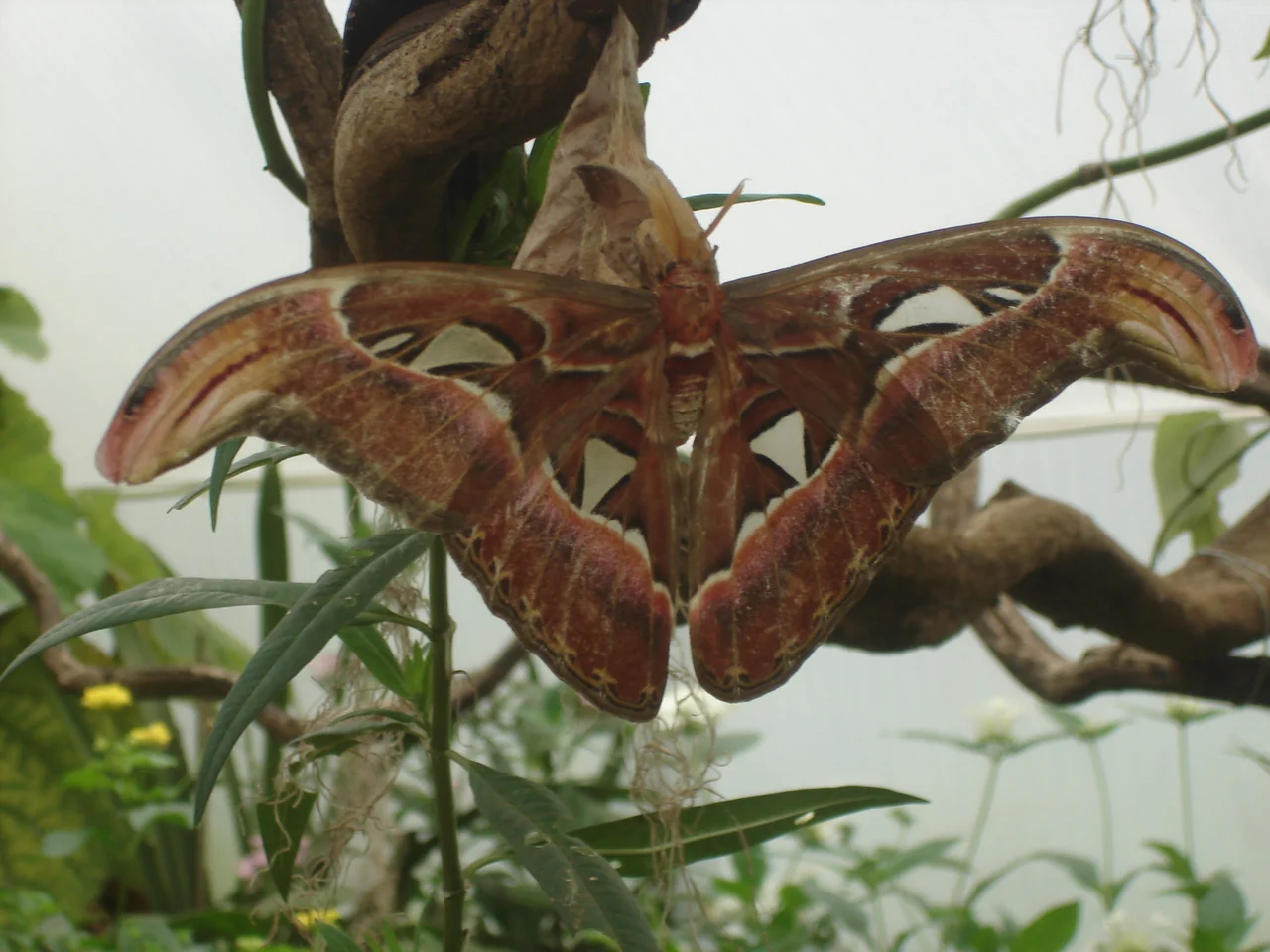
For two decades after opening, the gardens were a private research collection, accessible only to Fellows of the Society and their guests. The doors finally opened to paying visitors in 1847, and London discovered that animals could be entertainment as well as data. The firsts piled up: the world's first reptile house in 1849, the first public aquarium in 1853, the first insect house in 1881. In 1831 or 1832 the last of the royal menagerie at the Tower of London came over the wall, ending six centuries of lions kept beside the Thames. Lions, leopards, llamas, kangaroos, an elephant called Jumbo who later went to America and inspired the word for anything outsized - the collection grew until London Zoo was a kind of imperial inventory, a living catalogue of everywhere British ships had been.
Architecture in the Service of Animals
From the start, the Society hired serious architects. Decimus Burton, who designed Marble Arch, laid out the gardens in 1828 and served as the zoo's first official architect. A century later, the brief expanded into the avant-garde. Berthold Lubetkin's spiral-ramped Penguin Pool, finished in 1934, became one of the most photographed pieces of modernism in Britain - though the African penguins were eventually moved out in 2004 after the concrete caused foot infections. Cedric Price, Frank Newby and Lord Snowdon collaborated on the Snowdon Aviary in the early 1960s, a pyramidal aluminium framework reaching 21 metres high. It was Britain's first walk-through aviary, and in 2022 was reborn as Monkey Valley, home to eastern black-and-white colobus. Sir Hugh Casson designed the elephant house next door. The result is a working zoo that also functions as a Grade I and Grade II listed open-air museum of twentieth-century architecture.
Wartime
When the Second World War began on 3 September 1939, the zoo was ordered closed by 11 in the morning. The aquarium was drained as a precaution against bomb damage; the more valuable animals were evacuated to the Society's larger reserve at Whipsnade in Bedfordshire. The venomous snakes and spiders were killed, in case the buildings were hit and they escaped. The buildings were hit. On the night of 27 September 1940 high explosives took out the rodent house, the civet house, the zebra house, the gardener's office and the north gate; in January 1941 the camel house followed. A zebra and a mother donkey with her foal bolted into the streets, although they were eventually recovered. No animals were killed by the bombs. Throughout the war, the wounded entered free and other servicemen paid half price, and the zoo remained a small refuge of normality at the centre of a city being taken apart.
Living Collection, Changing Mission
The modern zoo is something Raffles would barely recognise. Gorilla Kingdom opened in 2007 with a moated island of western lowland gorillas. Land of the Lions arrived in 2016, styled after the Indian town on the edge of Gir National Park - the only place on Earth where wild Asiatic lions still hunt - to make plain that the cats' habitat now overlaps with human settlement, not in spite of it. Tiger Territory, opened in 2013 and home to Sumatran tigers and their cubs, runs a steel-cable canopy over Indonesian planting. In Tiny Giants, the body heat of visitors helps warm the invertebrate building. The 1962 loan of an Arabian oryx to Phoenix Zoo, Arizona, was the world's first international cooperative breeding programme, and that DNA, literal and institutional, now runs through global zoo practice. The Society pulls living things back from the edge of extinction; the gardens are still where the public meets them.
On Film
The cobbled paths, the strange architecture, and a steady supply of large mammals have made London Zoo an irresistible film set. Alfred Hitchcock used the aquarium in Sabotage (1936). Carol Reed brought Ralph Richardson and a small boy here in 1947 to shoot The Fallen Idol inside the lion house and the reptile house, and the footage now serves as a documentary of the immediate post-war zoo. David Naughton woke up naked in the wolves' enclosure in An American Werewolf in London (1981). At the end of Withnail and I (1987), Withnail recites Hamlet to the wolves in the pouring rain. Komodo dragon Raja stood in for Skyfall (2012). The zoo is in love with its own image and willing to lend it out - so long as no animal is harmed, and the cameras leave before the gibbons go to sleep.
From the Air
London Zoo sits in the northern crescent of Regent's Park at 51.5356° N, 0.1558° W, on the north bank of the Regent's Canal. From the air, look for the green oval of Regent's Park ringed by Georgian terraces; the zoo occupies the canal-side wedge at the top. London Heliport (EGLW) is the nearest dedicated landing site; the major airports are London City (EGLC) southeast, Heathrow (EGLL) west, and Luton (EGGW) north. Recommended viewing altitude 1,500-3,000 feet AGL for legible Regent's Park geometry, weather permitting; central London airspace is Class A and restricted.
Nearby Stories
- Stevenage 5.7 km away
- Malling Abbey 5.7 km away
- 1952 Farnborough Airshow Crash 7.7 km away
- Ingatestone Hall 8.2 km away
- Hellfire Caves 9.1 km away
- The Carrington Event: The Solar Storm That Could Happen Again 9.8 km away
- Bletchley Park 16 km away
- Castle Hedingham 23 km away