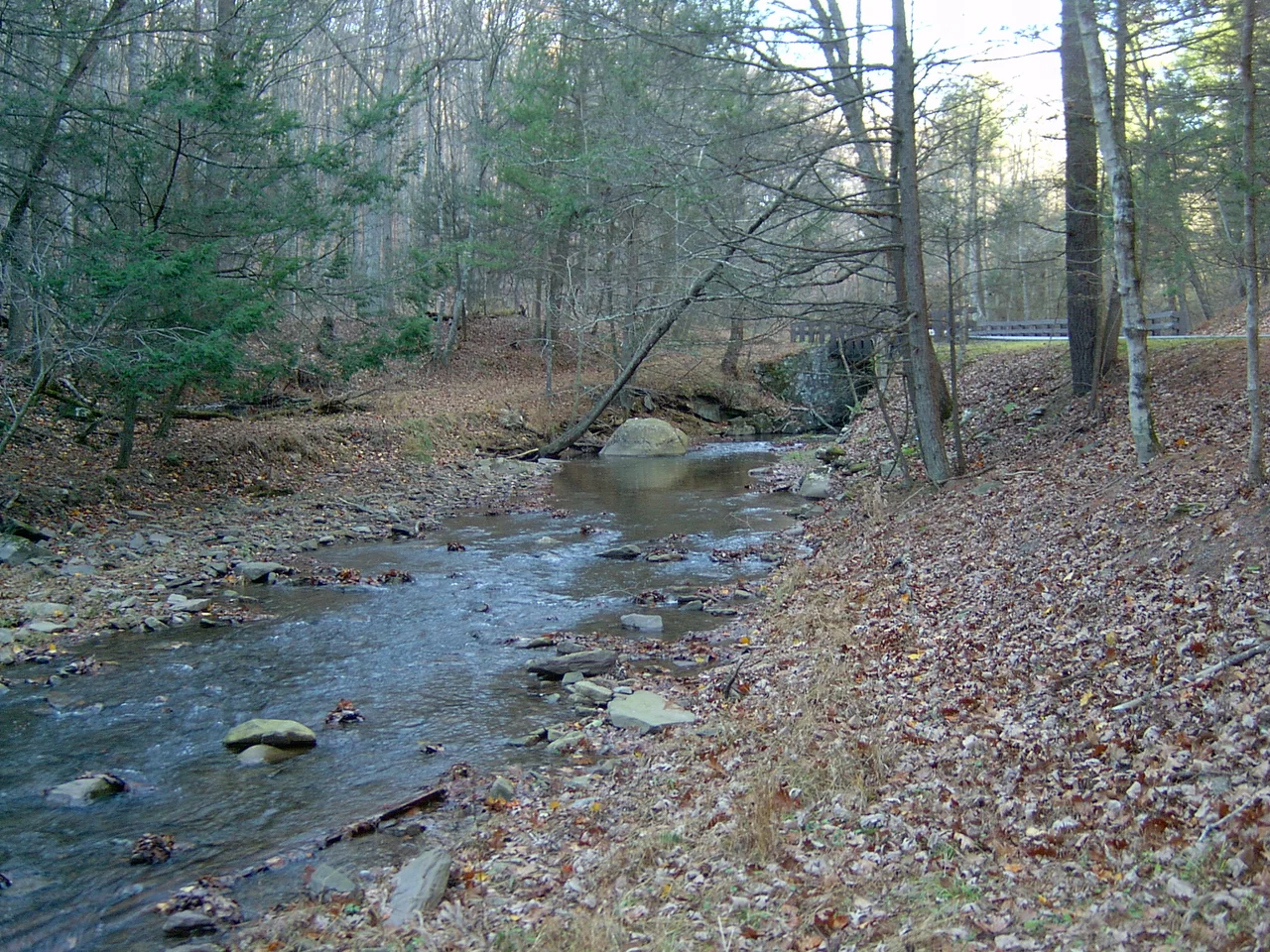

Lost River State Park
Lost River State Park does not touch the Lost River. The name persists from the early 20th century, when borders and naming conventions were less precise, and the park itself sits 2.3 miles west of the actual river. That small geographic curiosity is the first thing rangers explain to visitors. The next thing they explain is why a state park in remote Hardy County, West Virginia, contains a cabin associated with one of the most famous families in American history.
A New Deal Park
The park was established in 1934, in the depths of the Great Depression, as part of a national push to create public recreation while putting young men to work. Civilian Conservation Corps crews cleared trails, built lodges, raised cabins, and laid stone walls across the 3,712-acre property in the mountains around Mathias. The structures they built are still standing - so well built, in fact, that the New Deal Resources in Lost River State Park Historic District was added to the National Register of Historic Places in 2010. The park's hand-cut stone fireplaces, log cabin walls, and trail bridges are the kind of CCC-era work that has, almost without exception, outlasted whatever public buildings came after.
Twenty-Six Cabins and a Pool
Today the park runs as a working recreational facility under the West Virginia Division of Natural Resources. There are twenty-six vacation cabins available for rent, most built in the CCC style or by later state crews using compatible designs. There is a swimming pool, tennis and badminton courts, a volleyball court, an archery range, and an extensive network of hiking trails through the surrounding hardwood forest. Horse stables make the park one of the few in West Virginia where visitors can ride backcountry trails on rented mounts. The amenities are deliberately modest. Lost River was not designed as a resort. It was designed as a state park in the New Deal definition of the term - somewhere working families could afford to spend a week.
The Lighthorse Harry Lee Cabin
Inside the park sits a much older structure: the Lighthorse Harry Lee Cabin, built around 1820 by Charles Carter Lee as a Lee family summer retreat. Charles was the eldest son of the Revolutionary War cavalry commander Henry Light-Horse Harry Lee III, and the older half-brother of Robert E. Lee. The cabin remained in the Lee family until 1879, then changed hands several times until the state of West Virginia acquired it in the 1930s as part of the new park. It was listed on the National Register of Historic Places in 1974 and operates today as a small museum. Standing inside the cabin's single room, surrounded by the same Allegheny forest the Lees once rode through, the connection between a Tidewater Virginia dynasty and these West Virginia mountains stops feeling abstract.
Echoes of the Frontier War
The land around the park has older stories. In 1756, during the French and Indian War, Virginia militia clashed with Delaware and Shawnee warriors under the Shawnee chief Killbuck at a place called The Trough, the seven-mile gorge of the South Branch Potomac just to the north of the park. The Battle of the Trough was one of many bloody encounters that defined the Allegheny frontier during the war, and the Lost River drainage was at the western edge of European settlement at the time. A century later, the Lees built their cabin in country that had been hard-fought over only a generation or two before. A century and a half after that, the CCC turned that same country into a state park. Each layer is still legible if you know where to look.
From the Air
Located at 38.90 degrees north, 78.91 degrees west, near Mathias in Hardy County, West Virginia. From 5,000 to 7,000 feet AGL the park reads as a band of unbroken forest along Big Ridge Mountain, with a few small clearings around the lodge and cabins. The actual Lost River runs in a parallel valley about 2.3 miles east of the park boundary. Nearest airports include Hardy County (W22), Winchester Regional (KOKV), and Front Royal-Warren County (KFRR).
Nearby Stories
- Hoye-Crest 5.1 km away
- Battle of the Trough 6.5 km away
- Allegheny Mountains 8.2 km away
- Willa Cather Birthplace 9.9 km away
- Belle Grove Plantation 12 km away
- Lincoln Homestead and Cemetery 15 km away
- Jones-Imboden Raid 31 km away