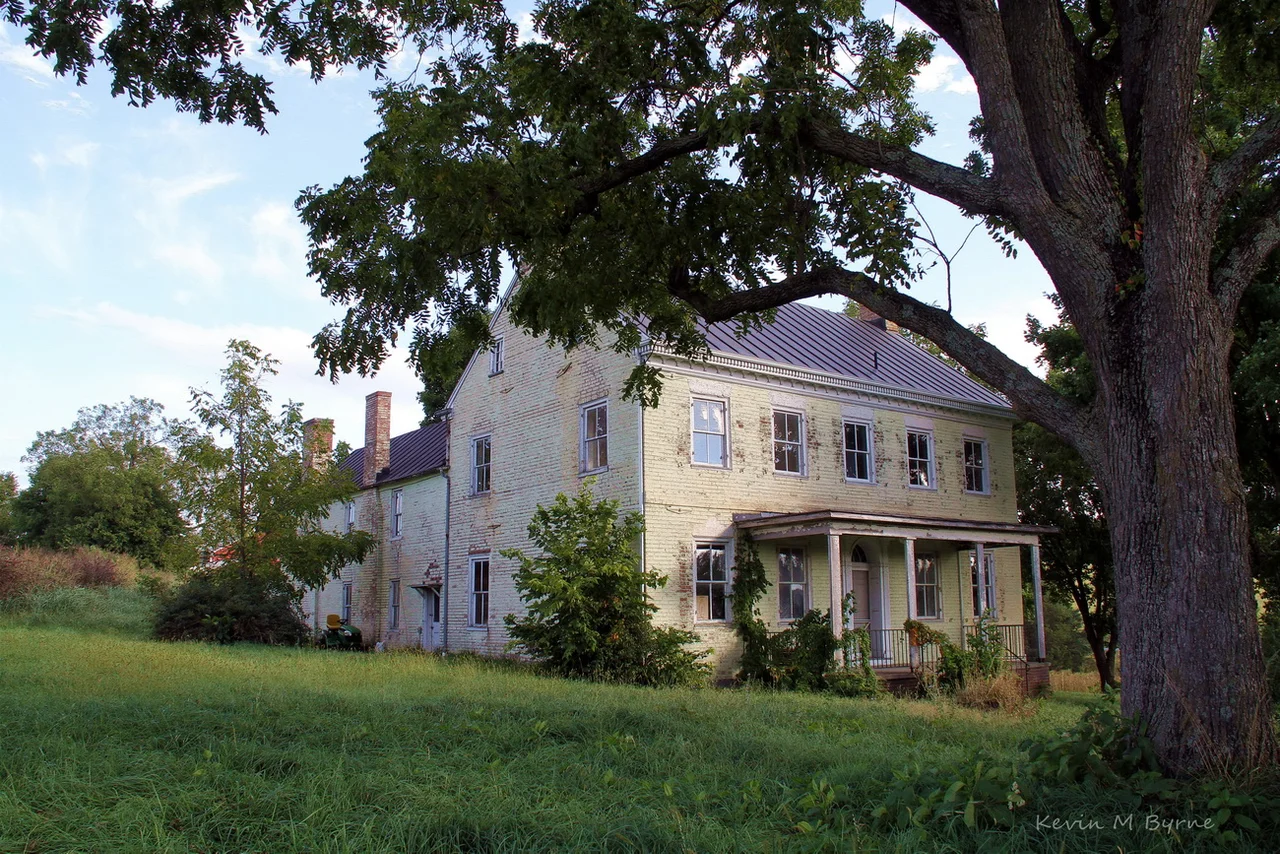

Lincoln Homestead and Cemetery
Abraham Lincoln's great-grandfather is buried in a small family cemetery in Rockingham County, Virginia, on the Shenandoah Valley farm his sons built. So is Queenie, a woman the Lincoln family held as a slave. The two graves are not far apart. The contradiction is not subtle, and it is not new. Five generations of Lincolns rest in the cemetery beside the brick farmhouse built around 1800. The man who would issue the Emancipation Proclamation was born in Kentucky in 1809. The family he came from owned other human beings on the same farm where his ancestors are now buried.
The Virginia Lincolns
The Lincoln family was Quaker by origin, descended from Samuel Lincoln of Hingham, Massachusetts, who arrived in the 1630s. Several generations later, in the early 18th century, John Lincoln - known as Virginia John, the future president's great-grandfather - migrated south to the Shenandoah Valley as part of the wider Scots-Irish and German settlement that filled the Valley in those decades. He acquired land near present-day Broadway, Virginia, and his descendants settled it. His son Jacob built the brick farmhouse around 1800. Another Lincoln son, Abraham (the future president's grandfather), pushed further west to Kentucky, where he was killed by Indigenous people in 1786, leaving his children to be raised on the frontier. One of those orphaned children was Thomas Lincoln. Thomas's son was the 16th President of the United States.
The House Jacob Built
The Jacob Lincoln House at the heart of the homestead is a Federal-style brick farmhouse - two stories, five bays, side-gable roof, with an elaborate wooden cornice featuring Wall-of-Troy molding, corbels, and dentils. A Federal-style doorway frames the entrance. A two-story brick rear ell was added in 1849 and connected to the main house in the early 20th century. The structure has been a private residence throughout its history, occupied by a succession of owners after the Lincoln family eventually sold it. It was added to the National Register of Historic Places in 1972. Most recently, a couple bought the property in November 2019 and completed a major restoration, opening the homestead to occasional public tours and events.
Queenie's Grave
In the family cemetery beside the house is a marker for Queenie, a woman who was enslaved by the Lincoln family. The historical record about her is thin - her age, her birthplace, her family situation, what she did each day on the farm. What is recorded is that she died here and was buried with the family she did not choose. The presence of her grave in the cemetery is unusual and complicated. Many enslaved people in the antebellum South were buried in unmarked graves or in segregated burying grounds away from the families who owned them. The Lincolns' decision to inter Queenie in the family plot - whether out of regard, paternalism, or something more complex - left a marker that researchers have begun to study. The current owners have made interpreting Queenie's life and acknowledging her presence on the property a priority of their restoration work. Her name is on the property tour. Her grave is identified, not hidden.
The Long Reach Back to Springfield
There is no record of Abraham Lincoln ever visiting this farm. By the time he reached the Presidency, his Virginia ancestors had been dead for generations and his immediate family was deeply rooted in Illinois. But the line goes back through this house. Virginia John, born around 1716, would have known a young Abraham only as a great-grandson he never lived to meet. The president whose Emancipation Proclamation freed millions of enslaved people in 1863 came from a family that, three generations earlier, had been participants in the same institution. Standing in the cemetery beside Queenie's marker and the Lincoln family graves is to stand at the precise intersection of those two facts - and to confront an American history less tidy than commemoration usually allows.
From the Air
Located at 38.5597N, 78.8292W in Rockingham County, Virginia, near Broadway in the northern Shenandoah Valley. The brick farmhouse and family cemetery sit in agricultural country along the North Fork of the Shenandoah River drainage. Recommended viewing altitude is 3,500 to 5,500 feet for views of the property and surrounding farmland. Massanutten Mountain rises to the east. Nearest airport is Shenandoah Valley Regional (KSHD) about 25 nm south. Watch for valley haze in summer.
Nearby Stories
- Lighthorse Harry Lee Cabin 5.2 km away
- Grand Caverns 10 km away
- Allegheny Mountains 17 km away
- Belle Grove Plantation 21 km away
- Sinks of Gandy 22 km away
- Montpelier 23 km away
- Bath County Pumped Storage Station 33 km away