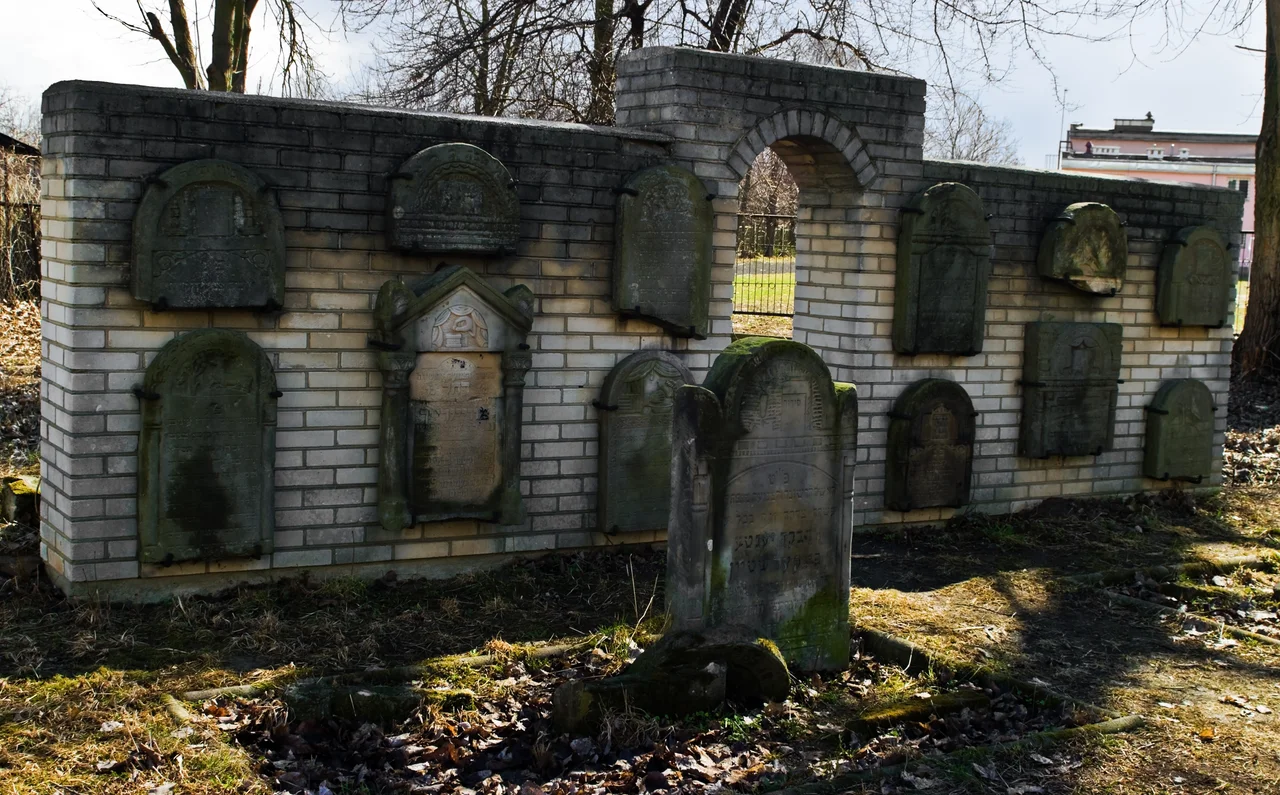

Lubartów Ghetto
On the morning of October 12, 1939, just over three weeks after the German army had entered the small town of Lubartów north of Lublin, every Jew in town was ordered to assemble in the market square. The square was ringed with machine guns. While the Jewish community of roughly several thousand people stood there all day under armed watch, German troops moved through their houses and shops, taking what they wanted. This was the first day. The Lubartów Ghetto did not formally exist yet. The mechanism that would end with thousands of Lubartów Jews dying in the gas chambers at Bełżec had begun.
An Old Jewish Town
Before the war, Lubartów had been a Jewish town in the way many small Polish towns were Jewish towns: not exclusively, but profoundly. Jews had lived there since the sixteenth century. By 1939, after decades of emigration to America and elsewhere, the Jewish share of the population had fallen to roughly 42 percent. Even at that reduced figure, Jewish life shaped the streets, the markets, the rhythm of the week. The German army arrived on September 19, 1939. By early November, deportations had begun: Jews from Lubartów were forced out to the nearby villages of Firlej, Ostrów Lubelski, and Kamionka. Most were exiled from their own town until September 1940. A small number were kept behind to work for the German army.
The Judenrat
A Judenrat, the German-imposed Jewish council that the occupiers used to run the ghettos through Jewish hands, was set up in late 1939. Its first president, Jakub Modko Lichtenfel, did not last long. He was replaced by Dawid Perec. The final council had five members whose names should be remembered: Moshe Joel Edelman as president, Shlomo Ber Ciesler as vice president, Izrael Ratensilber, Menashe Kosman, and Jechiel Weinberg. They administered a ghetto that grew through the early 1940s as the Germans funneled Jews into Lubartów from elsewhere. A thousand Jews from Ciechanów in northern Poland arrived. By May 1942, some 2,421 Slovakian Jews had been deported to Lubartów, swept up under the agreement between Slovakia's collaborationist government and Berlin. Around 3,500 people were now packed into housing around the town's two old marketplaces, where a communal kitchen tried to keep them alive.
The Trains to Bełżec
The first deportation to a death camp left Lubartów on April 9, 1942, the last day of Passover. Eight hundred Jews who did not have work cards were ordered to the railway station. They were loaded into cattle cars and sent to Bełżec, the extermination camp roughly 130 kilometers to the southeast where the only purpose was to murder Jews on arrival in carbon monoxide gas chambers. The killing at Bełżec was efficient enough that almost no one survived to describe it; of the roughly half a million people murdered there, fewer than ten are known to have lived through it. The second and final transport from Lubartów to Bełżec went on October 11, 1942. Three thousand people were sent that day. The ghetto, after that, was effectively empty. The members of the Judenrat and their families were deported to nearby Łęczna and shot in November 1942. Jews who had been kept alive to work for the German gendarmerie were murdered on January 29, 1943.
Helpers and Survivors
A few names survived because of acts performed at terrible cost. A Pole named Dąbrowski was executed by the Germans for the crime of helping Jews; he is one of many Polish neighbors of Lubartów's Jews who took the same risk and paid the same price. Others lived. Frank Bleichman, who had grown up in the Lubartów area, escaped and joined the Jewish partisan units operating in the surrounding forests; after the war he settled in the United States and gave testimony for decades. The number of Lubartów Jews who survived the war is small, and most who did had escaped before the deportations or had been hiding in the countryside with Polish families willing to risk death to shelter them. The town today has no Jewish community. The ghetto's old marketplaces are still there. The market square where the Jews of Lubartów spent that first October day under machine guns is still where the town gathers.
From the Air
Lubartów lies at 51.47°N, 22.60°E in the Lublin Voivodeship of eastern Poland, about 25 km north of the city of Lublin along the Wieprz river valley. The two old market squares around which the ghetto was concentrated are still the heart of the town, visible from low altitudes. Bełżec, where most of Lubartów's Jews were murdered, lies about 130 km to the southeast. Nearest airport: Lublin Airport (EPLB) about 30 km southwest in Świdnik, with Warsaw (EPWA) the nearest major hub.
Nearby Stories
- Battle of Wytyczno 4.8 km away
- Poniatowa Concentration Camp 26 km away
- Damachava Ghetto 28 km away
- Zamość Fortress 49 km away
- Brest Castle (Belarus) 81 km away
- Battle of Komarow 81 km away
- Battle of Warsaw (1831) 99 km away
- Krakow 197 km away