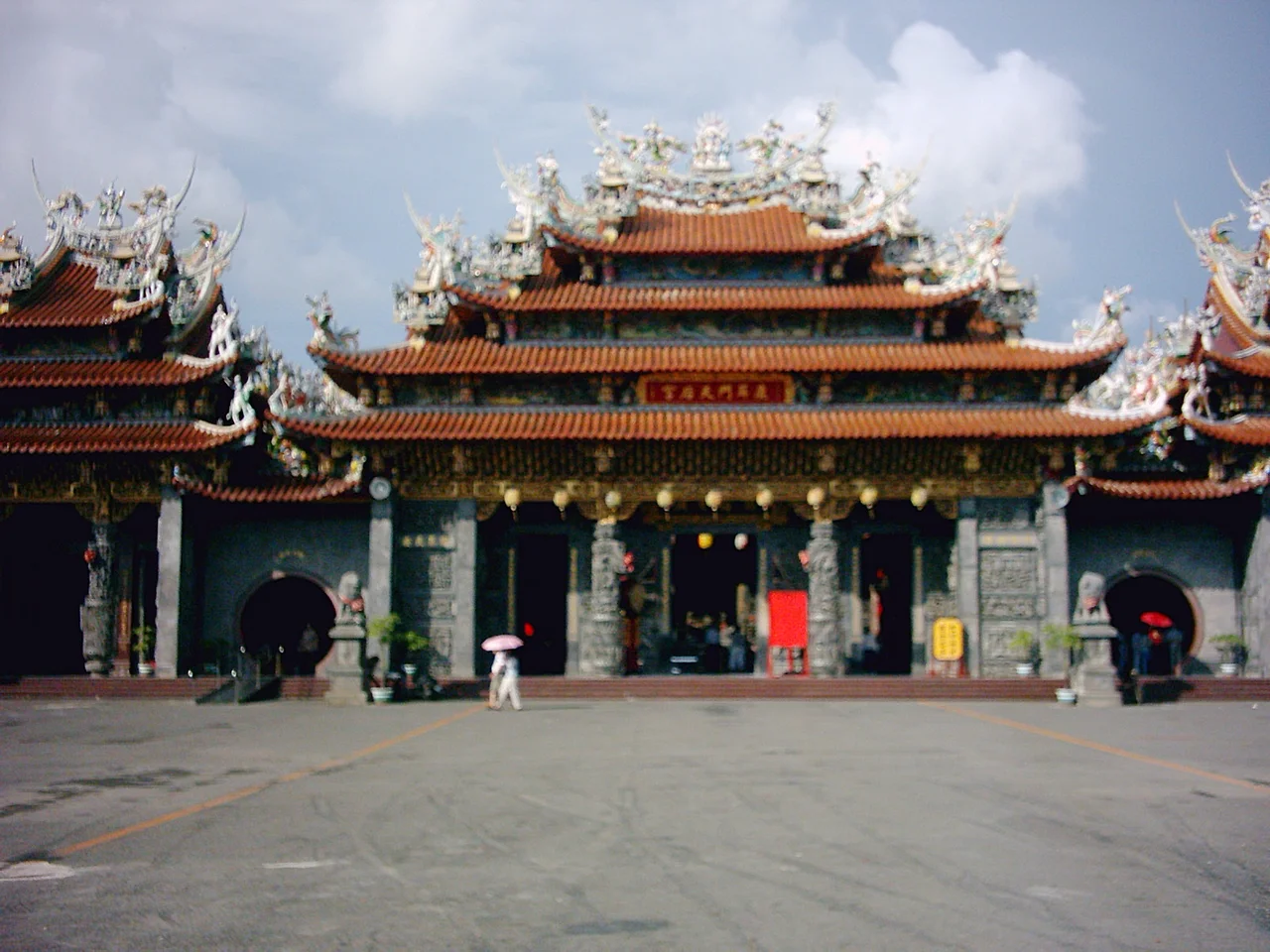

Luerhmen History and Culture Museum
The estuary had ears. That is what the old name says: Luerhmen, meaning Deer Ear Gate, describes the shape of the water passage — two curving sandbars like the ears of a deer — through which Koxinga's fleet reportedly sailed in 1661 to begin the expulsion of the Dutch from Taiwan. Whether the name comes from the sandbars or from something else, Luerhmen has been a charged place ever since, a location where the origin story of Chinese Taiwan is believed to have literally begun. The Luerhmen History and Culture Museum, a complex in Tainan's Annan District, exists to tell that story — though, as with most origin stories, two versions are competing for the title.
What the Name Holds
Luerhmen's name — Deer Ear Gate — comes from the shape of the estuary entrance, a narrow channel through the coastal sandbars north of Tainan that once connected the Taiwan Strait to an inland lagoon. Sailing through it in the 17th century required local knowledge: the channel was shallow, shifting, and would have been nearly impassable for large ships without a guide. According to the temple tradition the museum commemorates, Mazu herself — the sea goddess venerated across the Chinese coast — appeared in luminous form to lead Koxinga's fleet safely through the passage. The landing that followed changed Taiwan's history: Koxinga's forces besieged Fort Zeelandia and after nine months compelled the Dutch to surrender, ending European colonial rule and establishing a short-lived Chinese kingdom on the island.
The Museum and Its Rival
The cultural complex includes the Luerhmen Tianhou Temple, dedicated to Mazu and said to have been built in 1604, well before Koxinga's arrival. The museum itself houses the Luerhmen Residence, constructed in southern Fujian architectural style, and the Zheng Cheng-gong Heritage Museum — Zheng Cheng-gong being Koxinga's formal Chinese name. Together they constitute a kind of pilgrimage site for visitors interested in the founding moment of Han settlement in Taiwan. But a short distance away stands a rival institution: the Orthodox Luermen Shengmu Temple. Since 1956, the two temples have disagreed publicly and heatedly about which one marks the actual spot of Koxinga's landing. Both claim to be the spiritual successor to the original shrine he established or visited. The dispute is unresolved and shows no signs of resolution.
Women as Fairies, a Newer Tradition
Among the museum complex's living practices, one stands out for its unusual character. Since the 1990s, the Luerhmen Tianhou Temple has invited women to serve as what the temple calls 'fairies' — participants responsible for performing religious rituals during the first four days of the Chinese New Year. The role is ceremonial and prestigious within the temple community. It represents a relatively recent elaboration of older traditions rather than an ancient practice: New Year rituals at Taiwan's Mazu temples have always been significant, but this particular form emerged within living memory. For visitors who arrive during the lunar new year period, the performances are the most visible public expression of the temple's devotion.
Fujian Architecture on a Taiwan Shore
The Luerhmen Residence within the complex is built in the style of southern Fujian, the coastal Chinese province from which most of Taiwan's Han settlers originated. Southern Fujian architecture is distinctive: curved roof ridges that turn up sharply at the ends, red brick walls, carved wooden screens, and an interior organization around a central courtyard or hall that serves both functional and ritual purposes. In the context of Annan District — a neighborhood that sits on what was once the outer edge of the Tainan lagoon system, a landscape of reclaimed mudflats and fish ponds — the Fujian-style buildings feel deliberate. They say: we came from there, and we brought what mattered with us.
Flying Over the Lagoon's Ghost
The museum complex sits at approximately 23.038°N, 120.125°E in Annan District, on the flat coastal plain northwest of central Tainan. From the air, the surrounding landscape tells the same story as the museum below: this is reclaimed land, the former seabed of the Tainan Lagoon that has been progressively filled and farmed over three centuries. Fish ponds and irrigation channels still pattern the ground in the area near Luerhmen. Kaohsiung International Airport (RCKH) is roughly 30 kilometers to the south-southwest; Tainan Airport (RCNN) is about 12 kilometers southeast. Flying in from either direction at low altitude on a clear day, the coast here is visibly dynamic — the boundary between land and water is negotiated rather than fixed, exactly as it was when Koxinga's fleet worked its way through the deer-ear channel.
From the Air
Located at 23.038°N, 120.125°E in Annan District, Tainan, on the flat coastal plain northwest of the city center. Nearest major airport: Kaohsiung International (RCKH), approximately 30 km south-southwest. Tainan Airport (RCNN) is roughly 12 km southeast. The surrounding area shows the reclaimed wetland character of coastal Annan — fish ponds and irrigation channels visible from low altitude. Best viewed from 1,500–2,500 feet on clear-weather approaches.
Nearby Stories
- Battle of Penghu 1.2 km away
- Xiaolin Village Memorial Park 7.1 km away
- Maolin National Scenic Area 12 km away
- Fenqihu 18 km away
- Republic of China Air Force Academy 23 km away
- Southern Branch of the National Palace Museum 26 km away
- Penghu Air Raids 42 km away
- Daya Bay 512 km away