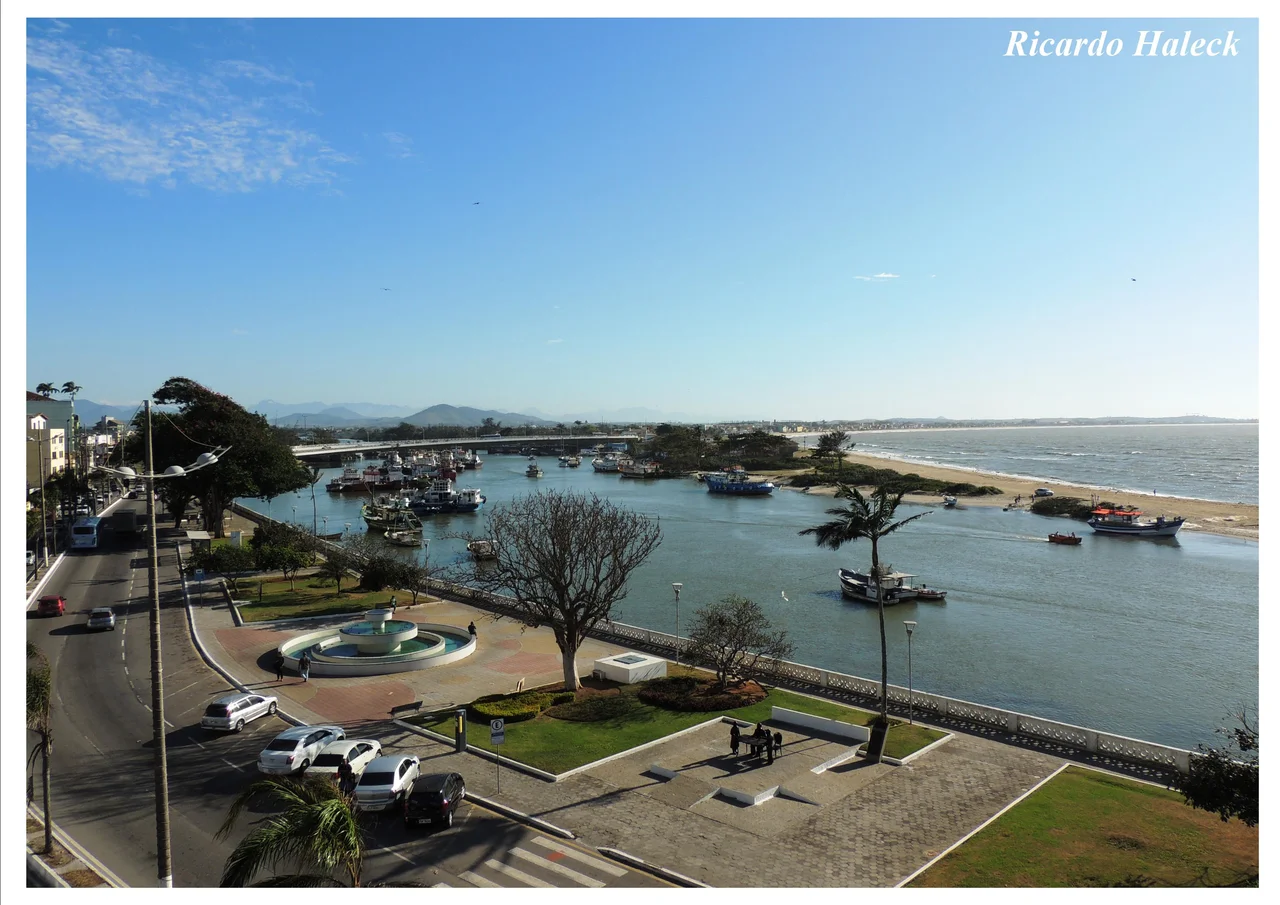

Macaé
They call it the City of Petroleum. Cidade do Petróleo. Macaé, 180 kilometers northeast of Rio de Janeiro along the Atlantic coast, is where the helicopters take off for the Campos Basin oil rigs offshore - a small city that became, almost overnight, the onshore headquarters for Brazil's largest offshore oil industry. Since 1997, its economy has grown 600 percent. Its population has tripled since Petrobras opened operations here in the 1970s. An expatriate community of about a thousand people, mostly English speakers, has settled around the oil and gas trade. A Norwegian sister-city relationship with Stavanger, itself an oil boomtown, is not coincidence. What was a small fishing and tourism village fifty years ago is now one of the fastest-growing cities in Brazil.
Before the Oil
Macaé was here long before the derricks. The town was established in 1813, a fishing port and colonial outpost on the mouth of the Macaé River, and it stayed that way for more than a century and a half. Tourism and fishing made most of its revenues through the 1970s. Its beaches at Cavaleiros and Pecado - the latter's name meaning 'sin' - drew visitors from Rio for weekend escapes. The interior of the municipality contained small rural towns like Sana and Frade, where the Atlantic Forest folded down the slopes of the Serra do Mar. Macaé's most famous son was Washington Luís, Brazil's 13th president, born here before becoming the last president of the Old Republic. When the military overthrew him in the 1930 revolution, it ended an era - but the town he was born in was still, for decades, a quiet coastal place.
Petrobras Arrives
The transformation began in the 1970s when Petrobras, the Brazilian state oil company, chose Macaé as its base for operations in the Campos Basin - the massive offshore petroleum field about 100 kilometers off the coast. The Campos Basin would become Brazil's main source of domestic crude. Macaé became the onshore infrastructure point: the warehouses, the supply ships, the helicopter terminals, the subcontractors, the engineers. Petrobras facilities spread across the town. More than four thousand companies followed. The population tripled. High-end hotels rose where there had been none. Benedito Lacerda Airport, which had been a quiet regional strip, now operates constant helicopter traffic to the offshore platforms - more rotorcraft movement per hour than most airports in Brazil.
The Numbers of a Boom
The statistics are startling. The economy has grown 600 percent since 1997. The tax generation of new jobs grew 13.2 percent per year, the highest in the interior of Rio de Janeiro state. Per-capita GDP in 2007 reached R$37,667, 200 percent above the national average. Average salaries run 8.2 times the minimum wage, making Macaé the highest-wage city in the state. The population, estimated at 194,413 in 2009, rose to roughly 261,501 by 2020. Schools opened to meet the demand: UFRJ, UFF, FEMASS, Faculdade Estácio de Sá all established campuses here, teaching business, medicine, and engineering to a workforce trying to keep pace with a city that was building itself faster than it was planning.
The Forest That Remains
Growth has not erased the older Macaé entirely. The municipality still holds part of the Central Rio de Janeiro Atlantic Forest Mosaic of conservation units, created in 2006. It contains part of the União Biological Reserve, which protects a population of endangered golden lion tamarins - the small orange-furred monkey that has become one of Brazil's conservation success stories. The inland rural communities of Sana and Frade, tucked into the folds of the Serra do Mar, remain quiet mountain getaways for Macaé residents wanting escape from the helicopter traffic. But the balance has shifted. The city invests little in tourism now, compared to its oil operations. Its famous beaches, Cavaleiros and Pecado, have not grown the way the industrial districts have.
A City Not Like the Others
Macaé is one of the stranger cities in Brazil. A port town with English-speaking bars because the oil rigs run on English. A fishing coast where helicopters outnumber fishing boats in the harbor at dawn. A sister city to Stavanger in Norway and Fara Filiorum Petri in Italy, the two relationships reflecting what is now the two strands of the local economy - oil from the north, Italian diaspora from the south. The American football league that launched here in 2013, the Macaé Oilers, played its first games on the beaches, naming themselves for the industry that paid the bills. The team won state championships in 2015 and 2016. Even the sports culture of the city wears the oil industry on its helmet. This is what a boomtown looks like when the boom has lasted long enough to have a boomtown culture of its own.
From the Air
Located at 22.37°S, 41.79°W on the Atlantic coast of Rio de Janeiro state, Brazil, 180 km northeast of Rio de Janeiro city. Best viewed from 3,500-5,500 ft AGL; the coastline is flat and the city spreads along it, with Benedito Lacerda Airport (SBME) distinctive for its constant helicopter traffic serving Campos Basin offshore platforms. Beyond the built-up areas, the Serra do Mar rises inland with remnant Atlantic forest and the União Biological Reserve. Campos Basin oil platforms are visible offshore on clear days, roughly 80-100 km out to sea.
Nearby Stories
- Itaboraí Formation 8.2 km away
- Nova Friburgo 38 km away
- Paraiba do Sul 61 km away
- Leopoldina, Minas Gerais 83 km away
- Rio de Janeiro 104 km away
- Christ the Redeemer: The Statue Built from Soapstone Carried Up a Mountain 162 km away
- Petrobras 36 167 km away
- Grytviken 3536 km away