
Petrobras 36
At 12:22 AM on 15 March 2001, a tank ruptured in the starboard aft column of the largest oil platform in the world. At 12:39 AM, seventeen minutes later, the fumes that escaped from it ignited and killed eleven men. A semi-submersible production unit named Petrobras 36, called P-36 for short, had been working the Roncador field 125 kilometers off the coast of Brazil for less than a year. It sat in water 1,360 meters deep - the kind of depth that in 2001 was still considered an engineering frontier. Five days after the explosion, after Dutch salvage teams worked through the nights pumping nitrogen and compressed air into flooded compartments to keep the rig upright, the platform gave up and rolled over. It sank at 11:40 AM on 20 March, in view of the thirteen rescue ships that had gathered around it. The immediate cause was a leaking valve and a vented tank that should not have been isolated the way it was. The deeper causes, investigators would later conclude, lived in the management culture of a state oil company running faster than its own safety systems could keep up with.
The Rig That Had Several Lives
The platform was built at the Fincantieri shipyard in Genoa between 1984 and 1994. It was originally called SANA 15,000, a speculative project built without a committed buyer. A Friede and Goldman L-1020 Trendsetter design, rated for depths of 500 meters. When Midland and Scottish Resources acquired its parent company in 1990, the rig was renamed Spirit of Columbus for a planned development of the Emerald field in the North Sea - a development that proved commercially unviable. Petrobras took over. After the Marlim Sul field was considered and set aside, the platform was assigned to Roncador. A major conversion project started in March 1997, just five months after the oil field was discovered - an aggressive schedule that investigators would later flag as a contributing factor. The Brazilian contractor Maritima Petroleo Engenharia, owned by Bolivian entrepreneur German Efromovich, was selected without competitive bidding. Conversion began in Levis, Quebec. When the Canadian shipbuilder Davie went bankrupt, work had to be completed at the Maua shipyard in Niteroi. Production began on 16 May 2000. The platform operated for just over ten months.
What Broke and What Caught Fire
The starboard aft column held an emergency drain tank - an EDT - a 450 cubic meter vessel meant for temporary storage of water and oil during maintenance on the topsides. In mid-March 2001, that tank had been mechanically isolated because its pump had been pulled for maintenance. A blind flange had been placed on the atmospheric vent pipe. But a valve that was supposed to be closed was passing - leaking. Oil from the high-pressure production header above began to flow into what should have been a sealed, empty tank. Water from the port aft emergency drain pump flowed into it too when that pump was started on the evening of 14 March. Over roughly two hours, pressure built in a vessel never designed to hold pressure. At 12:22 AM the shell failed. Water and oil burst out. The 18-inch seawater line running along the column wall failed in the event, flooding the column. Firewater pressure dropped, so the control system's safety logic started the firewater pump in the damaged column - making things worse. Ventilation dampers that should have closed automatically failed. Manholes that had been left open for maintenance let water pour deeper into lower compartments. The flammable vapors from the ruptured tank climbed through open watertight doors and ventilation ducts up into the main deck. At 12:39 AM they ignited. Eleven Petrobras employees who had responded to the first explosion were killed - ten immediately, one a week later.
Five Days of Trying to Save It
One hundred and seventy-five people were on the platform when the gas exploded. The 85 crew members began evacuating non-essential personnel at 1:44 AM, using a crane and a transfer basket. In two and a half hours, 138 workers were moved 12 kilometers to the FSO P-47 that served the field. By 6:03 AM the platform was tilting at 6 degrees, and everyone remaining was lifted off by helicopter. The tilt reached 20 degrees by 8:15 AM. Hawseholes - the openings where anchor chains ran - began taking water, which made the later sinking inevitable. A team of 350 engineers worked on the listing rig over the next days. Twelve vessels stood by. On 17 March the Dutch marine salvage firm Smit International arrived with 50 tons of equipment. They began pumping nitrogen at 200,000 liters per hour into flooded compartments, trying to displace the water. For a while it worked - the tilt reduced from 30 to 24 degrees. They switched to compressed air on 18 March. By the morning of Monday 19 March the rig had started sinking again and was abandoned due to bad weather. At 11:40 AM on 20 March, P-36 rolled completely and went down in 1,360 meters of water, where it now lies upside down on the seafloor. The bodies of the eleven workers killed in the blast went with it - their compartment had flooded before any recovery was possible. Petrobras paid the families the equivalent of lifetime salaries and funded their children's education through college.
What the Investigations Found
Three major investigations followed. The National Petroleum Agency and Brazilian Navy released their joint report in July 2001. The Minas Gerais engineering council issued its own report in October 2001. The Chamber of Deputies commission published its findings in March 2002. None of them pointed to a single cause. Together they pointed to a pattern. Storing water contaminated with hydrocarbons in the emergency drain tanks had become normal practice, contrary to the operations manual. The hazardous area classification of the column interiors was optimistic - gas detectors that should have been there were not. When the tank vented, no one on the emergency response team understood the space they were entering could already be full of flammable gas. In the 17 minutes between the tank rupture and the gas explosion, 1,723 alarms went off with no prioritization system to guide operator decisions. The company's Oil Workers Union blamed neoliberal management - aggressive cost cutting, the downsizing of Petrobras from 62,000 employees in 1989 to 34,000 by 2001, heavy reliance on outsourced contractors with thin training. Eighty-one workers had died in Petrobras operations in the three years leading up to the disaster. CEO Henri Reichstul resigned later in 2001. The total damages approached US$1 billion, with the salvage operation alone costing an estimated US$100 million. One year earlier, Petrobras had received a Distinguished Achievement Award from the Offshore Technology Conference for the innovations built into P-36.
What the Accident Changed
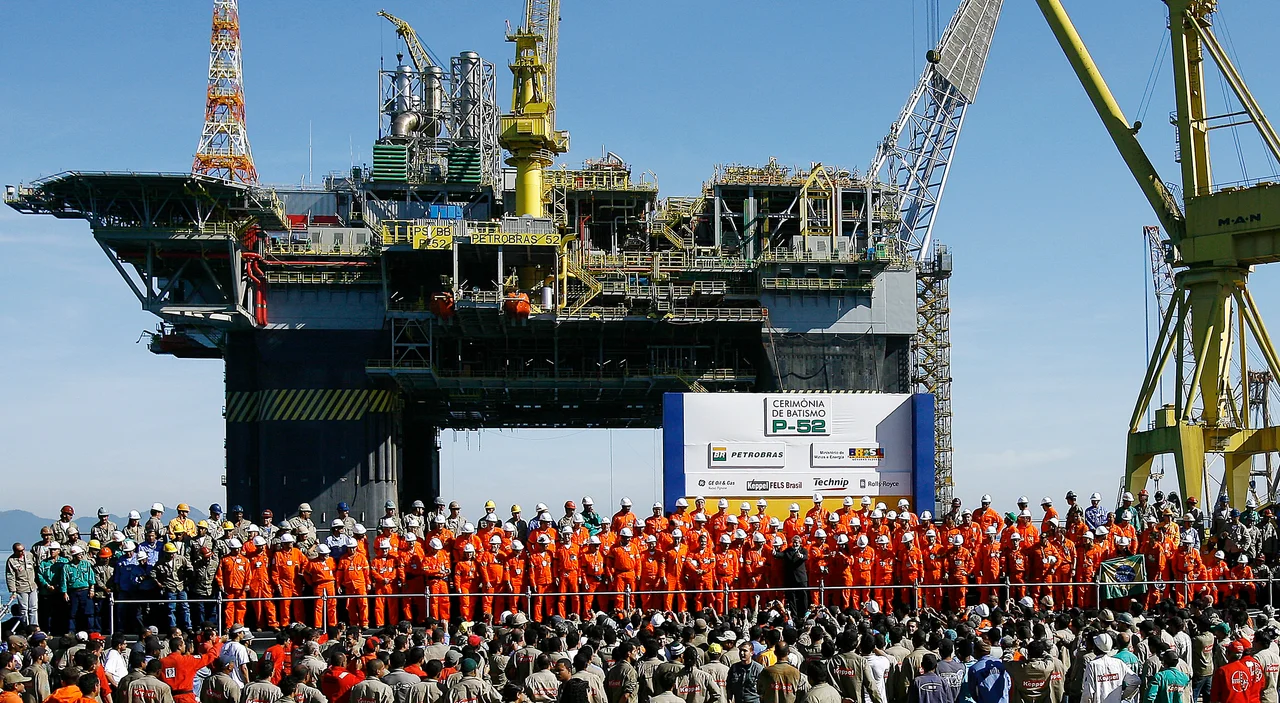
The P-36 disaster became a catalyst for reform of Brazilian offshore oil and gas regulation. In 2007 the ANP issued Resolution 43, establishing an operational safety regime for offshore drilling and production installations based on seventeen key management practices. Internationally, some rule-making bodies proposed banning the storage of hydrocarbons in the columns of semi-submersible platforms entirely - recognizing that what had seemed like a clever use of available volume had created exactly the conditions that doomed P-36. New requirements emerged for additional reserve buoyancy installed on the upper decks. In industry process safety training, the accident became a case history - studied alongside Piper Alpha and Deepwater Horizon as an illustration of how small procedural failures chain into catastrophe. Petrobras replaced P-36 with FPSO Brasil, leased from SBM Offshore, which began operating at Roncador in December 2002. In November 2007 the newer semi-submersible P-52, built in Singapore and Brazil, came online. FPSO P-54 followed in December 2007. Roncador kept producing. The platform that sank lies where it fell, in 1,360 meters of water on the Campos Basin seabed, with the eleven workers who died in the gas explosion. They have names on a memorial. The mistakes that killed them have entries in process safety textbooks. The deepwater frontier that P-36 helped pioneer is now routine, in part because of what its loss taught the industry that followed it.
From the Air
Located at 22.06 degrees south, 39.55 degrees west in the Campos Basin, approximately 150 km off the coast of Rio de Janeiro state, Brazil. This is the resting position of the sunken platform in 1,360 meters of water. Nearest airports serving the offshore oil industry: Macae (SBME) regional airport and Campos (SBCP). Cruise altitudes of 5,000 to 10,000 feet over this stretch of the South Atlantic will show offshore platforms active in the Campos and Santos basins, service vessels, and the dense maritime traffic supporting Brazil's offshore oil production.
Nearby Stories
- Paraiba do Sul 99 km away
- Itaboraí Formation 157 km away
- Guarapari 161 km away
- Macaé 176 km away
- Três Picos State Park 315 km away
- Roncador Field 431 km away
- SS Principessa Mafalda 557 km away
- Jequitinhonha River 691 km away