.jpg)
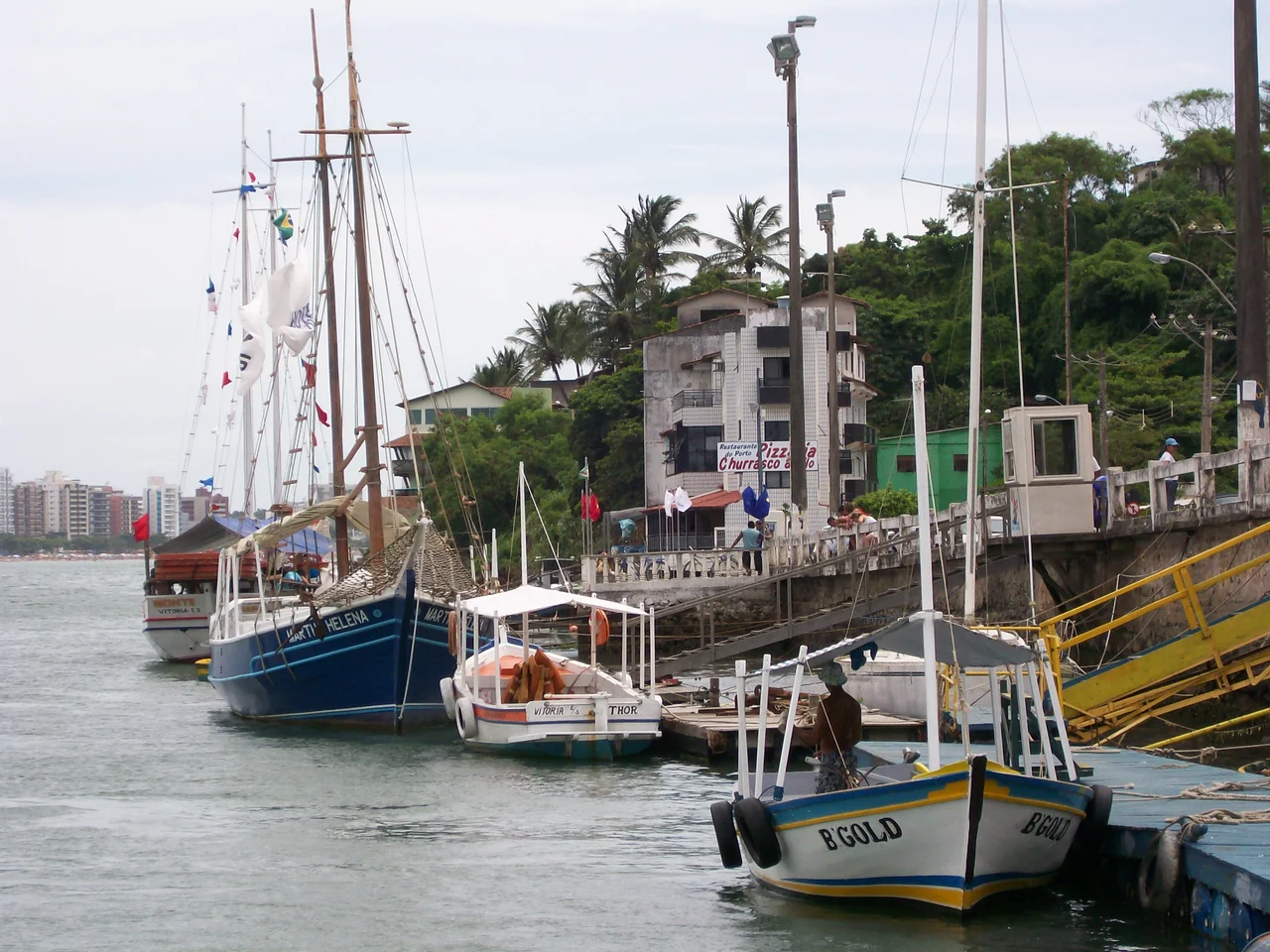
Guarapari
The population card for Guarapari reads 127,000, and that number lies by a significant margin between Christmas and Carnival. When the high season opens, cars from Minas Gerais and São Paulo pour down the Rodovia do Sol, every furnished apartment gets let, and the town's 127,000 swells to something closer to half a million. People from landlocked Minas Gerais state love Guarapari the way people from landlocked Colorado love coastal destinations: fiercely, predictably, and with a specificity about beach umbrellas and cold beer. The rest of the year, the kiosks along Praia do Morro cover their stools and the town waits.
The Airport Problem, Solved
Guarapari has a small airport with no regular commercial passenger traffic, which sounds inconvenient until you understand the alternative. Vitória's Eurico Salles Airport, formally SBVT, sits about 53 kilometers north and handles LATAM, Gol, Azul, and smaller carriers with daily flights from most Brazilian state capitals. From the airport, two direct Alvorada buses run daily to Guarapari for about R$20, taking around 90 minutes. A taxi costs roughly R$150. The cheaper workaround involves taking an Alvorada bus to Vila Velha, changing to a local bus at the Vila Velha terminal, and continuing to the airport for about R$10 total and two hours of your day. The system is Brazilian in its layers: slow, workable, and with just enough friction to teach newcomers patience.
The Bus Station That Doesn't Quite Fit
In 2015 Guarapari opened a new long-distance bus station that reviewers have described as possibly the most modern and definitely the most shopping-mall-like in Brazil. Its builders did one thing wrong: they put it seven kilometers out of town, on the BR-101 highway. For long-distance travelers this means another connection to reach the beach. The workaround most locals use is to take buses that stop in Vila Velha instead, or to use the hourly coastal-route service to Vitória that runs directly through town until 9 PM and bypasses the shopping-mall station entirely. The Kaissara coach to Rio de Janeiro runs three times daily, an eight-hour trip via Campos and Niteroi for about R$100. For distances within the state, the local bus system handles almost everything.
Praia do Morro
The main beach is Praia do Morro and it is where Guarapari happens. Kiosks line the sand at regular intervals, each with its own specialty — Quiosque 16 runs live music most nights until 10 PM, Quiosque 40 hosts live pagode every Friday and Sunday courtesy of Restaurante Janaína — and caipirinhas, beer, and coconut water flow through all of them without interruption. At the north end, a small nature reserve contains a 1.5-kilometer trail leading to a deserted beach that feels almost wrong after the crowds at the main stretch. Windsurfing and sailing gear rent from a stand near Quisque 55, along with kayaks and lessons. Taxis on the beach don't use meters; a table of fixed prices between neighborhoods should be posted somewhere, though locating it is sometimes an adventure.
The Quarry Nightclub
Cut short walk from Praia do Morro, in the abandoned workings of an old stone quarry, is Pedreira Adventures — an outdoor adventure-park-meets-event-venue that Wikivoyage rates as one of the best high-season party settings in Espírito Santo. Dance parties happen against backdrops of quarry walls, the acoustics doing odd things to electronic music, the crowds moving between zip lines and bars and rappel descents. The quarry itself was cut into the granite hills behind the coast, part of the stone industry that once defined parts of Espírito Santo's economy. Its transformation into a venue reflects the broader arc of the region: extractive industries closing, tourism filling the space, not always gracefully, but often with surprising imagination. Nightlife also concentrates in Meaípe, a fishing-village-turned-dining-destination just south of the main town.
Between Carnival and Carnival
The rhythm of Guarapari is seasonal, and the seasonal rhythm is Carnival. The fervor runs from Christmas week through Carnival, with smaller school-holiday peaks during the year. Between those periods the town shifts mode: restaurants close earlier, some kiosks shutter entirely, real estate agencies on every downtown corner offer short-term rentals at prices that plummet outside peak. For visitors who want Brazilian beach life without the mosh-pit of peak season, the shoulder months are generous. For visitors who want the full Brazilian beach experience, with pagode until dawn and enough caipirinhas to confuse a sunset, high season delivers. Guarapari is not trying to be anything other than this. The next stops on the coast — Vitória with its harbor and nightlife, Vila Velha with its hilltop Convento da Penha, Domingos Martins in the German-colonized hills above — all sit within an hour or two, extending the trip in whichever direction curiosity pulls.
From the Air
Located at 20.66°S, 40.51°W on the coast of Espírito Santo, 47 km south of Vitória. Closest airport is Vitória's Eurico de Aguiar Salles International (SBVT). Guarapari's own small airport has no scheduled service. Coastal access via BR-101 and ES-060 (Rodovia do Sol). The town is identifiable from cruising altitude by its bay, the white crescent of Praia do Morro, and the islands and rocky headlands offshore. The Paulo César Vinha State Park and Concha d'Ostra Reserve lie along the coast south of town.
Nearby Stories
- Moscoso Park 29 km away
- Mutum, Minas Gerais 73 km away
- Paraiba do Sul 88 km away
- Linhares 110 km away
- Feliciano Miguel Abdala Private Natural Heritage Reserve 126 km away
- Muriaé 130 km away
- Petrobras 36 138 km away
- São Mateus, Espírito Santo 217 km away