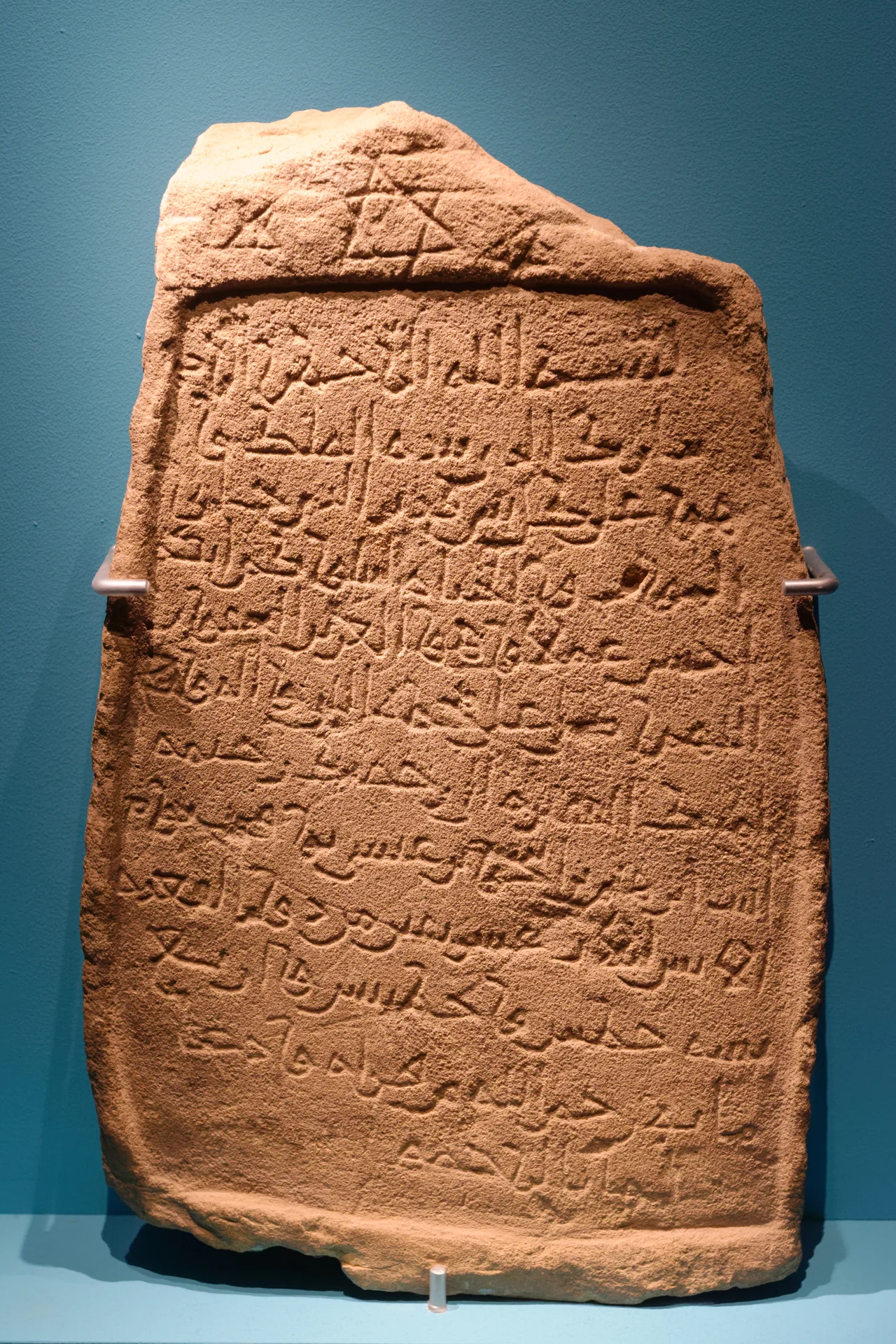

Makuria
In 651 CE, a Muslim Arab army arrived outside the walled citadel of Dongola expecting another swift conquest. The previous decade had seen Islamic forces sweep across Egypt and much of the Byzantine Near East. But the Nubian archers who defended this Christian kingdom shot so accurately that Arab chroniclers remembered them as the Pupil-Smiters -- men who reportedly aimed for the eyes. The catapults bombarding the citadel did damage without breaking through. When the siege ended, the two sides did something unusual: they negotiated. The Baqt treaty that emerged would govern peaceful coexistence between Christian Makuria and Muslim Egypt for more than six centuries. Few African kingdoms lasted as long, and none engaged the Islamic world on such extended terms of equality.
Rising from Kush
The kingdom emerged from the long decline of the Kushite empire at Meroe. By the late fifth century, one of Makuria's earliest kings had moved his power base from Napata down the Nile to Dongola, founding what would become one of medieval Africa's great urban centers. Contacts with Byzantium came next. Emperor Justinian sent missionaries in the 530s; his wife Theodora sent her own. The John of Ephesus account tells how Theodora's Miaphysite envoys reached Nobatia first, while the chronicle of John of Biclar records that around 568 Makuria had received the faith of Christ. Unlike Nobatia to the north and Alodia to the south, Makuria initially embraced Chalcedonian Christianity, the Byzantine imperial creed. A Makurian delegation arrived in Constantinople in 573 bearing ivory and a giraffe. By the early seventh century Makuria had absorbed Nobatia, extending its frontier north to Philae at the First Cataract.
The Baqt and the Long Peace
The treaty that followed the failed Arab siege was unusual even by medieval standards. Muslim Egypt agreed to supply grain, wheat, textiles, and wine. Makuria agreed to supply 360 enslaved persons per year. The exchange was understood as trade between equals, not tribute from a defeated people. Arabs and Nubians received mutual protections in each other's territory. When the Abbasid caliph in 835 demanded fourteen years of missed payments -- more than 5,000 enslaved persons -- the Nubian crown prince Georgios traveled to Baghdad, impressed the court with his learning, and negotiated the debt away entirely. He returned to Dongola and built a cruciform church 28 meters tall, the largest building in the kingdom. A new Throne Hall rose beside it, its Byzantine-influenced architecture a quiet statement about whose imagination this place was made from.
The Golden Centuries
Between the ninth and eleventh centuries Makuria flourished. Scribes produced manuscripts in Old Nubian written in a Greek-based alphabet expanded with Coptic and indigenous symbols. Painters filled church walls at Faras with saints whose faces survive still, some rescued from the rising waters of Lake Nasser and now hanging in museums from Warsaw to Khartoum. Diplomacy stretched across continents -- a Nubian delegation visited Fatimid Cairo; a Chinese traveler reached Makuria around 760; Ethiopian pilgrims passed through on their way to Jerusalem, leaving graffiti in Nubian churches. Archbishop Georgios of Dongola launched what scholars now call Nubization -- a self-conscious program to elevate Nubian language, liturgy, and visual culture against the gravitational pull of Arabic and Coptic. The Banganarti monastery rose during this period, and the Ghazali monastery in the Bayuda Desert had already been founded, possibly by King Merkurios.
The Mamluks Arrive
The balance held until the Mamluks seized power in Cairo in 1260. King David of Makuria responded by sacking the Red Sea port of Aidhab in 1272, a critical station on the Muslim pilgrimage route to Mecca. Mamluk retaliation was swift and catastrophic. Armies marched south in 1276, sacked Dongola, and installed a puppet on the throne. Further Mamluk invasions came in the 1280s. One chronicler, Al-Nuwayri, described the stretch between Meinarti and Dongola afterward: villages plundered, agriculture destroyed, everyone killed who had not fled. Archaeological evidence confirms the devastation. In 1316, a Mamluk-backed convert named Abdallah Barshanbu became Makuria's first Muslim king. Unpopular, he was killed within a year. The throne passed back and forth between Christian and Muslim claimants through a century that also saw plague devastate sedentary communities while leaving Bedouin nomads to press southward.
A Long Fading
In 1365 civil war broke the kingdom. A royal nephew allied with the Banu Ja'd tribe, killed his uncle in battle, then turned on his allies. The Mamluks intervened, drove off Bedouin incursions at the Second Cataract, and left. Dongola was abandoned as a capital. What remained of Makuria retreated to the castle-houses of Gebel Adda and Qasr Ibrim -- massive mud-brick structures with vaulted ground-floor rooms accessible only through the roof, designed for storage and defense. Greek inscriptions on the walls of the Meinarti castle-house read MICHAEL RAPHAEL GABRIEL, the archangels standing guard centuries after Byzantium had fallen. The last known king, Joel, appears in documents from 1463. By around 1500 a Syrian traveler named John reported that the Nubians retained their Christianity only in name, ruled now by lords in scattered castles rather than a single court. The Ottomans conquered the north by the 1560s. The Islamic Funj Sultanate had already absorbed Dongola. A thousand years of Christian African kingship ended with no chronicler to mark the hour.
From the Air
The old capital Dongola lies at approximately 18.21 degrees north, 30.75 degrees east on a fertile bend of the Nile between the Third and Fourth Cataracts in Sudan's Northern State. Best viewed at 10,000 to 20,000 feet to appreciate the riverine corridor of ancient Makuria. Visible landmarks include the Nile Valley's green strip, desert on either side, and the ruins of Old Dongola and Banganarti. Nearest airports: Dongola Airport (HSDN) and Merowe Airport (HSMN) downstream. Clear desert skies with occasional dust haze; hot temperatures year-round.
Nearby Stories
- El Khandaq 26 km away
- Northern Sudan 45 km away
- Nubia 49 km away
- Zuma, Sudan 52 km away
- Northern State (Sudan) 93 km away
- Esh Shaheinab 281 km away
- Selima Oasis 338 km away