
Northern Sudan
Kerma is 5,500 years old. The ancient city near the Third Cataract of the Nile is one of the largest archaeological sites in Nubia, with a monumental mud-brick temple called the Western Deffufa that still rises 18 meters above the desert after five millennia. Not far south, Meroe's royal pyramids cluster along a ridge above the Nile -- more than 200 of them, steeper and narrower than their Egyptian counterparts, each marking the tomb of a Kushite king or queen. This is Northern Sudan: three states that together hold more ancient pyramids than Egypt, two World Heritage sites, coral reefs that rank among the world's most pristine, and a traditional ferry service from Aswan that has connected Sudan and Egypt for generations of travelers willing to cross borders slowly.
Three States, One Ancient Land
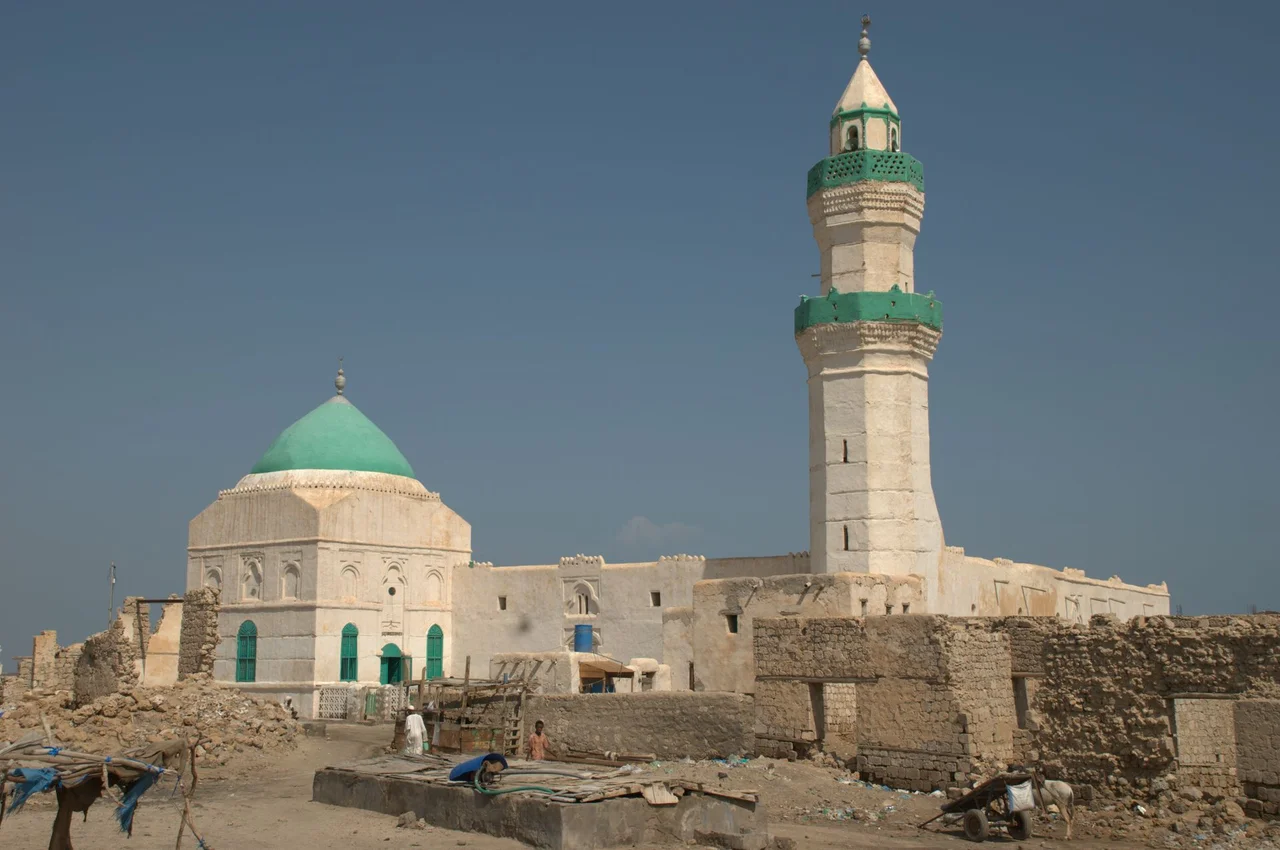
Northern Sudan consists of three of Sudan's 18 states: Northern State, Red Sea State, and River Nile State. Together they cover the old Nubian heartland plus the country's entire Red Sea coastline. Northern State, whose capital is Dongola, holds the pyramids of El-Kurru, Nuri, and Jebel Barkal plus the ancient capital of Kerma. River Nile State, whose major city is Atbara, includes the famous Meroe pyramids at Begarawiyah -- a UNESCO World Heritage Site -- along with Musawwarat es-Sufra and Naqa, Meroitic temple complexes that belong to the same inscribed heritage. Red Sea State holds Port Sudan, the country's main maritime port, and the spectacular Sanganeb Marine National Park and Dungonab Bay -- Mukkawar Island Marine National Park, together forming a World Heritage marine site whose coral reefs are virtually untouched by commercial tourism.
The Weekly Boat from Aswan
For decades, the most memorable way to enter Sudan has been the weekly ferry from Aswan in Egypt to Wadi Halfa. It runs southbound on Mondays and returns Wednesdays. The boat is old. It is crowded with people and goods. It passes the cliffs and temples of Abu Simbel -- including Ramesses II's monumental facade, saved from the rising Aswan reservoir in the 1960s and rebuilt on higher ground. Food and drink are available on board, though the experience is closer to a working ferry than a cruise. Travelers who board in Aswan and disembark in Wadi Halfa have entered Sudan the way merchants, pilgrims, and diplomats have been entering it for centuries -- from the north, by water, with the desert rising on either side.
The Pyramids of Meroe and Their Looters
The Meroe pyramids began going up around 270 BCE and the last one was built around 350 CE -- making it the last pyramid ever constructed in the Nile Valley. They cluster in three cemeteries: the South Cemetery, the North Cemetery, and the West Cemetery, with royal burials concentrated at the North. The Nubian pyramids are steeper than the Egyptian ones, rising at roughly 70-degree angles from footprints much smaller than comparable Egyptian structures. In 1834, an Italian physician-turned-treasure-hunter named Giuseppe Ferlini reached Meroe and systematically demolished more than 40 pyramids looking for gold. He found the jewelry hoard of the kandake Amanishakheto atop pyramid N6 at Wad ban Naqa -- an assemblage of gold and silver now divided between the State Museum of Egyptian Art in Munich and the Egyptian Museum in Berlin. Three of the Meroe pyramids have since been partially reconstructed to give visitors a sense of their original scale, though most remain in the condition Ferlini left them.
Sanganeb and the Untouched Coast
Sudan's Red Sea coast has stayed quiet in part because Sudan itself has been difficult to enter for decades. The consequence is coral reef in a condition that is becoming rare globally. Sanganeb Marine National Park surrounds an atoll reef rising from deep water, with sheer walls, schooling hammerheads, and hard coral coverage that has not been subject to the tourism pressures of the northern Red Sea. Dungonab Bay, off the coast north of Port Sudan, includes Mukkawar Island and seagrass beds that support dugong populations. Together they were inscribed as a UNESCO World Heritage Site in 2016. Diving Sudan remains an expedition rather than a vacation -- most visitors come on liveaboard boats that run from Port Sudan to the reefs and back. For travelers willing to go, the experience is of a marine ecosystem much closer to what Red Sea reefs once were everywhere.
What It Is to Visit Now
Sudan's ongoing civil war, beginning in April 2023, has made much of the country inaccessible to tourism. The northern states have been comparatively calm compared to Darfur or the Khartoum area, but drone attacks on the Merowe Dam and infrastructure have occurred, and land travel has been disrupted. Port Sudan, as of this writing, remains the seat of the Sudanese Armed Forces government and the main functioning port. For those who can reach Northern Sudan when conditions allow, the region's attractions include not only the ancient sites but the living Nubian culture along the Nile -- the villages where Nobiin and Dongolawi are spoken, the weekly markets, the date palm groves on fertile riverbanks, and the hospitality for which Sudanese communities across the country are justly known. What will happen to all of it as the war continues is uncertain. What has been built here over six thousand years is not easily erased, but it is not indestructible either.
From the Air
Northern Sudan spans roughly 17 to 22 degrees north latitude and 29 to 38 degrees east longitude, covering the northern third of the country. Major airports: Port Sudan (HSPN) on the Red Sea, Dongola (HSDN) on the Nile, Merowe (HSMN) near the Fourth Cataract, Atbara, and Wadi Halfa (HSSW). The Nile Valley is clearly visible from cruising altitude as a green ribbon between two deserts. Coral reefs of the Red Sea coast are visible as aquamarine patches along the coastline. Note: ongoing civil war since April 2023 affects airspace; security advisories should be checked before any flight planning. Extreme desert heat and occasional dust storms year-round.
Nearby Stories
- Zuma, Sudan 49 km away
- Banganarti 60 km away
- Makuria 84 km away
- Dar al-Manasir 117 km away
- Ghaba 143 km away
- Esh Shaheinab 168 km away
- Nubian pyramids 170 km away