
MALBA
Somewhere inside this museum hangs a self-portrait by Frida Kahlo, her gaze steady, a monkey and a parrot perched at her shoulders. One man wanted it badly enough to pay $3.2 million for it in 1995, a record for the artist at the time, and that single act of devotion is, in miniature, the whole story of MALBA. The Latin American Art Museum of Buenos Aires was built around the obsession of the Argentine businessman Eduardo Costantini, who spent a fortune assembling the works of his own continent and then built a home worthy of them on Figueroa Alcorta Avenue in the leafy Palermo district.
A Building Chosen by Giants
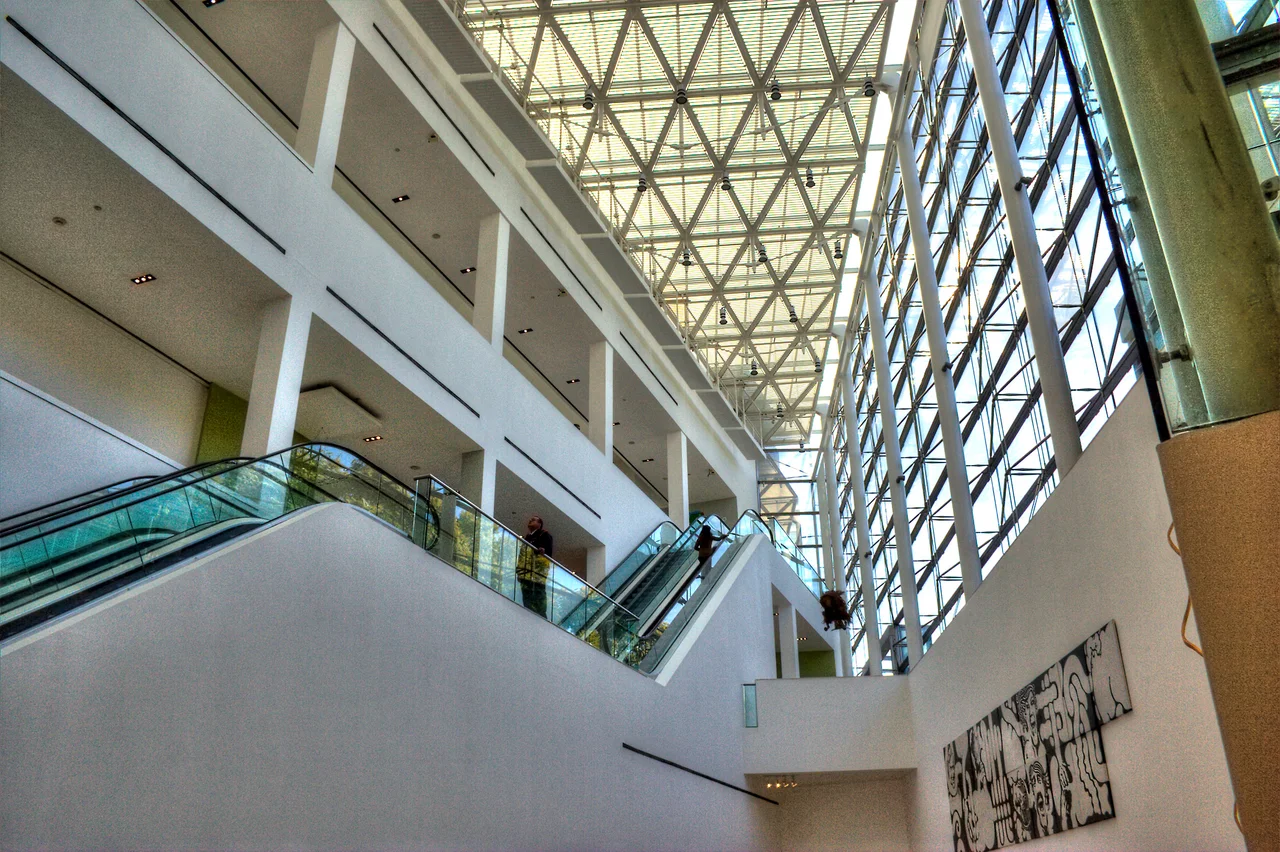
MALBA did not settle for a quiet design. An open international competition drew 450 proposals from 45 countries, and the jury that chose the winner was a constellation of architecture's biggest names: Norman Foster, César Pelli, and Mario Botta. First prize went, strikingly, to three young and largely unknown Argentine architects, Gastón Atelman, Martín Fourcade, and Alfredo Tapia. Their building, completed for the museum's 2001 opening, is an assertive composition of limestone, steel, and glass, all sharp angles and clean planes that seem to slice into one another. It stands deliberately modern amid Palermo's parks and palaces, an architecture that announces the art is contemporary and the ambition is serious.
One Collector's Continent
Costantini created the museum in 2001 and organized it around his own holdings, the Costantini Collection, then never stopped expanding it. The mission is precise: to collect, preserve, research, and promote Latin American art from the dawn of the twentieth century to the present. The walls hold landmarks of the canon. Tarsila do Amaral's Abaporu, a foundational image of Brazilian modernism, came into the collection in 1995. Diego Rivera's Baile en Tehuantepec arrived after Costantini paid $15.7 million for it at auction in 2016. The Kahlo self-portrait anchors the rooms, surrounded by the muralists, surrealists, and abstractionists who defined how Latin America saw itself. This is not a survey assembled by committee; it is the shape of one man's eye, made public.
Still Growing
MALBA refuses to stand still. Run by the not-for-profit Fundación MALBA – Costantini and sustained by over 1,400 active patrons, it draws more than a million visitors a year, more a cultural engine than a quiet gallery, with film programs, exhibitions, and public events filling its calendar. In 2024 it added a sculpture by the British-born Mexican surrealist Leonora Carrington, purchased for $11.3 million, and opened a satellite space, MALBA Puertos, in the town of Escobar outside the city. Then in late 2025 came a transformation: the museum acquired the Daros Latinamerica Collection from Zurich, 1,233 works by 117 artists, vaulting MALBA's holdings of post-1950 art and prompting plans to enlarge the building itself. A museum born of one collection had become a magnet for others.
The View from the Café
There is a particular pleasure to MALBA beyond its masterworks. From the museum's dining room, visitors look out across Figueroa Alcorta toward the Torres Le Parc and the green expanse of Palermo's parks, the glass walls dissolving the line between the art inside and the city outside. The neighborhood around it is Buenos Aires at its most open and luminous, wide avenues, jacaranda-lined parks, the embassies and gardens of Palermo. Inside, a continent's hundred-year conversation about identity, beauty, and resistance unfolds room by room. Costantini set out to give Latin American art a home equal to its importance, and on this corner of Buenos Aires, he did.
From the Air
MALBA stands in the Palermo district of Buenos Aires at 34.577°S, 58.404°W, on Figueroa Alcorta Avenue amid the city's broad northern parklands. From the air, look for the sharp, pale, faceted museum building set among the green rectangles of Palermo's parks and the cluster of tall residential towers nearby, a short distance inland from the Río de la Plata. The wide diagonal sweep of Avenida Figueroa Alcorta is a helpful navigational line through this part of the city. Best viewed at 1,500-3,000 ft, especially in spring when the surrounding jacarandas and the parks below are in full color. Aeroparque Jorge Newbery (ICAO: SABE), the downtown airport, lies roughly 3 km to the northeast along the coast; Ezeiza international (ICAO: SAEZ) is about 30 km southwest. The nearby Bosques de Palermo and the Planetarium make further easy landmarks.
Nearby Stories
- Ezeiza Massacre 1.9 km away
- Luján, Buenos Aires 5.1 km away
- Curutchet House 13 km away
- Colonia del Sacramento 17 km away
- Martín García Island 28 km away
- Atucha Nuclear Power Plant 37 km away
- Lobos 43 km away
- Cry of Asencio 87 km away