
Maldonado
Most travelers race straight through Maldonado on their way to the beaches, never noticing that the workaday city they skip is older, deeper, and in many ways the real reason the resort beside it exists. Punta del Este is the glittering peninsula of marinas and high-rises a few kilometers south; Maldonado is its quieter parent, a departmental capital of about 102,000 people whose plaza, cathedral, and old Spanish barracks were standing centuries before the first holiday tower went up. Together with Punta del Este and nearby San Carlos it forms a metropolitan area of more than 135,000, making it Uruguay's fourth-largest city. But step into the shade of its town square and the resort feels far away, and the eighteenth century feels close.
A Name Left Behind on a Bay
Maldonado is named for a man who sailed off and never came back to it. In January 1530 the explorer Sebastian Cabot left a lieutenant, Francisco Maldonado, at the bay that would carry his name. The settlement itself came much later. After Spain and Portugal began carving up this contested edge of South America, Montevideo's governor José Joaquín de Viana proposed two new towns, one here and one inland at Minas. In August 1755, still without the King's reply, Viana set out with a handful of families and founded Maldonado. When he returned twenty months later he brought seven indigenous families to strengthen the village and shifted it to its present site. Full city status was a slow grind: a council in 1787 renamed the place San Fernando de Maldonado, in honor of Ferdinand VI of Spain.
The Barracks Where Artigas Learned to Soldier
On the square stands the Cuartel de Dragones, the Dragoons' Barracks, raised between 1771 and 1797 as a piece of Spanish coastal defense. Its history is bound up with the man Uruguayans revere above all others. In 1797 the barracks took in the Corps of Blandengues of the Banda Oriental, the frontier cavalry, and a young José Gervasio Artigas entered their ranks here in March of that year. The future father of Uruguayan independence began his military life within these walls. The fortress was tested in October 1806, when British forces, ranging across the Río de la Plata during the Napoleonic Wars, stormed and briefly held San Fernando de Maldonado, three days during which the invaders sacked the town before moving on.
Stone Sentinels and a Spanish Square
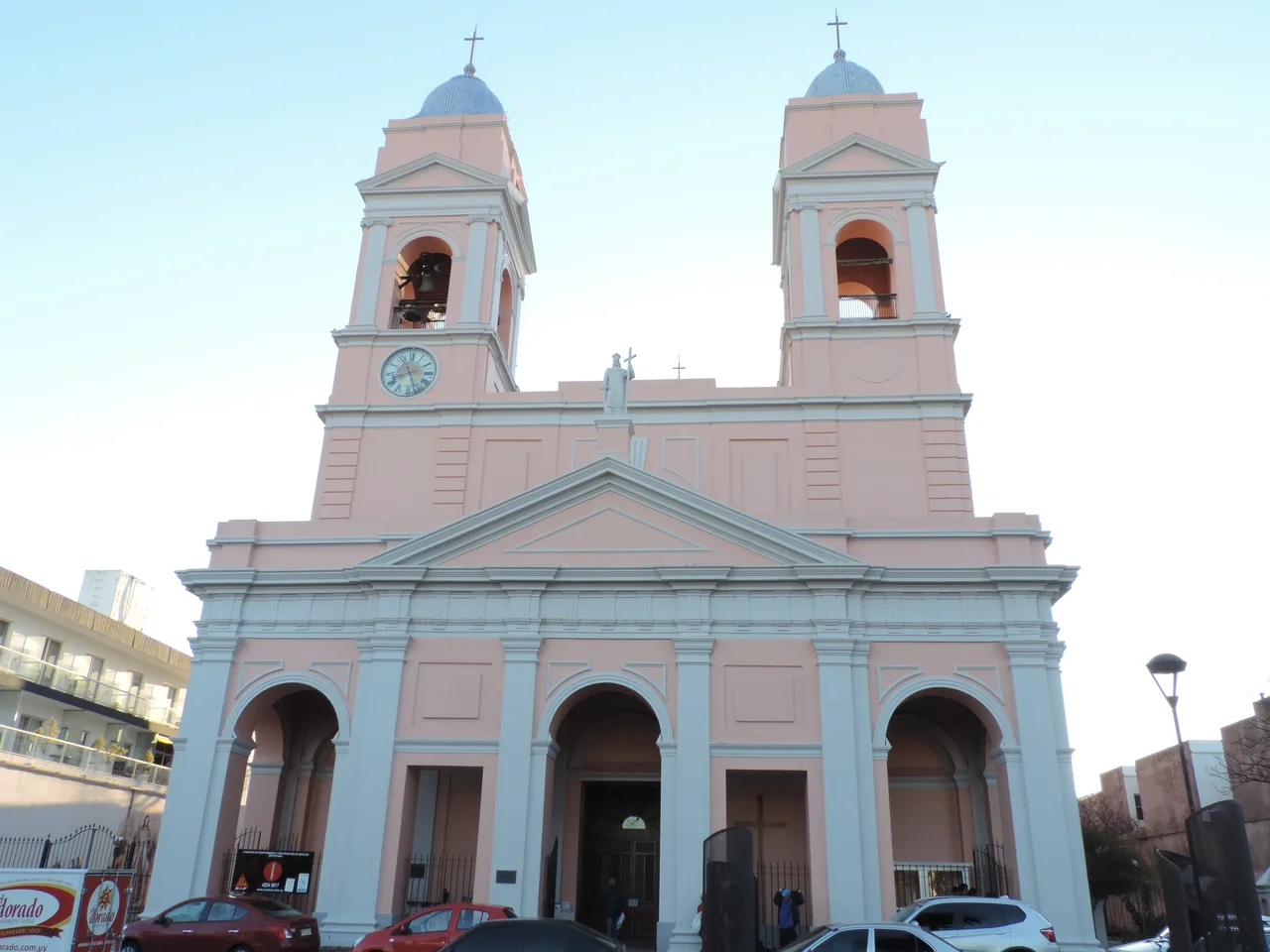
Maldonado wears its colonial bones plainly. The buildings ringing the central plaza, the cathedral among them, echo a traditional Spanish style that speaks to how closely the Crown watched over the town's growth. The San Fernando de Maldonado Cathedral is a neoclassical pile begun in 1801 and not finished until 1895, nearly a century in the making. Nearby rises the Torre del Vigía, the watchtower, built around 1800 under Rafael Pérez del Puerto; its lookouts scanned the Río de la Plata for ships bound for Buenos Aires and raised the alarm when sails appeared. These are the structures the holiday crowds drive past, the working memory of a town that defended this coast long before anyone came to sunbathe on it.
Where the Land Meets the Sea Change
Maldonado sits at a meteorological hinge. Its climate is mild and oceanic, with winters that never see snow and summers warmed by an Atlantic that, brushed by the cool Falkland Current and funneled through the continent's narrowing tip, holds the heat in check. Just east of the city the Arroyo Maldonado runs to the sea, crossed by the famous Puente de la Barra, a slender ribbon bridge whose roadway dips and rises like a frozen wave, an exercise in doing the most with the least material. Beyond it lie La Barra and José Ignacio; south, the towers of Punta del Este; west along Punta Ballena, the sculpted white folds of the Casapueblo. Maldonado is the hub they all hang from, the city that did the hard early work so the coast around it could become a playground.
From the Air
Maldonado lies at 34.91°S, 54.96°W in southeastern Uruguay, set just inland from the resort peninsula of Punta del Este on the Atlantic-facing shore of the Río de la Plata estuary. From the air the city blends into a continuous coastal conurbation with Punta del Este to the south and San Carlos to the north; the Punta del Este peninsula with its marina and skyline is the standout landmark, with the Arroyo Maldonado threading to the sea on the city's eastern edge. The nearest airport is Capitán de Corbeta Carlos A. Curbelo International (SULS / PDP) at Laguna del Sauce, about 15 km west. Montevideo's Carrasco International (SUMU / MVD) sits roughly 125 km southwest. Summer mornings often bring coastal haze off the estuary; visibility sharpens with afternoon sea breezes.
Nearby Stories
- Laguna de Rocha 19 km away
- Minas 34 km away
- 2012 Air Class Líneas Aéreas Fairchild Swearingen Metroliner crash 37 km away
- La Paloma 40 km away
- Battle of Sarandí 141 km away
- Tronador (rocket) 154 km away
- Mundo Marino 204 km away
- South Georgia Island 2539 km away