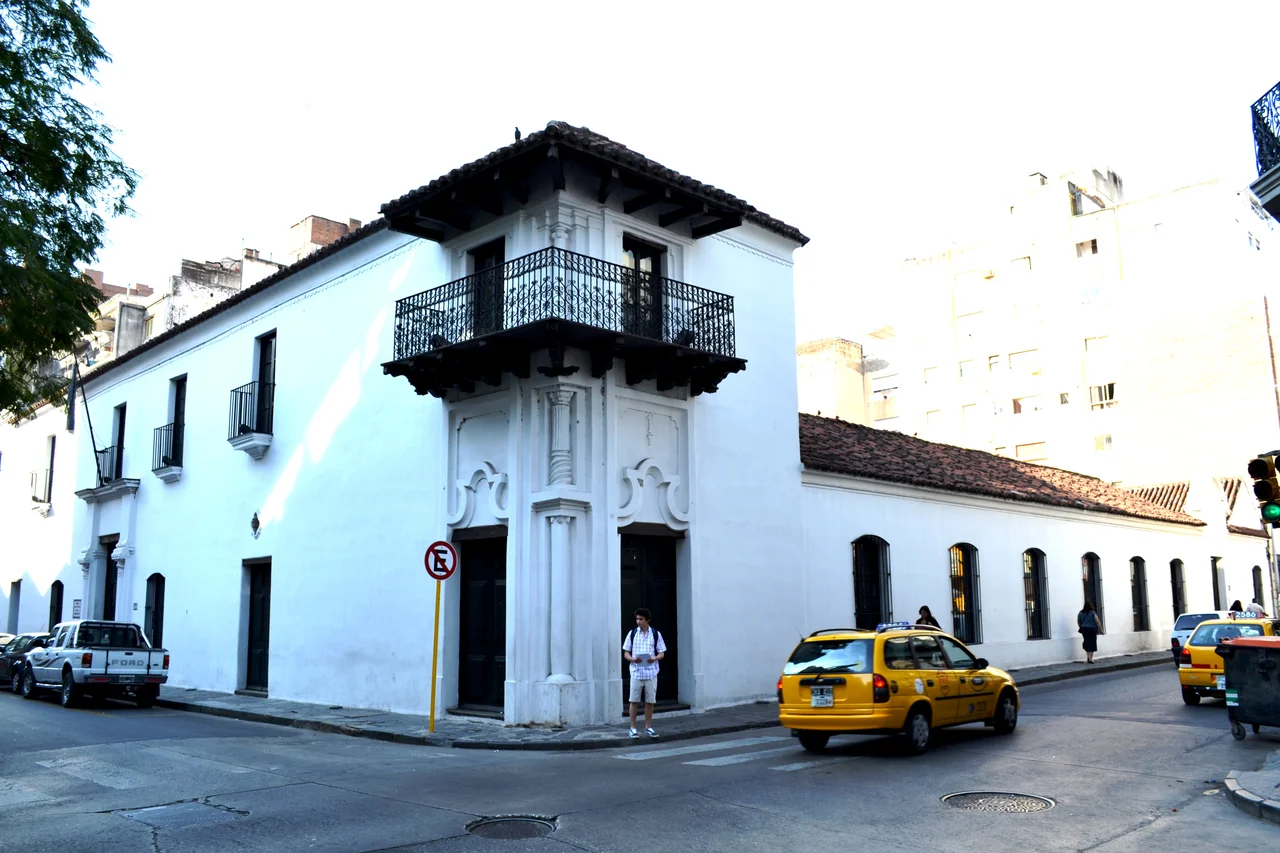

Marquis of Sobremonte Provincial Historical Museum
In June 1806, British troops took Buenos Aires, and the highest official in the Spanish viceroyalty did something that would brand his name for two centuries: he ran. Rafael de Sobremonte, viceroy of the Río de la Plata, packed up the royal treasury and fled inland toward Córdoba. He lost the silver to the British during the escape and his reputation along with it. Two decades earlier, before any of that, Sobremonte had been a respected governor living in a thick-walled merchant's house on a quiet Córdoba street. That house still stands. It is the oldest in the city, and today it carries his name.
The House on the Broad Street
A Spanish merchant named José Rodríguez began building the house in 1752, and it took roughly twenty years to finish. The result was a colonial dwelling built for two lives at once - a family home and a place of business, with shopfronts opening to the street and private rooms wrapped around interior courtyards. The architecture blends Roman and Andalusian forms into the Baroque language that Spain carried across the Atlantic. Masons laid up adobe and bound the walls with lime. Colonial tiles covered the roof. Inside, the floors are creole tile; in the courtyards, river boulders underfoot. It is the only house of its period still standing in modern Córdoba, a single surviving page from a city that has otherwise rewritten itself many times over.
A Governor and the Treasure He Lost
Sobremonte rented the house between 1783 and roughly 1797, the years he served as governor-intendant of Córdoba del Tucumán. He governed well enough here, by most accounts, before promotion carried him to the very top of colonial power as viceroy of the Río de la Plata. Then came 1806. When some 1,600 British soldiers landed near Buenos Aires under General Beresford, Sobremonte ordered the viceregal treasury - more than 1.6 million pesos - evacuated to the interior, and went with it. A 1778 law gave him cover: viceroys were to keep the treasury safe and avoid capture so they could not be forced to sign a surrender. The people of Buenos Aires saw only a leader abandoning his city, and called it cowardice. He lost the treasure to the British during the flight anyway. An open council deposed him soon after, handing power to Santiago de Liniers, who had led the recapture of the city. The man who fled died in 1827, long out of office; the house he had once rented has outlived the judgment many times over.
How a Home Became a Monument
For most of the nineteenth century the house was simply lived in, sold, and repurposed, the way old buildings are. Its rescue came in 1919, when the government of Córdoba bought it to found a colonial museum - recognizing that the city's last colonial house was worth more standing than gone. It was declared a National Historical Monument in 1941 and given Sobremonte's name as a provincial museum a few years later. The rooms now hold furniture, religious art, weapons, silver, and documents from the colonial and independence eras, arranged within the very walls those objects once furnished. You do not look at colonial Córdoba here so much as stand inside it.
Reading the Walls
What makes the museum quietly powerful is that the building is itself the largest object in the collection. The deep window reveals, the worn thresholds, the cool dim interiors built to hold off the Córdoba sun - these were design decisions made by people solving the same problems we do, with the materials they had. The blend of Roman and Andalusian forms speaks of a Spain that had absorbed centuries of its own conquests before exporting the style to America. Furniture, religious paintings, weapons, and silver from the colonial and independence eras fill rooms that those very objects once furnished, so the displays never feel like glass cases set down in a neutral hall. The courtyards still gather light the way Rodríguez intended. A house that watched a governor rise and a viceroy disgrace himself has settled, in the end, into something steadier than the fortunes of either: a place where a whole vanished century can still be touched.
From the Air
The museum sits in central Córdoba, Argentina, at roughly 31.42°S, 64.18°W, a few blocks from the Plaza San Martín in the dense colonial core - look for the grid of low rooftops south of the Suquía River. Córdoba is ringed by mountains to the west (the Sierras Chicas), which shape afternoon cloud buildup in summer. The main gateway is Ingeniero Aeronáutico Ambrosio L.V. Taravella International Airport (ICAO: SACO, IATA: COR), known locally as Pajas Blancas, about 9 km north-northwest of the city center; it is Argentina's busiest airport outside Buenos Aires. The colonial downtown is best appreciated from a low approach in the clear, dry air typical of the region's winter months.
Nearby Stories
- Jesús María, Argentina 16 km away
- Alta Gracia 26 km away
- Pampa de Achala 31 km away
- Mina Clavero 31 km away
- Mar Chiquita Lake 116 km away
- Battle of Quebracho Herrado 135 km away
- Villa San Agustín 271 km away
- Predelta National Park 289 km away