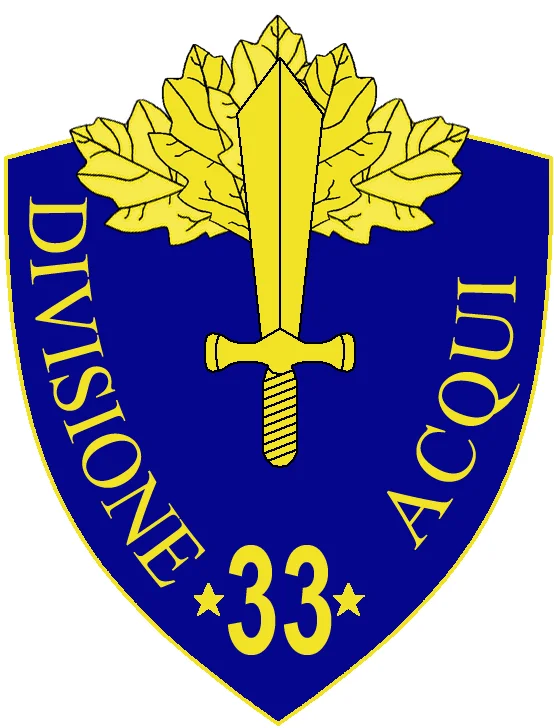

Massacre of the Acqui Division
They were conscripts and career soldiers, fathers and sons, men from Piedmont and Calabria and Lombardy who had been posted to a Greek island and had no particular reason to expect to die there. By the autumn of 1943, the 33rd Infantry Division "Acqui" had been the garrison of Cephalonia for months. Some had grown fond of the island. Some had taken up with local families. Some — according to survivor accounts — had spent evenings singing in the taverns of Argostoli. When Italy signed the Armistice of Cassibile on 8 September 1943, their world inverted in a single radio broadcast. The Germans, until that morning their allies, demanded the Acqui lay down their weapons. The soldiers voted. By a large majority, they chose to resist. What followed, over the last ten days of September 1943, was one of the worst atrocities committed against prisoners of war in the entire Second World War.
The Choice That Could Not Be Unmade
General Antonio Gandin commanded the Acqui — 11,500 soldiers and 525 officers — and faced an impossible situation. His orders from Rome were ambiguous. The Germans presented three options: join them, surrender and be repatriated, or resist. Gandin negotiated, delayed, and consulted his men. When the vote came back, his troops chose resistance. Whether that was defiance born of anti-fascism, loyalty to the Crown, or a simpler desire not to hand over their weapons to men who had been shelling them with Stukas — historians still debate it. What is not in dispute is that by 13 September, the fighting had begun, and by 22 September the Acqui had run out of ammunition.
Outgunned, outmaneuvered, without air cover, and without the reinforcements that never arrived, the division fought for nine days. Around 1,315 men died in the battle itself. Then came the surrender. Then came the orders from Hitler and the German High Command: "because of the perfidious and treacherous behaviour [of the Italians] on Cephalonia, no prisoners are to be taken."
The Executions
The massacre began on 21 September 1943 and continued for approximately a week. German Gebirgsjäger — mountain troops — shot their Italian prisoners in groups of four to ten. General Gandin was among those executed. The remaining soldiers were marched to the San Teodoro town hall and killed in batches by eight-man firing squads. In the end, 5,155 men were executed. Only 37 Italian officers survived, spared at the last moment for reasons that remain unclear. One survivor, Amos Pampaloni, later described watching executions take place in full view of the Greek civilian population in Argostoli harbour on 23 September, the bodies left where they fell.
The dead could not be buried. The Germans refused to allow it. Bodies were burned on massive pyres — smoke visible for miles, the smell of burning flesh settling over the island. Other bodies were thrown into the sea, weighted with stones. In the smaller streets, Pampaloni recalled, the stench became so overwhelming he could not stay long enough to photograph what he witnessed. He tried anyway.
One detail has lodged itself in accounts of those days: an Italian soldier who had made a habit of singing operatic arias in the local taverns for his German listeners was forced to keep singing while his comrades were shot. His fate afterward is unknown.
The Wider Catastrophe
The executions were not the end. Survivors were loaded onto German ships to be transported to concentration camps on the mainland. Those ships, caught by Allied aircraft and sea mines, sank. Approximately 3,000 more men drowned. From a garrison of around 11,500, roughly 9,500 Italian soldiers died in battle, by execution, or at sea — a loss so total that the word "massacre" only partially covers it.
The violence spread. On nearby Corfu, where elements of the Acqui's 18th Regiment were stationed, the Germans landed a force on 24 September in an operation they codenamed "Operation Treason." All 280 Italian officers on the island were executed. The bodies were put on a ship and thrown into the sea.
The man most directly responsible, General Hubert Lanz, was tried after the war. Because of uncertainties about who had issued which specific order, he was convicted only on a narrower charge. The officer who commanded the Gebirgsjäger on Cephalonia, Major Harald von Hirschfeld, was never tried: he died at the Dukla Pass in January 1945.
Memory and Meaning
In Italy, the Cephalonia massacre became a contested site of memory almost immediately. Some survivors and historians saw the Acqui's resistance as the first act of the Italian Resistance against Nazi-fascism — soldiers who chose their country and their dignity over capitulation. Others questioned Gandin's judgment, or argued that the decision to fight made the subsequent killings inevitable. Still others, like historian Gian Enrico Rusconi, suggested something simpler: most of the men just wanted to go home, and not at any price. The debate has never fully settled, which perhaps reflects how much was genuinely at stake in the choices those men made.
In the 1950s, the remains of roughly 3,000 soldiers — including 189 officers — were exhumed from Cephalonia and returned to Italy for burial at the Italian War Cemetery in Bari. The remains of General Gandin were never identified. Today, the presidents of Greece and Italy periodically meet at the monument to the Acqui Division on Cephalonia for joint remembrance ceremonies. The events inspired Louis de Bernières' novel "Captain Corelli's Mandolin," set on the island during the occupation, which brought the massacre to a wider international audience in the 1990s. An exhibition at Argostoli documents what happened with photographs and documents. The singing soldier is not mentioned there. No one knows his name.
Standing on This Ground
The island of Cephalonia today is luminously beautiful — green mountains, turquoise water, the long light of the Ionian Sea. It is difficult, standing in Argostoli harbour or on the slopes above the town, to reconcile what the eye sees with what happened here in the last days of September 1943. That difficulty is not accidental. It is part of why places like this matter: the beauty does not erase what occurred. It makes the contrast sharper, and the memory more insistent.
The men of the Acqui Division were not heroes of the Resistance in any simple sense, nor were they merely victims of forces beyond their control. They were people who had a choice put to them under extreme duress, and most of them made a particular choice, and were killed for it. Whatever the historians conclude about the politics, the orders, and the competing loyalties, that fact stands. Thousands of men died here, on this island, in September 1943. They deserved better.
From the Air
The events of September 1943 unfolded across Cephalonia, Greece's largest Ionian island, centered on Argostoli (38.17°N, 20.49°E), the island capital and harbour. The memorial to the Acqui Division stands near the town. From the air at 5,000–8,000 feet, the Gulf of Argostoli is clearly visible, with the peninsula of Paliki to the west. The island sits approximately 38.25°N, 20.59°E. Nearest airport: Kefalonia International Airport (LGKF), located on the southern tip of the island about 9 km south of Argostoli. In clear conditions the harbour where executions were carried out in September 1943 is visible from cruising altitude.
Nearby Stories
- Glarentza 5 km away
- The Septinsular Republic 5.8 km away
- Battle of the Echinades (322 BC) 8.1 km away
- Hellenic Trench 19 km away
- Ionian Islands 22 km away
- Stratos 27 km away
- Achilleion (Corfu) 119 km away
- Corfu 153 km away