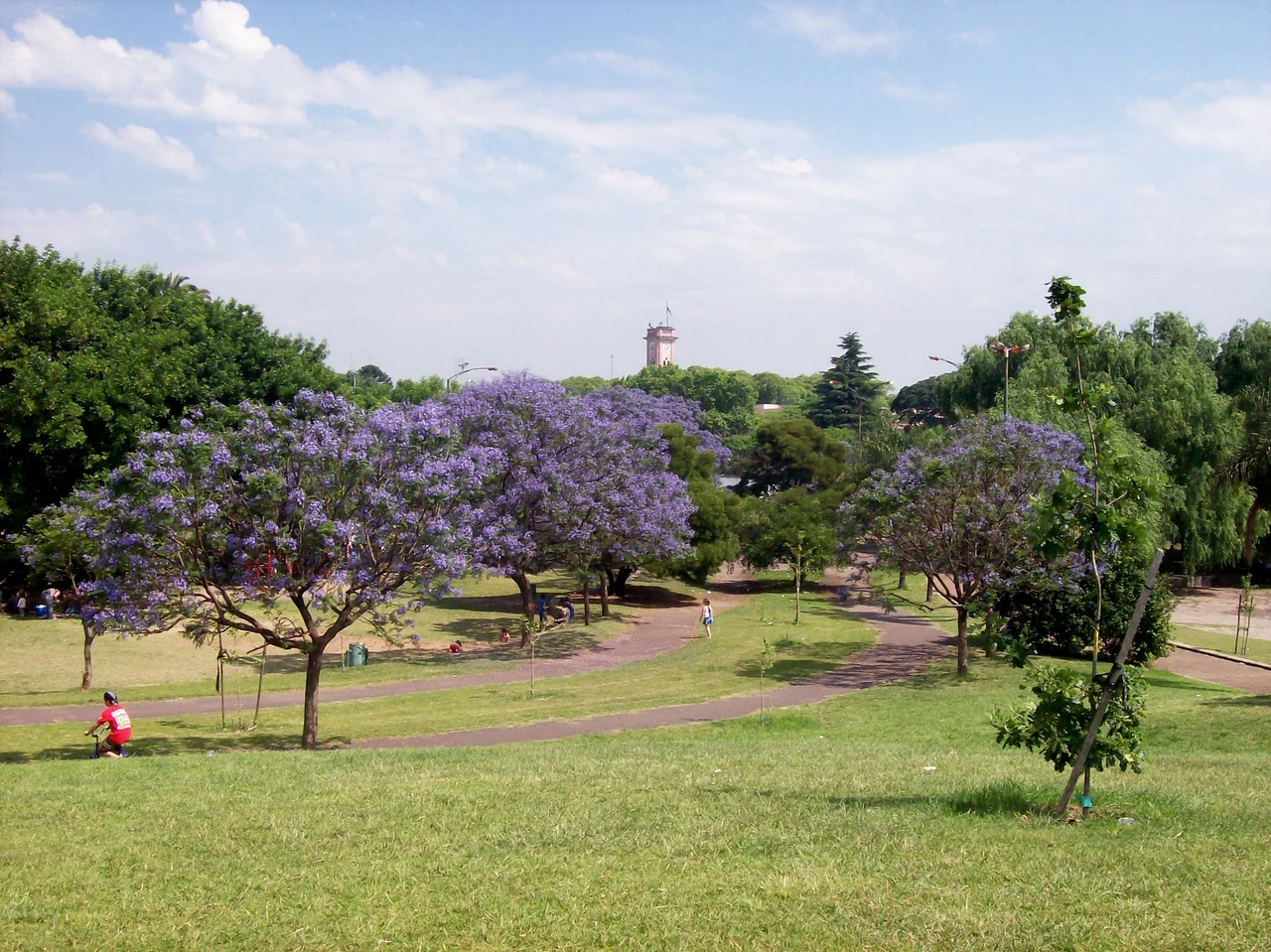

Mataderos
On a Sunday in Mataderos, the smell is woodsmoke and grilling beef, the sound is a guitar improvising verse against another guitar, and a man in a wide hat spurs his horse down a city street at a full gallop to snatch a tiny ring on a stick. This is Buenos Aires, but barely - the southwestern edge where the capital frays into the pampas, and where for generations the gaucho rode in from the grasslands to sell his cattle and stayed to dance. The barrio's blunt name tells you what built it: mataderos, slaughterhouses. The romance and the abattoir have always lived here side by side.
Where the City Ends
For most of its history, Mataderos was a threshold - the meeting point between the metropolis and the open country beyond. It became the last stop for the gauchos inside the city limits, and a hub of rural commerce in a nation built on cattle and grass. In the neighborhood bars, famous payadas unfolded: improvised duels of sung poetry, two singers trading rhymed challenges late into the night, each trying to outwit the other in verse. It was a culture imported whole from the plains, set down at the doorstep of one of South America's great cities, and it never entirely left. Even the barrio's football club carries the frontier in its name - Nueva Chicago, after the great American meatpacking city, a nod to the slaughterhouse trade that gave Mataderos both its livelihood and its blunt identity.
Fifty Thousand Cattle a Week
At the heart of the barrio stands the Mercado de Liniers, the national cattle market, established in 1900 across thirty-four hectares. In its prime, as many as fifty thousand head of cattle changed hands here every week, feeding the beef appetite of greater Buenos Aires. Its headquarters, a graceful Italianate arcade finished in 1899, also holds the Old Corrals Museum. In the courtyard rises El Resero - The Herdsman - a 1931 monument by Emilio Sarniguet honoring the men who drove the herds. After 122 years, the market finally relocated to Cañuelas in May 2022, leaving the old corrals silent - a rural island now awaiting a new chapter inside the modern city.
The Sunday Fair
Since June 8, 1986, the Feria de Mataderos has gathered every Sunday on the Avenida de los Corrales, and it is the barrio at its most exuberant. Stalls sell crafts and regional food; folk dancers and milongueros fill the street; and riders perform the sortija, the gaucho game of spearing a small suspended ring at a gallop. It is a living museum of the Argentine interior, staged where the herds once arrived. The same avenue still hosts block parties laced with tango and milonga, famous across the city for their energy - proof that the frontier spirit of Mataderos became not a relic but a recurring celebration.
The Little Bull
Mataderos breeds tough sons, and none was loved more than Justo Suárez, born here in 1909 and known across Argentina as El Torito de Mataderos - the Little Bull. He turned professional at eighteen and ignited a national passion for boxing; one 1930 fight in Buenos Aires drew sixty thousand spectators. In 1931 he stepped into the ring at Madison Square Garden against Billy Petrolle, a step toward a world title, and lost. Then tuberculosis caught him. He died in 1938 in Córdoba, only twenty-nine, and a vast crowd carried his coffin to Luna Park, the arena of his greatest nights. The writer Julio Cortázar, who admired him, immortalized him in the story Torito. The neighborhood that raised him still claims him as its own.
From the Air
Mataderos lies at the southwestern edge of the city of Buenos Aires, near 34.667 degrees south, 58.500 degrees west, in Comuna 9 alongside Liniers and Parque Avellaneda. From the air, look for the open block of the Mercado de Liniers cattle market and its corrals - a distinctly rural footprint set against the dense urban grid - and the wide Avenida de los Corrales running through the barrio. Recommended viewing altitude 1,500 to 3,000 feet. The nearest field is El Palomar (ICAO SADP) about 6 nm to the northwest; Aeroparque Jorge Newbery (ICAO SABE) is roughly 9 nm to the northeast along the river, and Ministro Pistarini / Ezeiza (ICAO SAEZ) about 9 nm to the south. Sunday daylight is best, when the Feria de Mataderos fills the streets and the barrio shows its character from low altitude.
Nearby Stories
- Tigre, Buenos Aires 6 km away
- Luján, Buenos Aires 17 km away
- Anchorena National Park 21 km away
- La Plata Museum 22 km away
- Lobos 23 km away
- San Antonio de Areco 43 km away
- Chascomús 82 km away
- Tronador (rocket) 96 km away