.jpg)
Mechelen Incident
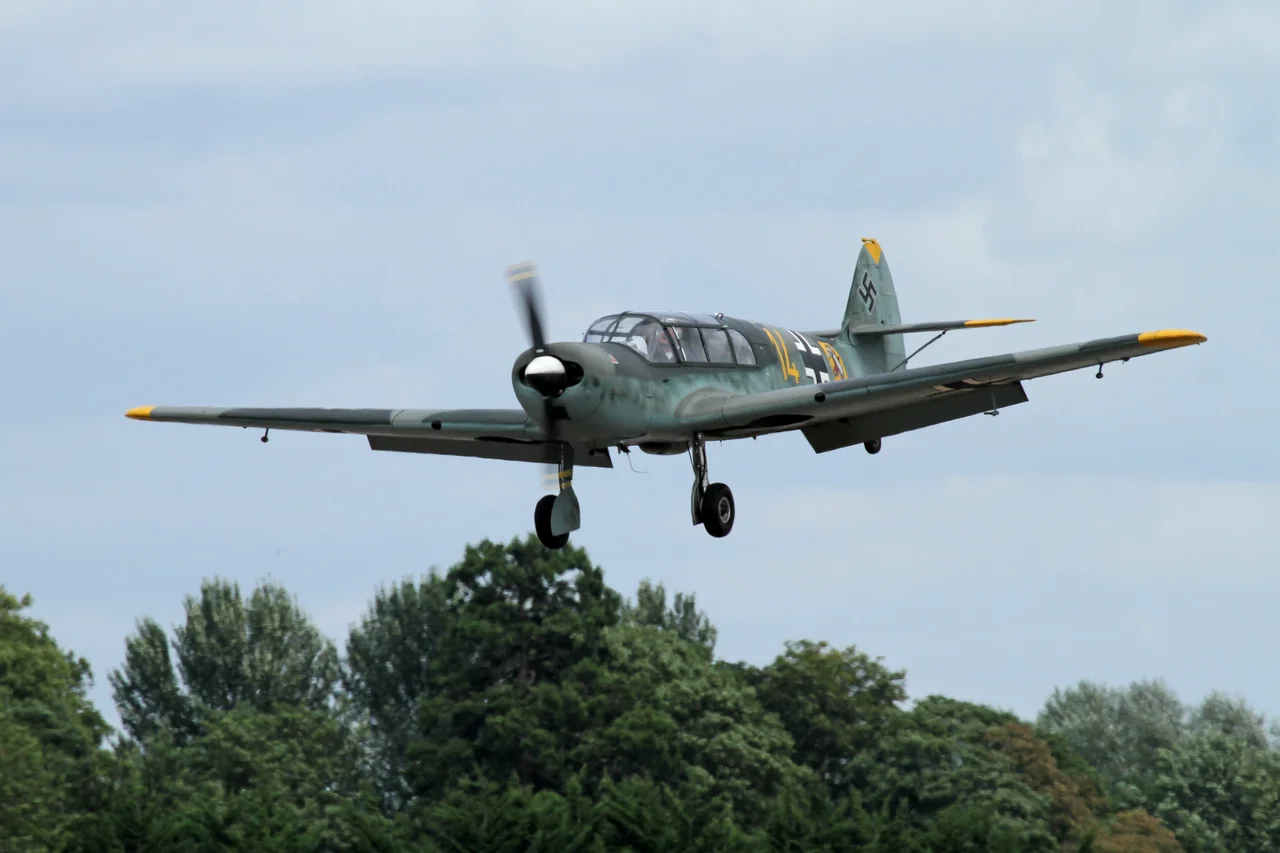
On the morning of 10 January 1940, Major Erich Hoenmanns wanted to drop off his laundry. The fifty-two-year-old base commander at Loddenheide airfield near Munster had a Messerschmitt Bf 108 Taifun warming up, a flight to Cologne planned, and a wife in that city expecting clean shirts. The night before, over a drink in the officers' mess, he had offered a lift to a Luftwaffe major named Helmuth Reinberger, who needed to attend a staff meeting in Cologne and was sick of the train. Reinberger said yes. He did not mention that his yellow pigskin briefcase contained the operational plans for Fall Gelb, the German invasion of Belgium, the Netherlands, and Luxembourg, scheduled to begin one week later.
Lost Over a Frozen River
Fog covered the landscape that morning. Hoenmanns lost his bearings and turned west, hoping to spot the Rhine and follow it south to Cologne. But he had already crossed the Rhine without seeing it, frozen and indistinguishable in the haze. He flew on, leaving Germany behind, crossing the Netherlands, and ending up circling a Dutch hamlet called Vucht on the Meuse, the border with Belgium. Somewhere in his confusion he bumped a lever in the cockpit and cut the fuel supply. The engine spluttered, then stopped. Hoenmanns put the Taifun down in a field at about 11:30 am. Both wings tore off as the aircraft skidded between two Canadian poplars; the heavy engine ripped clean off the nose. He climbed out unhurt. They asked a farmhand named Engelbert Lambrichts where they were. Lambrichts told them they had crossed Dutch territory and landed just inside Belgium.
A Lighter That Would Not Light
Reinberger panicked. He ran back to the wreck for his briefcase, shouting that he had secret documents and had to destroy them at once. Hoenmanns drew off as a diversion. Reinberger pulled out his cigarette lighter. It malfunctioned. He ran to the farmhand and begged for a match. Lambrichts gave him one. Reinberger ducked behind a thicket, piled the papers on the ground, and lit them. Then two Belgian border guards arrived on bicycles. Sergeant Frans Habets and Corporal Gerard Rubens saw the smoke. Rubens rushed over and pulled what was left of the papers out of the fire. Reinberger ran, then stopped when warning shots were fired, and surrendered.
A Stove and a Burned Hand
The two Germans were taken to a Belgian guardhouse near Mechelen-aan-de-Maas. Captain Arthur Rodrique sat them down and spread the charred documents across a table. Hoenmanns asked to use the toilet. Reinberger seized the moment, stuffed the surviving papers into a burning stove, and yelped in pain as he lifted the scorching iron lid. Rodrique spun around, snatched the papers out, and burned his own hand badly in the process. The documents were locked in a separate room. Reinberger, realising he had failed and would surely face a firing squad, lunged for Rodrique's revolver to shoot himself. Rodrique knocked him down. Reinberger burst into tears. Hoenmanns, watching, said quietly: 'You can't blame him. He's a regular officer. He's finished now.'
Cascading Telephone Calls
By that evening, the documents were with Belgian military intelligence in Brussels. Most had been badly burned, but enough survived to outline an attack against Belgium and the Netherlands. The information lined up with earlier warnings from the Italian Foreign Minister, Count Ciano, and from a German anti-Nazi insider named Hans Oster who was feeding intelligence to the Dutch attache Bert Sas. King Leopold III began telephoning. He warned the French commander, Maurice Gamelin. He warned Lord Gort of the British Expeditionary Force. He called Princess Juliana of the Netherlands with the code phrase 'Be careful, the weather is dangerous.' He called Grand Duchess Charlotte of Luxembourg with 'Beware of the flu.' On 13 January the Belgian chief of staff, without authorisation from the king, broadcast a radio order recalling all 80,000 Belgian soldiers from leave and quietly moved aside the border barriers so French and British troops could pour in. The Germans never came. Snow on the eastern front and word of the alerted Belgians made Hitler postpone, then on 16 January cancel the attack indefinitely.
The Plan That Changed the War
What the incident actually did is still argued. In one telling, it forced Hitler to demand a completely new strategy, which the German High Command found in the proposals of General Erich von Manstein, the so-called Sickle Cut: instead of the predictable thrust through northeastern Belgium that Reinberger had been carrying, Panzer divisions would concentrate further south and attack through the Ardennes toward Sedan. In another telling, Hitler had been hesitant about the original plan from the start, weather caused the postponement, and Manstein's friends pushed his proposal forward independently. Either way, when the real invasion came on 10 May 1940, the Germans did exactly what the captured documents had ruled out. The Allies, still half-expecting the original plan, deployed their best forces north into Belgium and watched the Panzers slice behind them through the forest. As for the two airmen, both were eventually exchanged back to Germany, tried for the loss of the documents, and let off lightly: Hoenmanns was partially pardoned, Reinberger fully acquitted. The wreck of the Messerschmitt is gone, but a small monument near Vucht marks the field where the war's most consequential forced landing took place.
From the Air
Crash site located at 50.97 N, 5.72 E, near Vucht in the municipality of Maasmechelen, Belgian Limburg, on the west bank of the Meuse. Approximately 10 NM northeast of Maastricht. The original German flight route ran from Loddenheide near Munster (Germany) southwest toward Cologne; Hoenmanns drifted west across the Rhine in fog and ended up over the Meuse border. Maastricht Aachen Airport (EHBK) lies about 12 NM south-southwest of the crash site.
Nearby Stories
- Siege of Julich (1621-1622) 4.6 km away
- Wessem-Nederweert Canal 6.7 km away
- Monchengladbach 9 km away
- County of Duras 10 km away
- SCK CEN 15 km away
- Belgium 56 km away
- Marcinelle Mining Disaster 100 km away
- Marmoutier Abbey 228 km away