
Monkwearmouth-Jarrow Abbey
In the year 716, an old monk named Ceolfrith died on a road through Francia. He was carrying a Bible to Rome. The book was enormous - over a thousand pages of parchment, bound between covers as thick as a man's hand, written in a careful half-uncial script that he had personally helped develop. It was one of three identical copies he had ordered produced at his monastery on the north-east coast of England. The other two stayed at home. This one was meant as a gift for Pope Gregory II. Ceolfrith's companions delivered it after his death. Thirteen centuries later, that Bible sits in the Laurentian Library in Florence. It is the oldest complete Latin Vulgate Bible in existence. It was made in Sunderland.
Benedict Biscop Brings the Continent Home
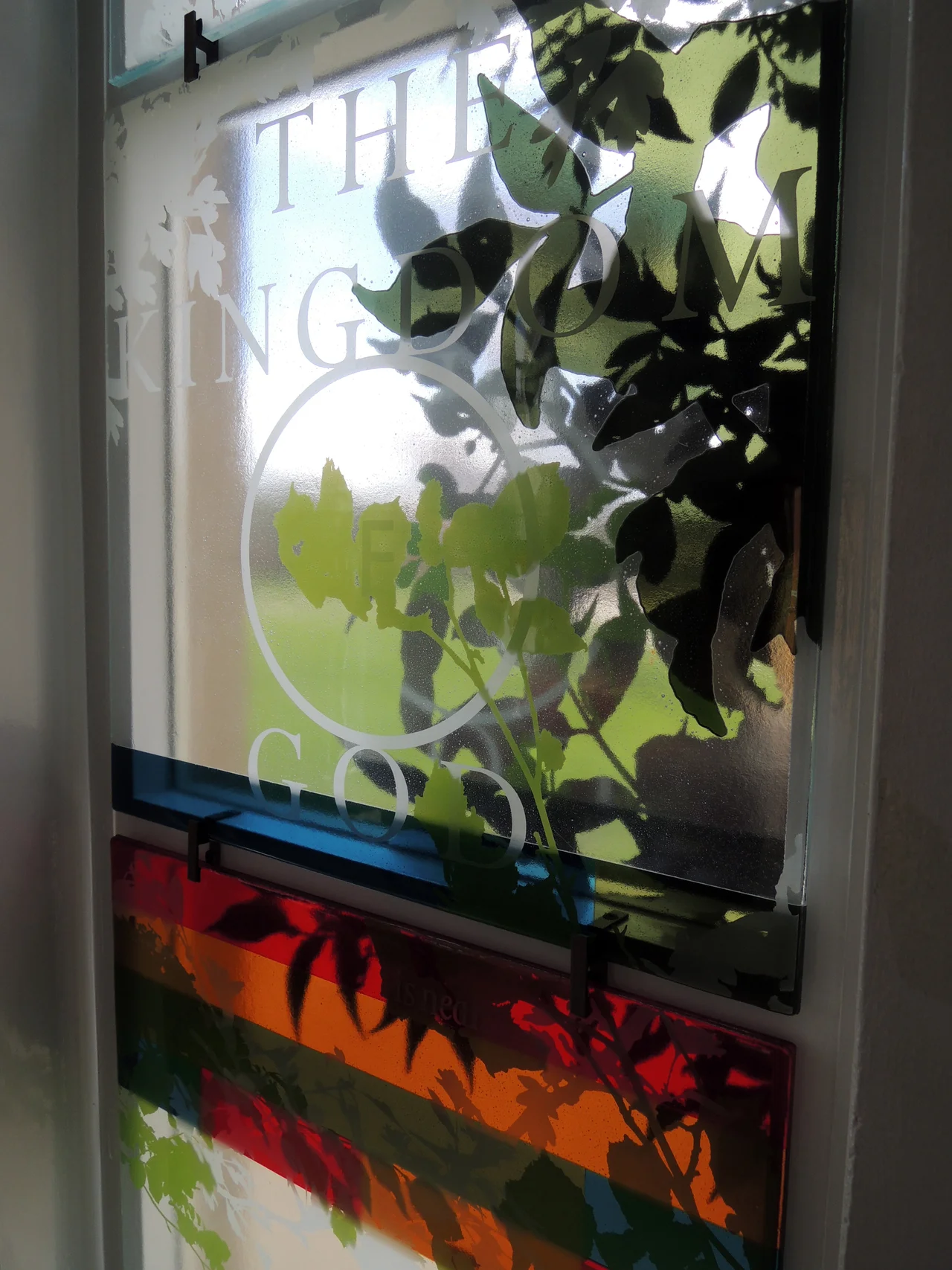
In 674 the Northumbrian nobleman Benedict Biscop received a grant of land at the mouth of the River Wear from King Ecgfrith. He used it to found St Peter's Monastery, Monkwearmouth, the first of two houses that would become Britain's most important early medieval centre of learning. Biscop had travelled extensively in continental Europe and to Rome - he wanted his English monastery built in stone in the Roman style, glazed in window glass, sung in the plainsong he had heard at St Peter's Basilica. England had no stonemasons capable of the work. He brought them from Francia. England had no glassmakers either. He brought them too, and set up a workshop on the bank of the Wear that would supply windows for both his monasteries and survives today in archaeological traces. In 682 King Ecgfrith gave him a second land grant at Jarrow on the River Tyne. St Paul's Monastery was founded there in 685, seven miles north.
One Monastery in Two Places
Biscop appointed Ceolfrith as abbot of the new Jarrow house and Eosterwine as abbot of Monkwearmouth, with a stipulation that the two communities should function as one monastery in two places. Among the monks Ceolfrith took with him to Jarrow was a boy named Bede. Bede had been given to the monastery at age seven, in the Anglo-Saxon tradition by which children entered religious life as oblates. He never left. He learned Latin and Greek from the library Biscop had assembled on his European travels - one of the largest collections of books anywhere in northern Europe at the time. He grew into the greatest scholar of his age. His Ecclesiastical History of the English People, completed in 731, is the foundational text of English historical writing. Without it, much of what we know about Anglo-Saxon England would not exist.
Six Hundred Monks, Three Bibles
By the time Ceolfrith died in 716, Monkwearmouth-Jarrow had grown to six hundred monks split between the two houses. The scriptorium produced books at industrial scale for the era - a distinctive insular minuscule script was developed here specifically to speed copying. Ceolfrith's three pandect Bibles - complete one-volume copies of the entire Old and New Testaments - were the major project of his abbacy. Two stayed in England. One has been entirely lost; only fragments survive of the second. The third copy, the one Ceolfrith carried toward Rome, is the Codex Amiatinus. Pope Gregory II received it from Ceolfrith's companions and acknowledged it in a letter to the new abbot Hwaetberht. The book passed eventually into the library of the Abbey of San Salvatore at Monte Amiata in Italy, which gave it its modern name. The fact that a Bible copied at Sunderland is the oldest surviving complete Vulgate anywhere is a piece of British literary history most British people have never heard.
Burned, Forgotten, Refounded
In 793 the Vikings attacked Lindisfarne. A year later, in 794, they reached Monkwearmouth-Jarrow. The abbey survived the first raid but Danish forces destroyed it around 860 and the site was abandoned by the late ninth century. The historian Symeon of Durham, writing two centuries later, said Wearmouth lay waste and desolate two hundred and eight years. In the 1070s, a Gloucestershire monk named Aldwin read Bede's Historia and decided to rebuild what Bede had described. He arrived with twenty-three brothers from Evesham Abbey and started construction. The work was incomplete when they were called back to Durham in 1083 to help build the cathedral there. The two houses were eventually refounded as cells of Durham Priory in the fourteenth century, dissolved by Henry VIII in 1536, and survived only as parish churches. St Peter's, Monkwearmouth still stands on the north bank of the Wear, its tower built in phases from the seventh to tenth centuries - one of the oldest churches in Britain. St Paul's, Jarrow stands too, with substantial monastery ruins next to it. In 2011 the United Kingdom nominated the entire site as a UNESCO World Heritage candidate. The bid was withdrawn before designation. The stones remain anyway.
From the Air
Monkwearmouth-Jarrow Abbey survives as two sites about seven miles apart. St Peter's, Monkwearmouth lies at 54.913 N, 1.375 W on the north bank of the River Wear in Sunderland, adjacent to the National Glass Centre and the University of Sunderland's St Peter's Campus. St Paul's, Jarrow lies further north at the River Tyne. Cruise at 2,500-4,000 feet for orientation - the Stadium of Light is the easiest visual anchor near Monkwearmouth, with St Peter's just to its east. Newcastle International (EGNT) is 17 nautical miles north-north-west and very close to the Jarrow site. Durham Tees Valley (EGNV) 22 nautical miles south. The two sites mark the historic territorial reach of Northumbria's most important early monastery.
Nearby Stories
- Seaton Carew 2.7 km away
- HMS Unity (N66) 6 km away
- George Stephenson's Birthplace 6.1 km away
- Raby Castle 9 km away
- Cragside 15 km away
- Whitby Abbey 21 km away
- German submarine U-2367 46 km away
- Alexander L. Kielland (Platform) 277 km away