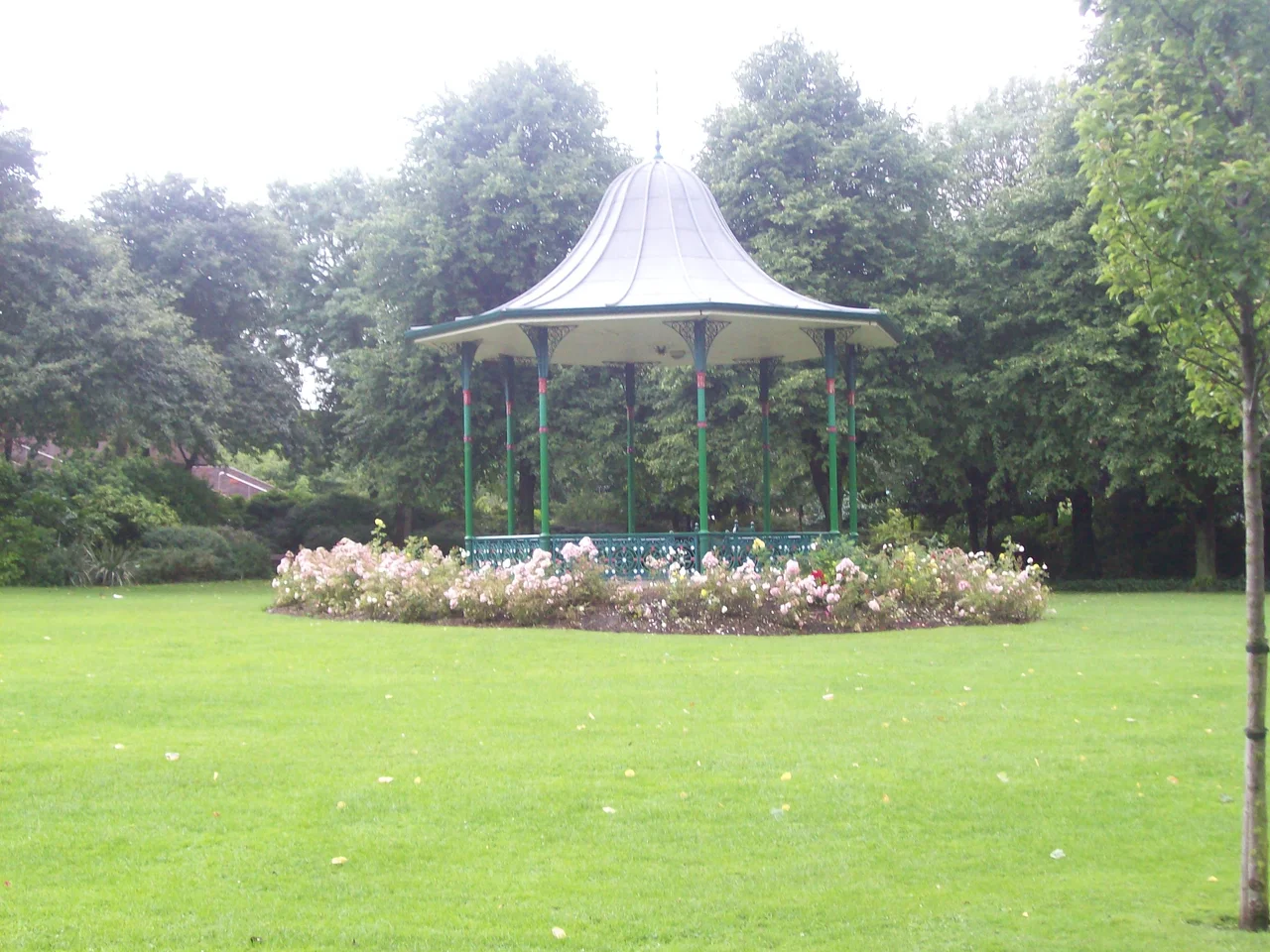

Mowbray Park
The story starts with sickness. In 1831 Sunderland recorded the first cholera outbreak in mainland Britain, and a health inspector arrived in town carrying the unsettling new idea that green spaces and clean air might keep people alive. Twenty-six years later the verdict became a park. The government supplied £750. The Mowbray family sold land worth £2,000. A former limestone quarry, with the spoil heaps moulded into wooded hummocks, opened to the public on 12 May 1857. The shops closed early so thousands could walk through the gates. The People's Park, they called it. The town had been waiting.
A Park Built on a Quarry
The Victorian designers did something clever with the topography they inherited. A worked-out limestone quarry on Building Hill became the bones of the layout - those steep-sided hummocks were spoil heaps reshaped into hills, the paths winding among them giving the impression of a much larger park. The aim was perambulation: the act of walking circuits in fresh air, considered essential to Victorian respectability and health. In 1866 an extension carried the park down to Borough Road, adding a lake and a terrace. By 1879 the Winter Gardens, museum and art gallery rose on the northern boundary. The People's Park had grown into a full civic ensemble - lawn, water, statuary, and culture stitched together within a few hundred yards of the busy streets of central Sunderland.
The Statues and What They Remember
Walk the paths and you meet Sunderland's heroes in bronze and stone. Jack Crawford, the sailor who nailed the colours to the mast at the Battle of Camperdown in 1797. General Sir Henry Havelock, the Indian Mutiny commander born locally. John Candlish, the mayor and MP who opened the park itself in 1857, cast in contemporary dress on a granite plinth. Most poignant is the memorial to the Victoria Hall disaster of 1883 - the day 183 children were crushed to death at a stage door during a giveaway of toys, the worst loss of children's lives in a single incident in British history. The William Hall Drinking Fountain remembers the oldest Oddfellow in the north of England, dead in 1876 at seventy-five. The park is a roll call of a city's grief and pride.
Bombs, Vegetable Patches, and Neglect
The Second World War hit Mowbray Park hard. German bombs left craters in the lawns. The cast-iron Winter Gardens, the iron bridge, and the bandstand were dismantled and melted down for munitions - a fate shared by parks across Britain. The open lawns became allotments, dug up for vegetables. After the war, decline set in. The Sunderland Civic Centre was built on the western portion of the park, taking land the Victorians had carefully laid out. By August 1993 the Sunderland Echo reported that locals were too frightened to use the park; £13,000 in damage had been done in a single month. The People's Park no longer belonged to the people.
Through the Looking Glass
The recovery took six years. A public campaign led to a £3.3 million Heritage Lottery Fund grant in 1994. The Winter Gardens were rebuilt. The lake was dredged and restored. A new bandstand rose where the old one had stood. And in a touch that would have delighted Lewis Carroll - who knew Sunderland through family connections - the adventure playground was themed on Alice Through the Looking Glass: a distorted chequerboard, giant chess pieces, mirror tricks for children to wander through. The park officially reopened in 2000. In its first year it received over 800,000 visitors, making it the most-visited free attraction outside London. The cholera-born park, voted Britain's best in 2008, had completed its second resurrection.
From the Air
Located at 54.9019 degrees north, 1.3797 degrees west, the park sits in the centre of Sunderland just south of the city's main shopping streets. From 1,500 to 2,500 feet AGL look for the green polygon bordered by the glass dome of the Winter Gardens to the north and the modern Civic Centre to the west. The lake reflects clearly in sun. Nearest major airport is Newcastle International (EGNT), 13 nautical miles north-northwest. Durham Tees Valley (EGNV) lies 22 nautical miles south. The Wear estuary is one nautical mile north.
Nearby Stories
- Seaton Carew 2.7 km away
- HMS Unity (N66) 6 km away
- George Stephenson's Birthplace 6.1 km away
- Raby Castle 9 km away
- Cragside 15 km away
- Whitby Abbey 21 km away
- German submarine U-2367 46 km away
- Alexander L. Kielland (Platform) 277 km away