
Murder of Fernando Báez Sosa
He was eighteen years old, and he had come to the beach for the summer. Fernando José Báez Sosa was the only child of Silvino Báez, a doorman, and Graciela Sosa, who cared for the elderly, Paraguayan immigrants from the town of Carapeguá who had built a life in Buenos Aires so their son could have more than they did. Fernando attended his high school on a scholarship because the family could not afford the tuition. He had just begun studying law at the University of Buenos Aires. On the night of 18 January 2020, outside a nightclub in Villa Gesell, a group of young men beat him to death in less than a minute. He had done nothing to deserve it. Almost nothing about his death makes sense except the cruelty of it.
The Boy His Parents Raised
Before he was a headline, Fernando was a son. He lived with his parents in the Recoleta neighborhood of Buenos Aires and carried the quiet weight of being an only child in an immigrant family that had sacrificed for him. He had a girlfriend, Julieta Rossi, a fellow law student; the two had been together about ten months. Friends remembered him as gentle and easygoing, the kind of young man who waited outside a club for his friends rather than leaving anyone behind. That January he traveled to Villa Gesell, a popular summer town on the Atlantic coast, to spend a few days with his high school friends. It was meant to be the ordinary happiness of being young in summer. He intended to go home on the twenty-third.
Less Than a Minute
It began with something trivial, the kind of friction that fills any crowded dance floor near closing time. Inside the packed club around half past four in the morning, a friend of Fernando's brushed against one of a group of young men from the town of Zárate. Words were exchanged. Security expelled both groups. Outside, Fernando and his friends stood eating ice cream while they waited for the others. Then the group from Zárate attacked. They targeted Fernando, punching and kicking him to the ground while others held his friends back so no one could reach him. He suffered blunt trauma to the head and lost consciousness. The whole assault lasted under a minute. He never woke up. An autopsy later found that he died of neurogenic shock and internal bleeding from the blows.
A Country That Refused to Look Away
What might have stayed a local tragedy became a national reckoning, in part because so much of it was filmed and shared. The footage of a young man overwhelmed by a pack horrified Argentina. The men responsible nearly all played rugby at the same club, and the press came to call them simply the rugbiers. Some had boasted afterward; one referred to Fernando in a group chat as having expired. Prosecutors and many Argentines saw in the attack the ugliness of racism and class contempt, and the case forced a hard conversation about violence that some corners of the country had learned to excuse. Fernando's parents became the steady center of it. Graciela and Silvino did not retreat into private mourning. They marched, they spoke, they asked their countrymen not to forget their son.
Justice, and What Endures
The trial opened in January 2023 in the small city of Dolores, watched by an entire nation; the courtroom livestream drew tens of thousands at its peak. On 6 February 2023, the court convicted all eight defendants of aggravated homicide. Five were sentenced to life imprisonment, the other three to fifteen years. Higher courts have since upheld the convictions; through 2024 and 2025 the appeals were rejected, and the men remain in prison. Fernando's family received condolences from Pope Francis and from the president of Argentina. Each year on the anniversary, people gather, especially in Villa Gesell, to remember. At a memorial in Dolores, leaders from Catholic, Muslim, Evangelical, Jewish, Anglican, and Umbanda communities prayed together before a crowd of thousands. Fernando is buried at Chacarita Cemetery in Buenos Aires. He was eighteen. He wanted to be a lawyer. His mother and father made sure the country never let him become a statistic.
From the Air
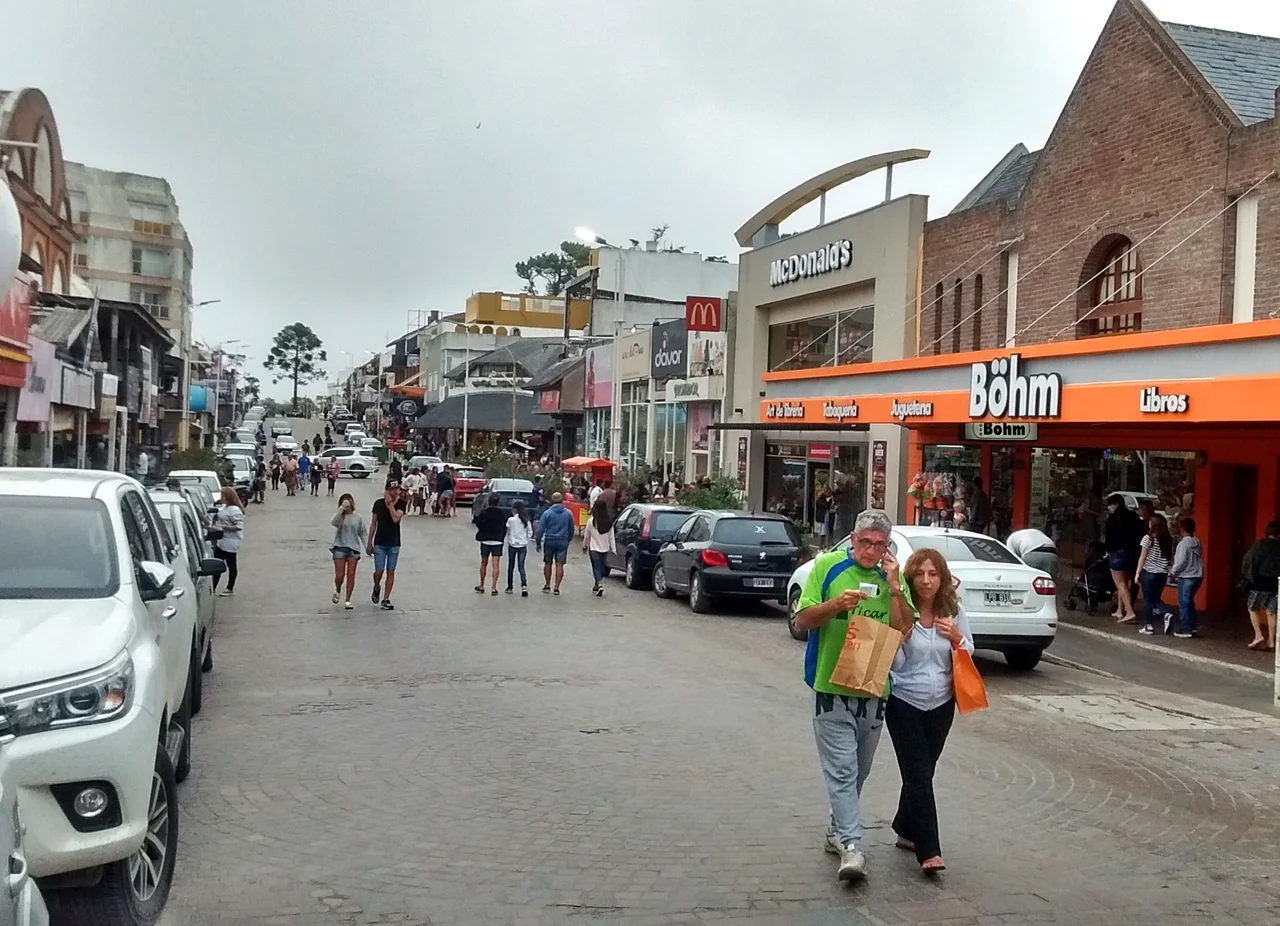
Villa Gesell sits on the Atlantic coast of Buenos Aires Province at approximately 37.25°S, 56.98°W, a town of streets numbered rather than named, laid out along the shoreline behind a belt of wooded dunes. From the air it reads as a dense grid pressed between the forest and a long pale beach. The site of the crime lies in the downtown blocks near Avenida 3. The nearest field is Villa Gesell Airport, also called Villa Gesell–Pinamar International (ICAO: SAZV), about 6 km inland with a single paved runway; Mar del Plata's Astor Piazzolla International Airport (ICAO: SAZM) lies roughly 80 km southwest along the coast. This is a place to pass over quietly. Recommended altitude 2,500 to 4,000 feet AGL, with the clear coastal light that summer usually brings.
Nearby Stories
- Campos del Tuyú National Park 67 km away
- Austral Líneas Aéreas Flight 205 67 km away
- Museo Juan Manuel Fangio 69 km away
- Tandil 132 km away
- Chascomús 152 km away
- German cruiser Admiral Graf Spee 218 km away
- 2012 Air Class Líneas Aéreas Fairchild Swearingen Metroliner crash 254 km away
- South Georgia Island 2413 km away