.jpg)
Austral Líneas Aéreas Flight 205
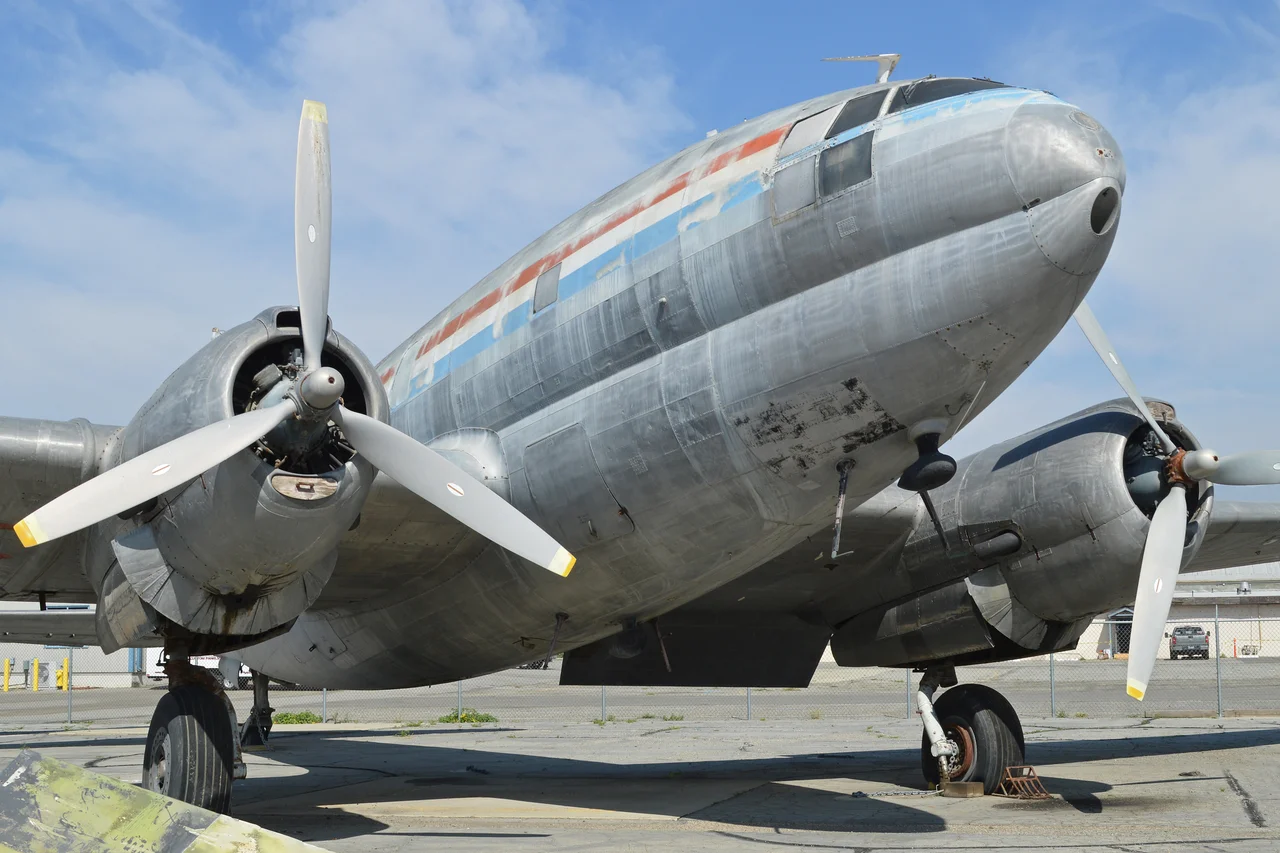
It was high summer in Argentina, the season when Buenos Aires empties toward the coast and the resort city of Mar del Plata fills with families chasing the sea breeze. On the night of 16 January 1959, fifty-two people boarded a propeller-driven Curtiss C-46 Commando for the short hop south, an hour or so over the dark Pampas to the Atlantic shore. The weather over Mar del Plata was poor, and the flight had already waited thirty-five minutes for it to clear. It would never clear. Of the fifty-two souls aboard, fifty-one would not see the morning.
A Routine Hop South
Flight 205 lifted off from Buenos Aires at 19:50, carrying five crew and forty-seven passengers across roughly 250 miles of darkened countryside. For most of the journey there was nothing remarkable about it. The Commando was a sturdy wartime workhorse, twin-engined and reliable, the kind of aircraft that had carried tens of thousands of people safely over these same Pampas. The route was familiar. The passengers were the ordinary traffic of an Argentine summer: vacationers, families, people heading to the coast for reasons that died with them and were never fully recorded. They had every reason to expect to land within the hour and step out into the warm sea air. As the aircraft neared Mar del Plata, controllers cleared it to land on runway 12. The night, though, was working against everyone aboard.
The Approach That Failed
Two things compounded the danger. The airport's non-directional beacon, the radio aid that would have guided the crew down through cloud, was not functioning. And the visibility was poor, the runway lights smeared and indistinct in the murk. The captain, unfamiliar with the local airspace, misjudged his approach. The Commando came in too high, passing over the runway at about 85 meters, and overshot. He made the right call and committed to a go-around, pushing the engines to climb away and try again. But in the bad light and worse visibility, the heavy aircraft stalled. At 21:40 it struck the sea roughly 1.2 kilometers from the airport, the warm Atlantic swallowing it in the dark.
Four Hours in the Water
All five crew and forty-six of the forty-seven passengers were lost. That so many died makes the survival of the one almost unbearable to imagine. Roberto Servente, a businessman, came out of the wreckage into the open sea with multiple fractures and grave injuries, and somehow did not give up. For four hours he stayed alive in the water, and then he swam, broken, toward a shore he could barely see. He reached it. The story of that night could have ended in pure tragedy, and for fifty-one families it did. For Servente, it became the strange beginning of a long second life.
The Survivor's Long Road
Servente did not let the crash define him by its grief alone. In the years that followed he went to work for the very airline whose plane had nearly killed him, and he rose to become a director of Austral. He carried the night of 16 January 1959 for the rest of his days and lived a remarkably long life, dying on 7 March 2014 at the age of ninety-three, fifty-five years after the water nearly took him. The official investigation laid most of the blame on the crew's handling of the failed approach, finding that the captain, unfamiliar with the airspace, had miscalculated the instrument approach, and that the strain of the moment contributed to the loss of control. But it noted, too, the dead beacon and the blinding weather. Mostly the report is a ledger of how small failures, stacked together on a dark night, cost fifty-one people everything. At the time it was the second-worst accident in Argentine aviation history, and it remains one of the deadliest ever involving the Curtiss C-46. In Mar del Plata, older residents long remembered it simply as the night the city did not sleep.
From the Air
The crash site lies in the Atlantic roughly 1.2 km offshore from Mar del Plata, near 37.93°S, 57.57°W, just short of what is today the city's Astor Piazzolla International Airport (ICAO: SAZM, named in 2008 for the tango composer born in Mar del Plata). The coastline here is a long arc of beach backed by the resort city's dense grid; from altitude the airport sits a few kilometers inland of a shore that meets open ocean to the southeast. For aviators retracing the approach, the modern field uses runway 13/31. Recommended contemplative viewing altitude is 2,500 to 4,000 feet over the shoreline. Summer brings sudden coastal storms and reduced visibility of exactly the kind that doomed Flight 205, so treat the area's weather with the respect that night demanded and was not given.
Nearby Stories
- Museo Juan Manuel Fangio 22 km away
- Cariló 50 km away
- Murder of Fernando Báez Sosa 60 km away
- Tandil 105 km away
- Campos del Tuyú National Park 170 km away
- Tres Arroyos 199 km away
- Monte Hermoso 345 km away
- HMS Sheffield (D80) 1659 km away