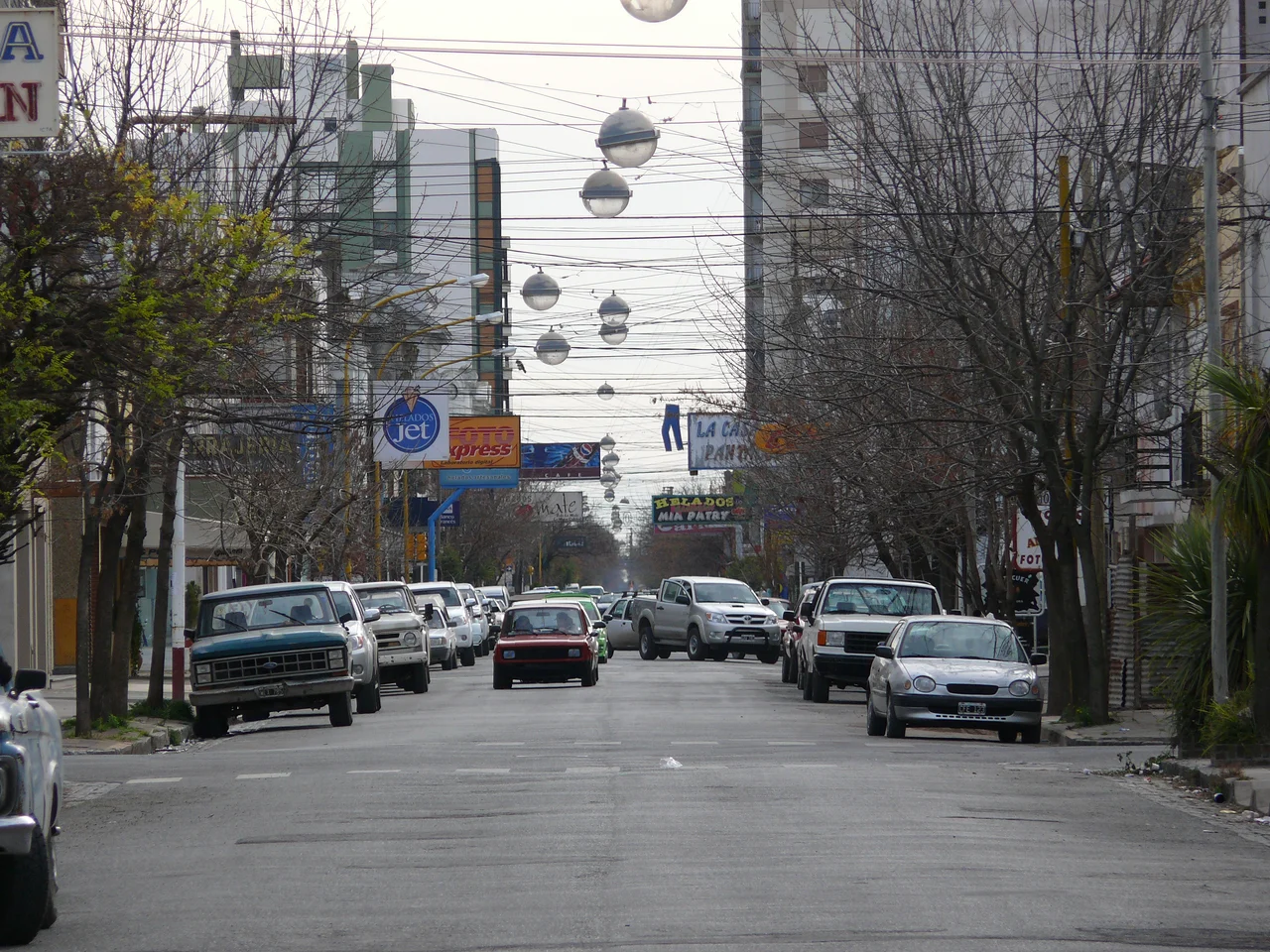

Tres Arroyos
Somewhere on the flat grasslands of southern Buenos Aires Province, you might catch the silhouette of a church that looks like it wandered south from the Low Countries, and you would not be imagining things. Tres Arroyos holds the largest Dutch community in Argentina, a colony of Frisian and Groninger farmers who crossed an ocean for cheap fertile land and then refused, for generations, to stop being Dutch. The name means three streams, a plain enough description of the three watercourses that cross the partido. The town itself is anything but plain: it is a piece of Holland transplanted into the Argentine pampas, and a place where human history runs far deeper than any immigrant ledger.
Holland on the Plains
The Dutch came in two waves. The first arrived in 1889, mostly poor families from the agrarian districts of Friesland and Groningen, chasing land they could never afford at home. A second group followed in 1924, farmers' sons from the Haarlemmermeer polder near Amsterdam, some with real money behind them and modern farming know-how to match. Together they built Argentina's largest Dutch enclave, centered in the Micaela Cascallares area, founding agricultural cooperatives and working the soil with techniques their neighbors had never seen. What is remarkable is how well the colony held its identity. Generations later, the community remains distinctly Dutch in character, an immigrant culture that did not dissolve into the Argentine mainstream but kept its own shape on the open grass.
The Oldest Sleepers
Just five kilometers from town lies Arroyo Seco, one of the oldest archaeological sites yet found in Argentina. Excavators uncovered more than forty human skeletons, many arranged in what appear to be deliberate burial positions, dated to roughly nine thousand years before present. Around them lay stone tools, hunting implements, and the fossil bones of extinct mammals, the gear and prey of people who lived on this plain when it still carried Ice Age survivors. These were not anonymous remains but the dead of a community that buried its own with care, on the same ground where farmers would plant wheat ninety centuries later. Much of what was found is now displayed at the José A. Mulazzi Municipal Museum, where reconstructions try to give those ancient lives a face.
Wheat, Wind, and Weather
Tres Arroyos sits in a sweet spot for farming, which is precisely why immigrants kept coming. Its oceanic climate, mild and bordering on humid subtropical, spreads roughly 836 millimeters of rain fairly evenly across the year, with summers warm and winters gentle. Snow falls now and then but rarely sticks. The sun is generous, near 2,374 hours a year, and the rhythm of moderate rain and ample light suits grain and grazing alike. This is the agricultural heart that drew Frisians across the Atlantic and sustained them once they arrived: unglamorous, reliable, productive land, the kind a farmer can build a life on without ever quite escaping the wind that never stops sweeping the pampas.
A Town and Its Team
Like most Argentine towns, Tres Arroyos lives and dies a little with football. Its club, Huracán de Tres Arroyos, is the local pride, a team now playing in the regional leagues but with a memory worth boasting about: as recently as the 2004-05 season it competed in the Argentine Primera, the country's top flight, an outsized achievement for a city of its size. To reach the wider world, the town leans on Tres Arroyos Airport, a small field linking this corner of the plains to the rest of Argentina. It is a community comfortable in its own skin, equally proud of a Dutch church, a stadium, and a burial ground older than almost anything else in the country, all of them rooted in the same patch of grass.
From the Air
Tres Arroyos lies in southern Buenos Aires Province at 38.37°S, 60.27°W, on the pampas inland from the Atlantic coast. From altitude the city reads as a compact grid surrounded by the geometric patchwork of wheat fields and cattle pasture, with the three watercourses that give the town its name threading the partido; the Arroyo Seco archaeological site sits about 5 km out. The town is served by Tres Arroyos Airport for general aviation. The nearest major airport is Comandante Espora at Bahía Blanca (ICAO: SAZB) to the southwest; Buenos Aires Ezeiza (ICAO: SAEZ) lies to the northeast. The flat terrain offers good visibility, though the region shares the Pampas tendency toward strong spring and summer thunderstorms.
Nearby Stories
- Monte Hermoso 54 km away
- Club Hotel de la Ventana 98 km away
- Sierra de la Ventana (mountains) 103 km away
- Piedra Movediza 107 km away
- Yellow Fever in Buenos Aires 130 km away
- Tandil 134 km away
- Punta Alta 156 km away
- Pepys Island 928 km away