.jpg)
Murder of Marie Wilks
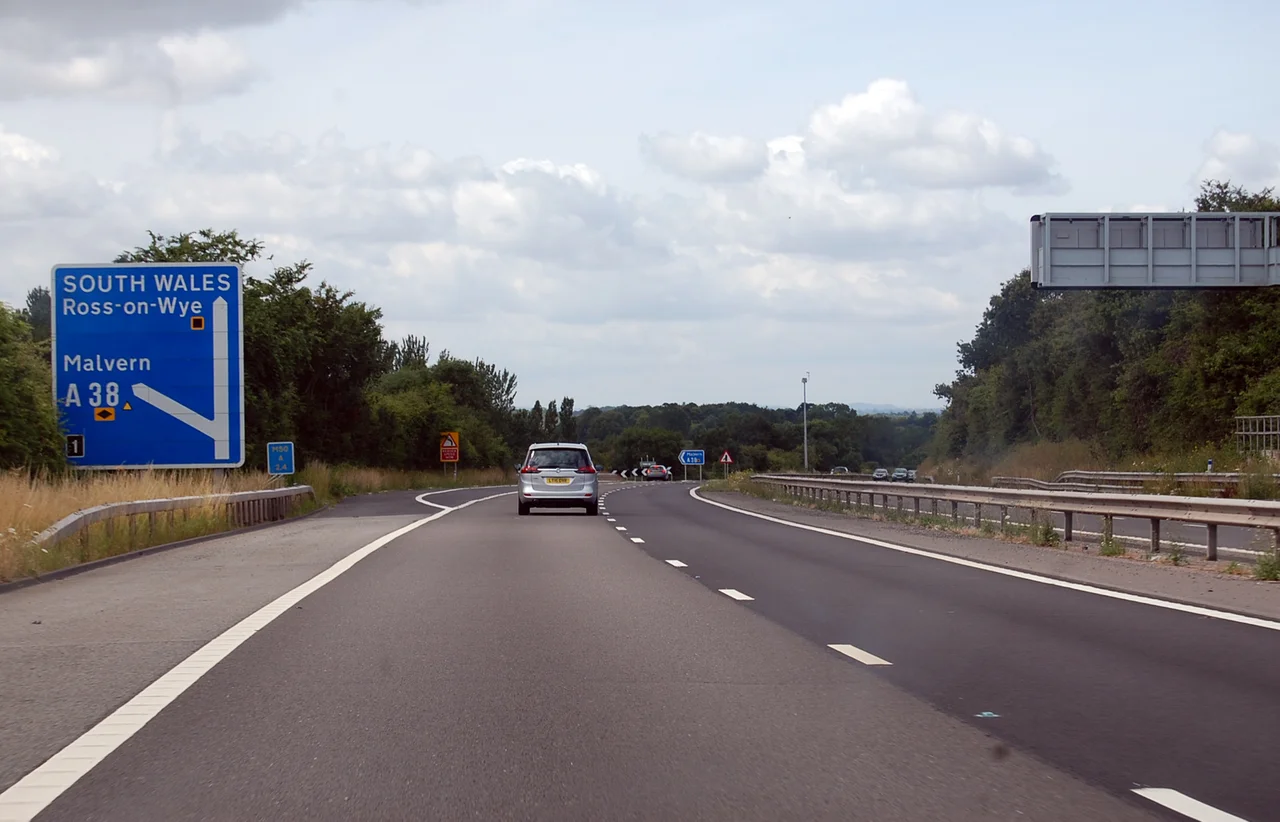
Marie Wilks was 22 years old, seven months pregnant, and driving home to Worcester on the afternoon of 18 June 1988. She had been visiting her husband Adrian, a Territorial Army soldier on weekend training. In the car with her were her 11-year-old sister Georgina and her 13-month-old son Mark. Somewhere on the M50 motorway, between the Welsh border and Worcester, her car broke down. She left the children in the vehicle, walked to an emergency telephone on the hard shoulder, and called for help. The attack that followed took roughly ten minutes. Her body was found two days later, dumped three miles further up the road.
Who Marie Was
She was a young mother. She was about to be a mother of two. She was the kind of person who would offer her sister a day out at the Army camp because her husband missed them, and would put her toddler in the back of the car for the drive home. The crime was not a robbery. Nothing was taken. The attacker stabbed her in the neck, severing her carotid artery, and struck her on the head. The whole thing was over in roughly ten minutes by the prosecution's reconstruction. Georgina and baby Mark waited in the broken-down car. They survived, but the next forty years would carry the weight of what nearly happened to them and what did happen to Marie. The case marked a generation of British women, who began to think differently about driving alone, about breakdowns, about the casual safety of motorways.
The Investigation
West Mercia Constabulary mounted a methodical search. Officers set up interview tents at every nearby service station. They stopped motorists. They appealed for witnesses, and witnesses came forward in remarkable numbers. A blond man in his twenties, with a crew cut, pale skin and a sharp nose, had been seen pulling up alongside Marie's car in a silver-grey Renault 25. On 24 June, an artist's impression was released. On 25 June, a televised reconstruction sent a constable in a pink-and-white maternity dress walking the same hard shoulder where Marie had walked a week earlier. The image was widely broadcast. Tips poured in. Several of them named the same man - a Welsh nightclub bouncer called Edward Owen Browning.
Edward Browning
Browning had been released from prison in 1986 after serving most of a seven-year sentence for aggravated burglary. Police had found a revolver buried in his garden, used to threaten his victims. He had previous convictions for assault. On the day of the murder, he stormed out of his house after a violent argument with his wife Julie - who, like Marie Wilks, was seven months pregnant - and announced he was driving to Scotland to see a friend. The route would naturally have taken him along the M50. At trial in 1989, prosecutors described a chain of evidence: dozens of witnesses identifying him and his car; a written itinerary in his belongings that included the M50, which he then denied using; a tyre fault on his front nearside wheel that matched a skid mark at the body site; a blue-and-white striped shirt matching the artist's impression; and a smear of blood on his car when he arrived in Scotland, which he explained as an animal he had hit and then washed off. He was the only driver of a C-registered silver-grey Renault 25 in the entire country who could not be eliminated as a suspect. The jury deliberated for five and a half hours and convicted him unanimously. The judge sentenced him to life with a 25-year minimum.
Released on a Technicality
In 1994 Browning was freed on appeal. The reason was procedural rather than evidentiary. A police officer who had driven past the scene without realising what he was seeing had felt guilty afterwards. He had undergone hypnosis to try to recover more of the car's number plate. The hypnosis video produced a different number plate than Browning's, though the witness still insisted the car was C-registered, and he had immediately told police to disregard his recovered memory. The tape was never disclosed to either side at trial. The Court of Appeal ruled this a material irregularity. They did not declare him innocent. They simply could not be certain the jury would have convicted him knowing about the tape. He was released, and at the time, anyone released on appeal automatically received compensation regardless of likely guilt - a policy since changed.
What Came After
In the years after his release, Browning was convicted twice for carrying a knife in public, the same type believed used in the murder. He was convicted of drunk driving and evading arrest. He was arrested - though not convicted - for attacking his wife with a chainsaw. In 2000, a former friend testified on oath at an unrelated trial that Browning had confessed to murdering Marie Wilks the day before he was arrested in 1988. Re-investigations of the case have identified no other plausible suspects. Browning died in 2018, aged 63. Marie's husband Adrian, her son Mark - now grown - and her sister Georgina have spent more than three decades living with both the killing and the appeal. The emergency phones Marie used have been replaced and modernised. The motorway carries on. The case lives on in police training, in the changed habits of women drivers, and in a quiet stretch of the M50 near Bushley that most travellers pass without ever knowing what happened there.
From the Air
The site lies at 52.018 degrees north, 2.226 degrees west, on the M50 motorway near Bushley in Worcestershire, between Tewkesbury and the Welsh border. Best viewed from 2,000 to 4,000 feet. The M50 runs east-west, joining the M5 at the eastern end. The Severn Valley spreads out to the west. Nearest airfield is Gloucestershire Airport (EGBJ) about ten miles south-southeast. This is a place of remembrance, not visual spectacle.
Nearby Stories
- Grosmont Castle 4.8 km away
- Charfield Railway Disaster 9.8 km away
- Stratford-upon-Avon Canal 9.9 km away
- Droitwich Spa 11 km away
- Caerleon 12 km away
- Wigmore Castle 13 km away
- Church of the Holy Trinity, Stratford-upon-Avon 27 km away
- Marlborough Castle 29 km away