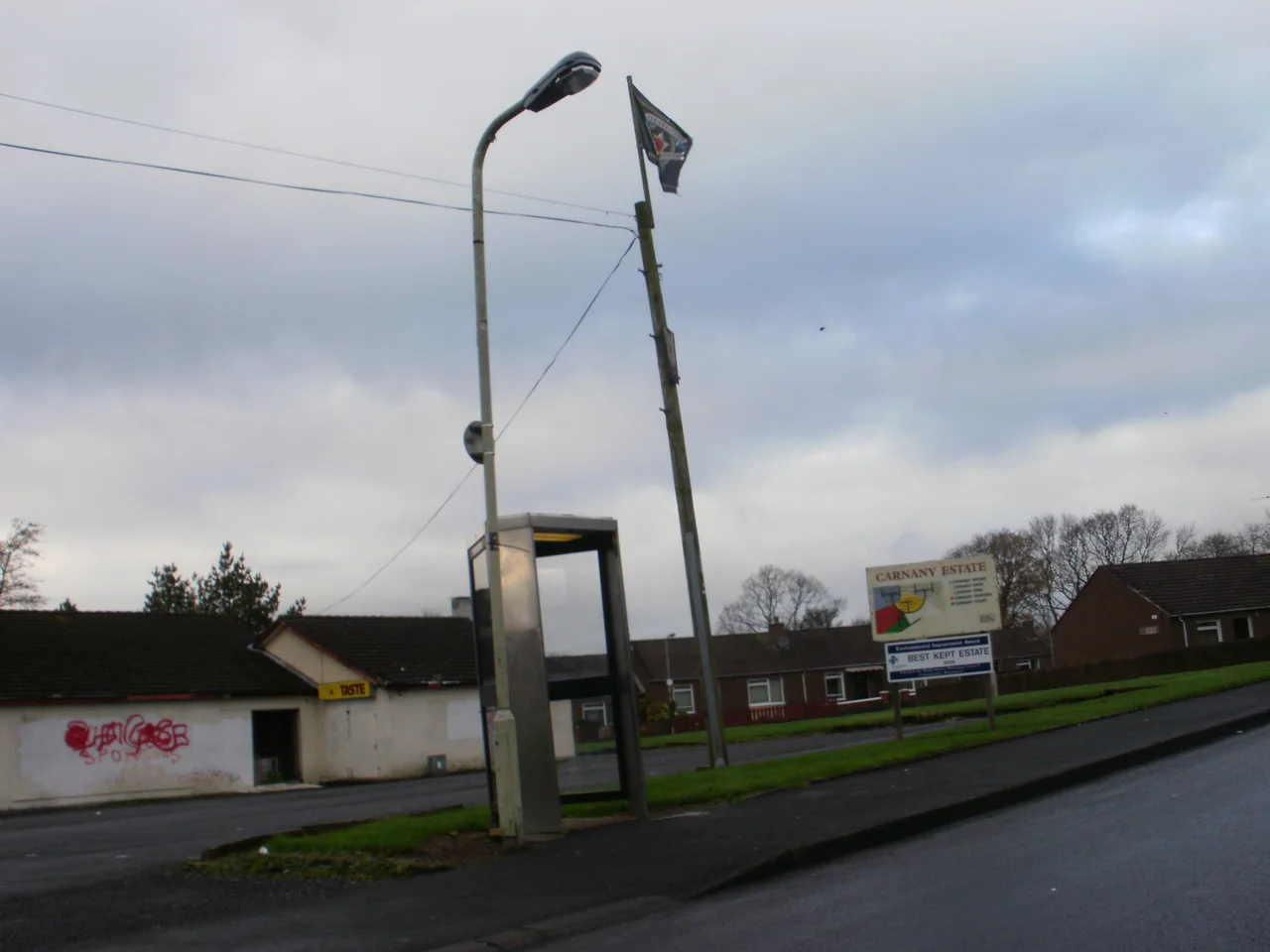

Murder of the Quinn brothers
Richard Quinn was eleven years old. His brother Mark was ten. Their younger brother Jason was nine. The night before they died, the three boys had been outside in the Carnany estate helping to build the Eleventh Night bonfire - the traditional loyalist celebration that lights up Protestant neighbourhoods across Northern Ireland on the eve of the Twelfth of July. They went to bed sometime after midnight. At about 4:30 in the morning of 12 July 1998, members of the Ulster Volunteer Force pulled up at their house and threw a petrol bomb made from a whiskey bottle through a rear window. The petrol caught and the smoke filled the upstairs bedrooms within seconds. Their mother Chrissie escaped by jumping from a first-floor window. The boys did not. They died in their beds.
The Boys
Richard, Mark and Jason were children. That has to be said first, because the killing was political enough that the children sometimes get lost inside it. Richard liked to go to school. Mark was the middle brother. Jason was the youngest. They attended a local state primary school. They had a mother who loved them, a stepfather, a wider family. On the evening before they died they had been doing what children all over Ballymoney did on the Eleventh of July - gathering wood for the community bonfire, watching the older boys do the heavy lifting, running around in the long northern summer twilight with the smell of petrol-soaked tyres in the air. They went home to a small house on the Carnany estate where they had been living for six days. The house had previously belonged to their aunt; the family had moved in only the week before. When the attack came they were asleep. There is no way to write about Richard, Mark and Jason Quinn without grief, but there is also no way to write about them without remembering that they were boys.
A Mixed-Religion Family
The Quinn family was what Northern Ireland calls 'mixed' - a Catholic mother, a Catholic father, but after Chrissie separated from her husband Jim Dillon she raised the boys as Protestant 'to avoid the hassle', as the inquest later heard. She lived with her Protestant partner Raymond Craig. The boys attended a Protestant state school. They built the Eleventh Night bonfire. By every visible signal of identity in 1998 Northern Ireland - school uniform, accent, friend group, neighbourhood - they were Protestant children. But their mother was Catholic, and on the Carnany estate that was reason enough. Five Catholic families on the estate had received UVF Christmas cards in the months before the attack - cards reading 'get out now', accompanied by letters containing 9mm bullets. The week of the attack, loyalists had set up an illegal roadblock at the entrance to the estate in support of the Drumcree Orange Order parade. Police had been petrol-bombed by the same crowds. Chrissie Quinn had told friends in the weeks beforehand that she was afraid the family home might be attacked.
The Attack
It happened at half past four in the morning. A car pulled up at the rear of the house in Carnany Park. Men got out. A petrol bomb - a whiskey bottle filled with fuel and stoppered with a rag - was lit and thrown through a rear window. The bottle broke on impact and the petrol spread fire across the floor. The boys' shouting woke their mother. She came into a bedroom thick with smoke and could not see well enough to find her sons. She thought they had escaped already. She and Raymond Craig and a family friend, Christina Archibald, climbed onto the windowsill and jumped to the ground a storey below; all three survived with minor burns and smoke inhalation. When the fire was finally controlled, two of the brothers' bodies were found in Chrissie's bedroom, where they had fled in the smoke trying to reach her. The third was found in another bedroom. Chrissie was treated at hospital and released the following day. The boys were buried two days later in St Mary's cemetery in Rasharkin, where her mother had been born, after Requiem Mass in a packed church. Thousands of mourners attended - Catholics and Protestants both.
Drumcree's Shadow
The attack on the Quinn family did not come out of nowhere. The summer of 1998 was dominated by the Drumcree standoff in Portadown, where the Orange Order's traditional march was being blocked by the Parades Commission from passing through the predominantly Catholic Garvaghy Road area. The Drumcree protests had escalated into nightly violence across loyalist areas - roadblocks, petrol bombings of police vehicles, attacks on Catholic homes throughout Northern Ireland. Senator Ted Kennedy of Massachusetts said in the aftermath that 'the Orange Order must recognize that its refusal to abide by the decision of the Parades Commission led to the murder of the Quinn boys'. Within days of the Quinn killings, the Drumcree protests collapsed. Many Orange Order leaders, horrified by the deaths, withdrew support. The Reverend William Bingham, an Orange Order chaplain, delivered a sermon describing the killings as a moment when 'no road' was 'worth' three children's lives. The deaths broke something in the loyalist political mood that summer. Drumcree was never quite the same after Ballymoney.
The Reckoning That Didn't Come
Garfield Gilmour, a local loyalist who had been involved in the attack, was arrested soon afterwards. He admitted driving three other UVF members to the Quinn house. He named the three men - Johnny McKay and the brothers Raymond and Ivan Parke - and was convicted of murder in October 1999, sentenced to life. The three he named were never charged: the prosecution said there was insufficient evidence. In June 2000, Gilmour's murder conviction was reduced to manslaughter on appeal and his sentence was cut to fourteen years. He was released six years after that. Chrissie Quinn moved back to Rasharkin to be near her family. The Quinn house in Carnany Park was demolished in April 1999 and a children's play park was built in its place as a memorial. The bench beside the swings has the names: Richard, Mark, Jason. They are still children there. They have been children there for more than twenty-five years now, and they will go on being children, while everyone they knew grows older around them, and the small Ballymoney estate where they were murdered for being half-Catholic in a mostly-Protestant place tries to grow into something better than it was on that morning in July 1998.
From the Air
The site of the attack was the Carnany estate on the northwest edge of Ballymoney, at approximately 55.07°N, 6.49°W. From altitude, Ballymoney is visible as a market town on the rolling country between the Lower Bann valley and the Antrim hills, about ten miles south of the Causeway Coast. The memorial play park where the Quinn family home once stood is in the residential Carnany area. Nearest airports: City of Derry (EGAE) about 19 nm west, Belfast International (EGAA) about 30 nm southeast. Visitors to Ballymoney are unlikely to find the site marked with anything visible from outside; it is a small play park within a residential estate, kept by the local community.
Nearby Stories
- Attacks on Shipping in Lough Foyle (1981-82) 7.9 km away
- Castledawson 8 km away
- Glenarm Castle 16 km away
- Machrihanish 16 km away
- Carrickfergus 18 km away
- Gortin 20 km away
- German submarine U-218 20 km away
- Port Ellen Distillery 35 km away