
Museo Nacional de Bellas Artes (Buenos Aires)
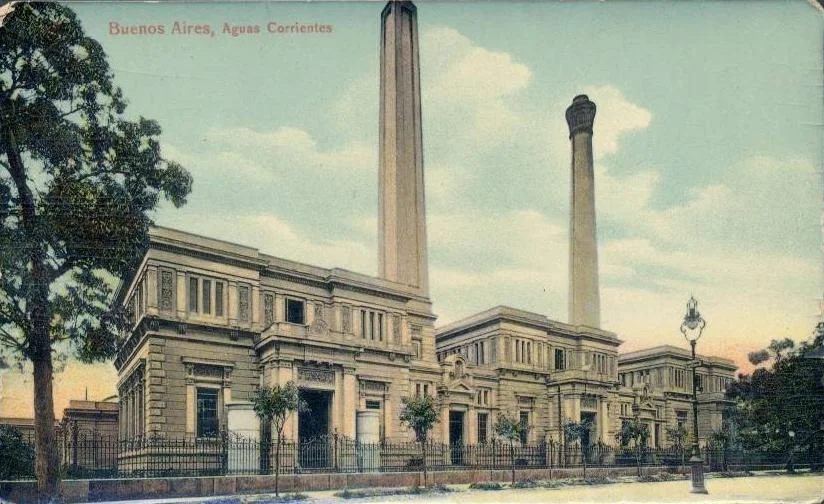
The building that holds Argentina's greatest paintings was designed to move water, not to display art. When it went up in 1870, this was a drainage pumping station, a piece of municipal plumbing for a growing port city. Today its halls hold a Rembrandt, a Goya, a Van Gogh, two Monets, a Manet, and works by Rodin and Chagall. The National Museum of Fine Arts in Buenos Aires is one of Latin America's most important art collections, and it lives, fittingly for a city that reinvents itself constantly, inside a structure that started life with an entirely different job.
A Museum That Kept Moving
The museum opened on Christmas Day, 1895, in a building on Florida Street that is now a glittering shopping mall, the Galerías Pacífico. Its first director was the painter and critic Eduardo Schiaffino, a man determined to give Argentina a serious national collection. In 1909 it moved into the old Argentine Pavilion on Plaza San Martín, a wrought-iron confection first built for the 1889 Paris exhibition, then dismantled and shipped across the Atlantic. When that pavilion was demolished in 1932, the collection moved again, settling in 1933 into its present home in elegant Recoleta. Architect Alejandro Bustillo transformed the former pumping station into galleries. The museum had finally stopped wandering.
European Masters by the Río de la Plata
Walk the ground floor and you travel through European painting from the Middle Ages to the twentieth century, hall after hall, twenty-four in all. A young woman gazes out from a Rembrandt of 1634. Goya hangs nearby, and a Zurbarán monk meditates in Spanish Baroque shadow. Van Gogh's view of the Moulin de la Galette glows with the restless brushwork of his Paris years. Monet appears twice along the Seine, Degas sketches his dancers, Manet's surprised nymph turns away. That so much of the European canon found its way to the far side of the world is itself a story, of immigrant wealth, of a young nation hungry to be counted among the cultured capitals.
The Argentine Floor
Climb to the first floor and the perspective shifts. Eight halls here hold the painters who built an Argentine visual identity: Antonio Berni, the visionary Xul Solar with his private mythologies, the port painter Benito Quinquela Martín, Raquel Forner, Eduardo Sívori, Lino Enea Spilimbergo. Among the most haunting is Ernesto de la Cárcova's Sin pan y sin trabajo, Without Bread and Without Work, painted in 1894. A laborer's family huddles indoors while, through the window, a strike turns violent. It is one of South America's first great works of social realism. Cándido López hangs nearby, the soldier-painter who lost his right hand in the Paraguayan War and taught himself to paint with his left, documenting the battles he had survived. The room insists, quietly, that the drama of art was never only European, and that a country at the edge of the map had its own urgent stories to tell.
The Scale of It
The permanent collection runs to 688 major works, backed by more than 12,000 drawings, fragments, and lesser pieces, spread across thirty-four halls and more than 4,600 square meters of exhibition space. A specialized library holds some 150,000 volumes. The museum found its modern footing under the director Jorge Romero Brest, who led it from 1955 to 1964 and pulled it toward the avant-garde, partnering with the Torcuato di Tella Institute to gather contemporary work; a hall devoted to current Argentine art opened in 1980. In 2004 the museum opened a Patagonian branch in the city of Neuquén, designed by architect Mario Roberto Álvarez, carrying the national collection a thousand miles south toward the steppe. For a museum that spent its first fifty years homeless, shuttled from a shop to an iron pavilion to a waterworks, the reach is remarkable, and admission to the Buenos Aires galleries remains free.
From the Air
The Museo Nacional de Bellas Artes stands in Recoleta at 34.58°S, 58.39°W, just inland from the Río de la Plata and a short walk from the Recoleta Cemetery. From the air, look for the green expanse of the Plaza Francia and the parks of Recoleta, with the wide riverside Avenida del Libertador running alongside. Aeroparque Jorge Newbery (ICAO: SABE) sits only about 3 km north along the river, so this stretch of Recoleta passes directly beneath many arrivals and departures; Ministro Pistarini / Ezeiza International (ICAO: SAEZ) lies roughly 35 km southwest. A viewing altitude of 1,500–2,500 ft on a clear day reveals the green grid of Recoleta's parks against the dense city beyond. River fog can reduce visibility over the riverbank on still mornings.
Nearby Stories
- Ezeiza Massacre 1.9 km away
- Luján, Buenos Aires 5.1 km away
- Curutchet House 13 km away
- Colonia del Sacramento 17 km away
- Martín García Island 28 km away
- Atucha Nuclear Power Plant 37 km away
- Lobos 43 km away
- Cry of Asencio 87 km away