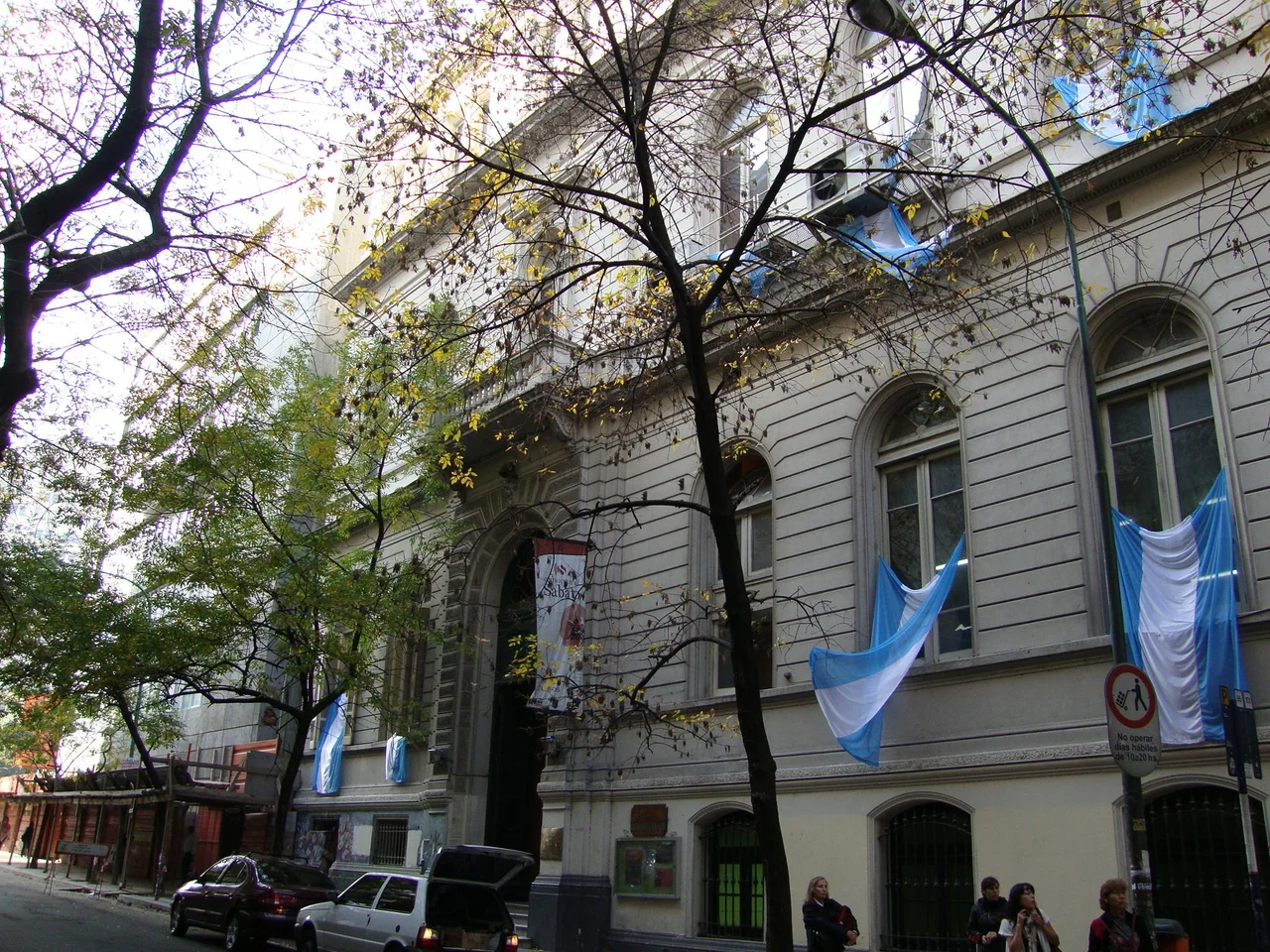

Museum of Foreign Debt
Most museums display what a nation is proud of. This one displays what nearly broke it. In the basement of the University of Buenos Aires economics faculty sits the Museum of Foreign Debt, a small, defiant institution devoted to a single, painful subject: two centuries of money Argentina borrowed and could not always repay. There are no gold treasures here, no old masters. There are charts, documents, and the long arithmetic of crisis. It may be the only museum in the world built to teach a country its own debt, and it was created by the people who lived through the worst of it.
Born From a Collapse
The idea took shape in 2001, in the rubble of catastrophe. Argentina was sliding into the depths of the 1998–2002 great depression. Banks froze ordinary people's savings behind what came to be called the corralito, the streets filled with protesters banging pots and pans, and in December 2001 riots left the country churning through multiple presidents in a single week. Then came the default, roughly 100 billion US dollars, the largest sovereign debt default in history to that point. Amid the wreckage, graduate students and professors at the economics faculty asked a simple question: how did we get here, again and again? They resolved to build a space to explain it, in their words, in a way both didactic and engaging. The faculty's board approved the project, and a professor named Simón Pristupin became its founding director, turning a basement on Uriburu Street into a classroom for the whole country.
Never Again
The museum opened to the public in 2005 with an exhibition whose title borrowed deliberately from Argentina's reckoning with its dictatorship: Deuda Externa, Nunca Más, Foreign Debt, Never Again. The echo was intentional and pointed. Argentines had used Nunca Más to confront the crimes of the junta years; now the same words were turned on an economic wound. The choice framed debt not as a dry technical matter but as a national trauma, something a society should study, remember, and resolve never to repeat. It was an unusually emotional charge for an exhibit full of bond yields and interest rates.
The Long Ledger
The collection traces the debt across the whole arc of the republic, beginning with the very first years of independence after 1810 and running to the present day. One of the founding wounds came early: an 1824 loan from the London bank Baring Brothers, meant to fund public works, that the young country spent decades struggling to repay. Its archive holds more than 1,200 classified documents on the history of borrowing and unemployment in Argentina. To walk through is to follow a pattern that repeats with grim reliability across generations: loans taken in good times, defaults forced in bad, and ordinary people, savers, workers, families, left to absorb the cost. To reach younger audiences, the museum even published comic books and produced an animated series. It does not lecture so much as lay the record bare and let the recurrence speak. Admission is free, and so are the guided tours.
A Lesson Kept in the Open
There is something quietly radical about a country putting its financial failures on permanent display, in a public university, for students and curious visitors alike. Argentina has restructured and defaulted on its debt more than once even since the museum opened, a reminder that the lesson is not finished being learned. That is precisely the point. The Museum of Foreign Debt does not pretend the problem is solved. It treats it as living history, an ongoing argument about sovereignty, fairness, and the price of borrowed money, conducted in the basement of the faculty that trains the country's next economists.
From the Air
The Museum of Foreign Debt occupies the basement of the University of Buenos Aires Faculty of Economic Sciences, near 34.60°S, 58.40°W, in the Balvanera area just west of the historic center. From the air it is not a distinct landmark, but it lies within the dense university and government quarter; look for the broad Nueve de Julio Avenue and its towering obelisk a short distance east, and the green of nearby plazas. Aeroparque Jorge Newbery (ICAO: SABE) is roughly 5 km northeast along the river; Ministro Pistarini / Ezeiza International (ICAO: SAEZ) lies about 30 km southwest. A viewing altitude of 2,000–3,000 ft on a clear day gives the best sense of the surrounding cityscape. Summer humidity can leave a haze over the central districts.
Nearby Stories
- Ezeiza Massacre 1.9 km away
- Luján, Buenos Aires 5.1 km away
- Curutchet House 13 km away
- Colonia del Sacramento 17 km away
- Martín García Island 28 km away
- Atucha Nuclear Power Plant 37 km away
- Lobos 43 km away
- Cry of Asencio 87 km away