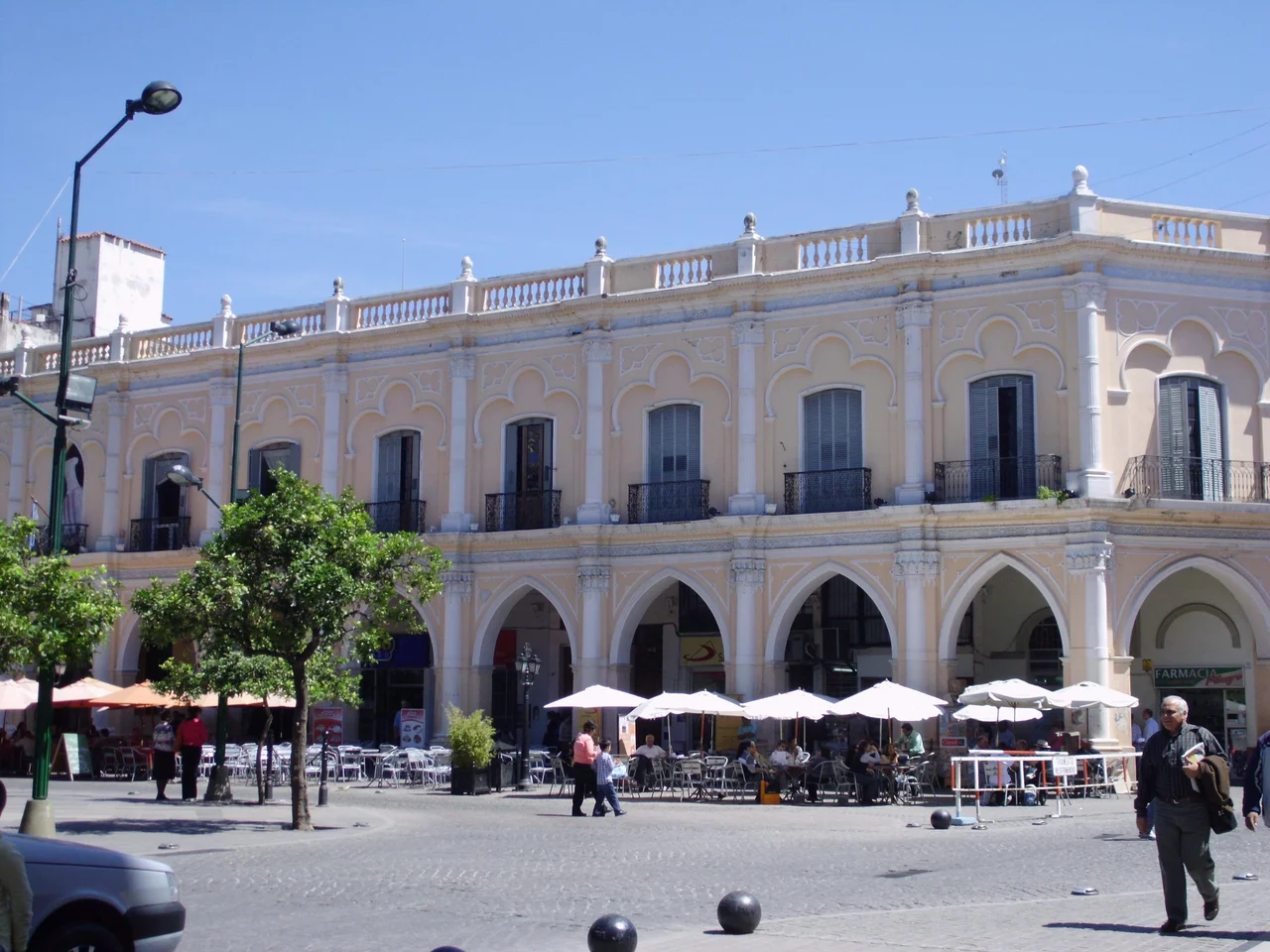

Museum of High Altitude Archaeology
She looks as though she might be asleep. The girl the world has come to call la Doncella, the Maiden, sits with her head bowed and her hands resting on her knees, her dark hair still braided, her face calm. She was around fifteen years old when she died, more than five hundred years ago, on the frozen summit of the Llullaillaco volcano. The cold that killed her also kept her, perfectly, down to the fine hairs on her arms. In the historical heart of Salta, the Museum of High Altitude Archaeology was built around her and two younger children, and around a question their presence forces every visitor to confront.
The Summit Where They Were Found
In March 1999 the archaeologists Johan Reinhard and Constanza Ceruti led a team to the top of Llullaillaco, a stratovolcano of 6,739 meters straddling the border of Argentina and Chile. Near the summit, at roughly 6,700 meters, they uncovered three children where the Inca had laid them: the Maiden of about fifteen, a boy of around seven, and a girl of about six who had been struck by lightning in her grave and is known now as the Lightning Girl. Researchers called them the best-preserved mummies ever found. One of the small hearts still held frozen blood. They had not decayed so much as paused, suspended by altitude and ice in the highest archaeological site on Earth.
Capacocha: What the Children Carried
The children died in a rite the Inca called capacocha, an offering of the most precious thing the empire could give. They were not victims of cruelty as their own culture understood it, but chosen ones, often children of unusual beauty or noble birth, sent to join the mountain gods who governed weather, harvest, and the fate of the realm. Hair analysis has since traced their final year: in the months before the long pilgrimage to the summit, their diet shifted, and they consumed growing amounts of coca and maize beer. The Maiden likely died asleep or unconscious, dulled by drink and coca against the cold. They went to the mountain richly dressed, accompanied by figurines and offerings, as messengers between their people and the sky.
A Museum Built Around a Silence
When the children came down from Llullaillaco, Salta Province faced an unusual problem: how to care for human remains so fragile that ordinary display would destroy them. The answer was a museum, opened in 2004 and devoted to them, though the technical challenge of showing the children without harming them was not solved until 2007. They rest now in low light inside sealed cases that recreate the cold and dryness of the peak, shown one at a time. Over the years the collection grew to include other Andean finds, among them a looted mummy called the Reina del Cerro, the Queen of the Hill, recovered after decades adrift among private collectors.
The Question That Will Not Settle
The museum is among the most admired in Argentina, and yet its central exhibit has never been at peace. Since its founding, Indigenous communities have objected that the children were removed from the mountain and put on display without their consent, calling it a desecration and a violation of their rights. To some, the children are an irreplaceable window into a vanished world, cared for with a reverence ordinary burial could not offer. To others, they are ancestors who completed a sacred journey and should have been left where their people meant them to remain. The museum does not pretend to resolve this. It holds the children, and it holds the argument, and it asks visitors to sit honestly with both.
From the Air
The Museum of High Altitude Archaeology stands at about 24.79 degrees south, 65.41 degrees west, in the colonial center of the city of Salta at roughly 1,187 meters (3,894 feet) elevation. It sits on the main plaza near the Salta Cathedral and the colonial Cabildo; from the air, look for the dense grid of the historic center cradled in the green Lerma Valley at the foot of the Andes. The volcano that gives the museum its purpose, Llullaillaco, lies far to the west on the Chilean border and is not visible from the city. Nearest airport is Martín Miguel de Güemes International (ICAO: SASA), about 7 km southwest of the center at 1,246 meters elevation, with generally clear conditions and good visibility year-round.
Nearby Stories
- Cachi 28 km away
- 1844 Salta Earthquake 35 km away
- 1692 Salta Earthquake 38 km away
- Santa Rosa de Tastil 43 km away
- San Antonio de los Cobres 48 km away
- Colomé 51 km away
- Quebrada de Las Flechas 84 km away
- Ledesma S.A.A.I. 91 km away