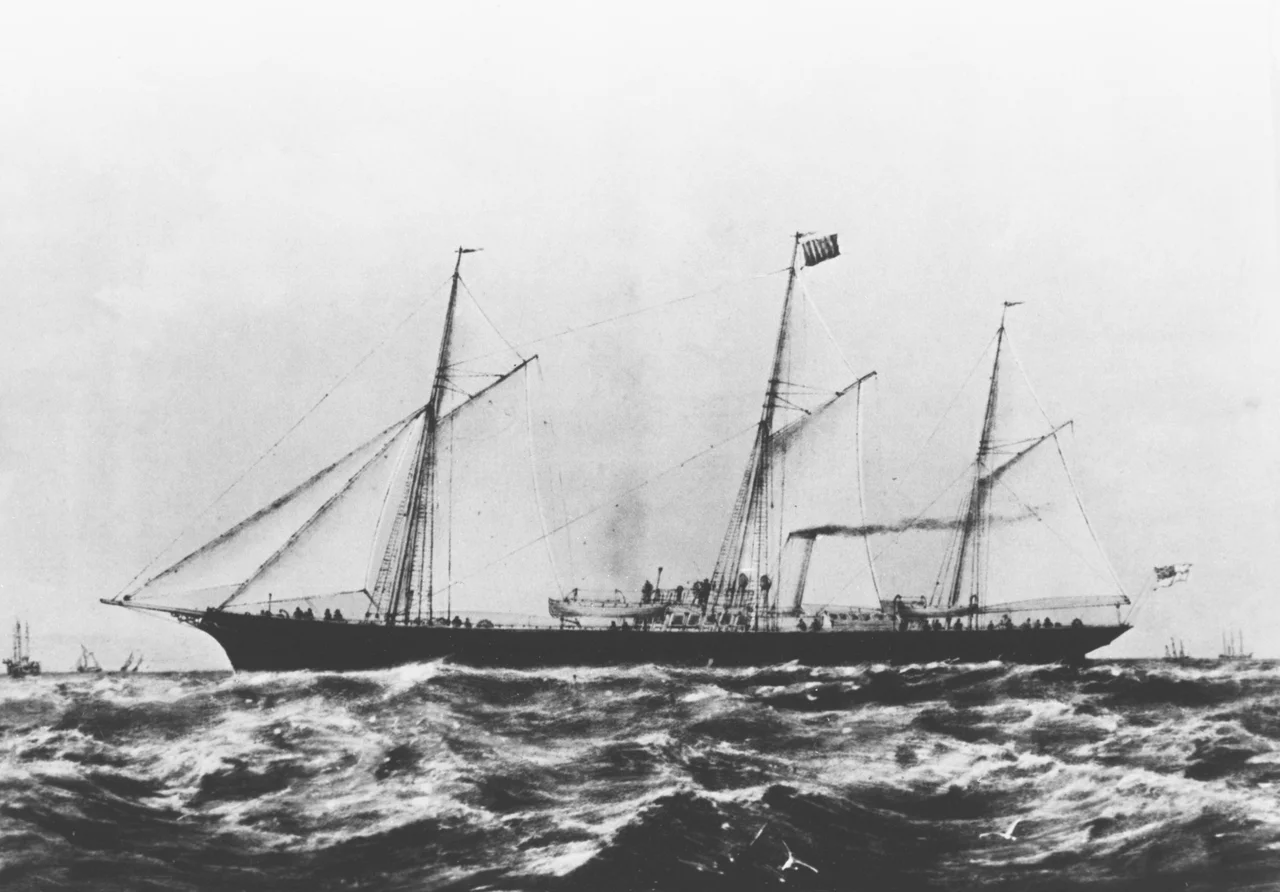

MV Struma
In December 1941, nearly 800 Jewish men, women, and children boarded a small, barely seaworthy ship in the Romanian port of Constanța. They were fleeing Axis-allied Romania, where their lives were in mounting danger, hoping to reach British-controlled Palestine. What followed — ten weeks of diplomatic abandonment in Istanbul harbor, followed by death in the Black Sea — became one of the worst maritime disasters of the Second World War, and one of its least remembered. The ship was called Struma. There was one survivor.
The People Who Boarded
The Struma had not been built for passengers. Originally launched in 1867 as a luxury steam yacht for a British aristocrat, the vessel had passed through a succession of owners and names — Xantha, Sölyst, Sea Maid, Kafireus, Esperos, Makedoniya — before ending up as a small diesel cargo ship used for hauling livestock. By December 1941, when the New Zionist Organisation and the Betar Zionist youth movement chartered her to carry Jewish refugees from Romania to Palestine, she was old, poorly maintained, and already showing engine trouble.
Aboard were families — parents with children, young couples, elderly men and women. Romanian Jews in 1941 faced persecution under Ion Antonescu's fascist government, an Axis ally of Nazi Germany. Emigration to Palestine offered a way out. The passengers paid for their places on a ship that carried roughly 781 refugees and 10 crew members, and departed Constanța on 12 December 1941. The engine failed almost immediately. A tug towed her out of port.
Ten Weeks in the Harbor
By 15 December the engine had failed again, and Struma was towed into Istanbul. Turkish authorities anchored her in quarantine in the harbor — not at a dock, but in the water — and the passengers were not permitted to disembark. They were trapped on a broken ship, crowded below decks, in winter, without adequate sanitation or supplies.
What followed was a diplomatic stalemate in which no government chose to help. Turkey would allow the passengers ashore only if Britain would authorize their immigration to Palestine. Britain refused, citing the 1939 White Paper that severely restricted Jewish immigration to Palestine out of concern for Arab political opinion. British officials, including those in Palestine, exchanged memos that acknowledged the refugees' desperate situation and declined to act. Romanian authorities showed no interest in taking the passengers back. Weeks passed. Then months. Jewish organizations in Istanbul sent food and supplies to the anchored ship. Diplomatic cables moved between capitals. The passengers waited.
After more than two months — 71 days in quarantine — no solution had been found. A handful of passengers were permitted to disembark for medical or other reasons; the vast majority remained aboard.
Towed Out and Cast Adrift
On 23 February 1942, Turkish police boarded Struma. Her engine still did not work. The Turkish authorities made their decision: the ship would be towed out of Istanbul harbor, back into the Black Sea, and released. No rescue arrangements were made. No port was designated for the passengers to reach. The ship was cast adrift roughly 10 miles off the coast, its engine inoperable, its passengers unable to go anywhere.
On the morning of 24 February 1942, the Soviet submarine Shchuka-class vessel Shch-213 torpedoed Struma. The explosion and the sinking were swift. Many people were trapped below decks and drowned immediately. Others reached the surface and clung to wreckage. For hours, in the cold February sea, no rescue came. One by one, they died from drowning or hypothermia.
Of the approximately 791 people aboard — by most careful recent counts, 781 refugees and 10 crew members — exactly one survived. His name was David Stoliar, a 19-year-old Romanian Jew who clung to floating debris until he was eventually rescued. He was the sole survivor not just of the sinking but of the entire voyage. He lived until 2014, when he died in Oregon at the age of 91.
Accountability and Memory
The sinking of Struma produced no immediate international reckoning. The Soviet torpedo was not a targeted act against civilians — the submarine crew almost certainly did not know what the ship was — but the conditions that left nearly 800 people adrift and defenseless in a war zone were entirely man-made. The Turkish decision to tow the ship out; the British refusal to issue immigration permits; the failure of any party to provide the passengers refuge or safe passage: these were choices, made by governments, on behalf of the people aboard.
The wreck of Struma has never been found, despite a search in 2000. Memorials to the victims stand in Ashdod and Holon in Israel. Yad Vashem, Israel's Holocaust memorial authority, maintains documentation of the disaster. David Stoliar, for decades reluctant to speak publicly about what he survived, eventually gave interviews in the 2000s; the Washington Post profiled him in 2000 and again after his death.
The name Struma is remembered today primarily in Israel, where it appears in the history of the Aliyah Bet — the clandestine Jewish immigration to Palestine that British policy had driven underground. For the people who boarded in Constanța in December 1941, it was simply the ship they believed would take them somewhere safe.
From the Air
The Struma was torpedoed and sank in the Black Sea approximately 10 nautical miles north of the Bosphorus mouth, in open water near coordinates 41.38°N, 29.22°E. There is no land feature to mark the location — the site is open sea. The nearest major airport is LTFM (Istanbul Airport) on the European shore, approximately 25 km to the west. Flying north from the Bosphorus mouth, the featureless expanse of the Black Sea begins almost immediately. The waters here are cold in winter; visibility can be limited by Black Sea overcast. The Struma wreck has not been located.
Nearby Stories
- Polonezköy 12 km away
- Istanbul Canal 13 km away
- Bathonea 13 km away
- German submarine U-23 (1936) 26 km away
- Januarius MacGahan 52 km away
- Battle of Constantinople (922) 54 km away
- Sangarius Bridge 60 km away
- Edirne 187 km away