
Polonezköy
Franz Liszt passed through in 1847. Gustave Flaubert came by in 1850. The future Pope John XXIII gave confirmation to children here in 1941. Lech Wałęsa visited in 1994. The guest book of Polonezköy — also known as Adampol — reads like a peculiar hall of fame, and that peculiarity is precisely the point. This is a Polish village in Turkey, thirty kilometers from the heart of Istanbul, founded by political exiles who fled a failed uprising against Russian rule in 1830 and never went home.
Exile's Foundation
After the November Uprising of 1830 collapsed under Russian military pressure, thousands of Polish patriots scattered across Europe and beyond. Prince Adam Jerzy Czartoryski, then chairman of the Polish National Uprising Government and the most prominent leader of the Polish political emigration, established his main exile court in Paris. But he envisioned a second center further east, where Polish soldiers and refugees might find sanctuary closer to their homeland. In 1842, his representative Michał Czajkowski purchased a forested tract of land near Tuzla from the Lazarist missionary order on behalf of the prince, and the first twelve settlers arrived. The village was named Adampol in the prince's honor — a Polish rendering of Adamköy. The land was bought, the trees cleared, the soil broken for agriculture. Poland itself did not exist as a state. This small forest clearing, improbably, would.
Waves of Arrival
The village's population grew in surges that mapped the catastrophes of nineteenth-century Europe. Participants in the revolutions of 1848 came. Veterans of the Crimean War arrived in 1853. Escaped prisoners from Siberian exile found their way here, as did Poles who had been held captive in Circassia. At its peak the village held no more than 220 Poles — it was always a small place. The first settlers farmed, raised cattle, and worked the forest. Over time, tourism began to supplement agriculture; Adampol's proximity to Istanbul made it a destination for Ottoman aristocrats and European travelers alike. The chronicles dutifully recorded arrivals: Flaubert with his notebook, Liszt presumably with his piano ambitions intact, Atatürk himself paying a visit in 1937. Even in exile, this village had a social life.
The Turkish Century
Polish independence came in 1918, and many of Adampol's residents returned to the country they had spent generations mourning. Those who remained made a different choice: in 1938, they took Turkish citizenship. The village became officially Turkish — renamed Polonezköy, from the French polonaise and the Turkish köy, meaning simply "Polish village" — while remaining culturally Polish. The Our Lady of Częstochowa Church continued to hold services. The cemetery kept its Polish inscriptions. Muslim families gradually settled alongside the old Polish community, and today the village of 346 residents (as of 2022) is ethnically mixed, though the Polish thread runs through every institution. Some residents still speak Polish fluently. Their neighbors generally know them only by their distinctly non-Turkish family names.
An Unlikely Inheritance
The village's most surprising legacy may be cultural rather than architectural. Nazım Hikmet — the poet whose work became foundational to modern Turkish literature, who was imprisoned for years by the Turkish state and whose influence spread across the world — had Polish ancestry: his great-great-grandfather Konstanty Borzęcki was a Polish officer who fled to the Ottoman Empire after the 1848 uprising. Leyla Gencer, the soprano whose operatic career carried Turkish artistic life onto international stages, was born in Polonezköy itself, though to a Turkish father and a Lithuanian Catholic mother. The Polish exiles who cleared this forest did not set out to shape Turkish culture. They set out to survive, to hold on to something, to keep Polish alive in a place where no one required them to. That what they kept alive also fed the culture around them is one of exile's more generous ironies.
The Village Today
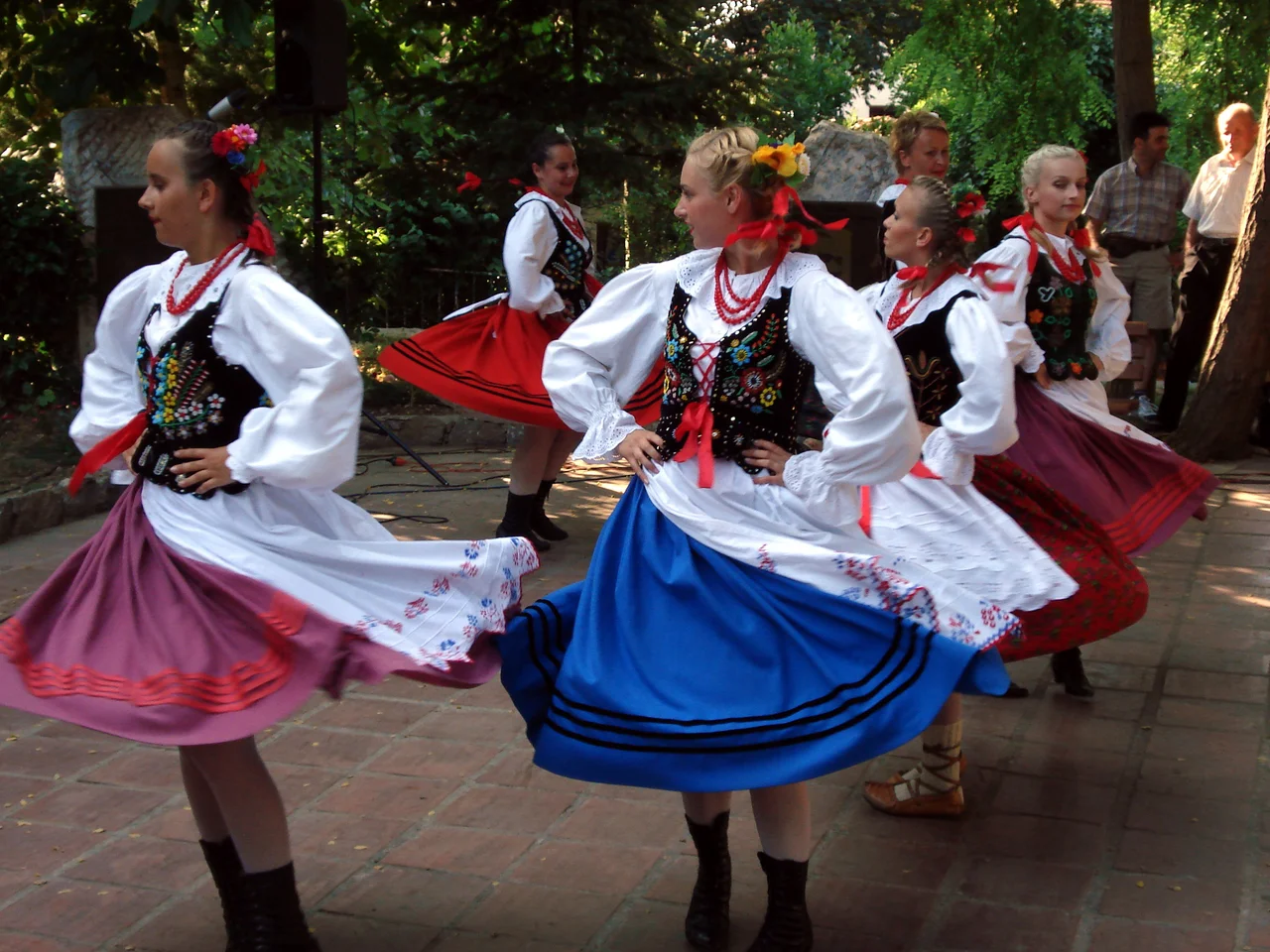
Polonezköy is twinned with Tomaszów Mazowiecki and Zakopane in Poland, and the annual summer festival that brings folk bands from Poland fills the village square with music that would have been recognizable to the first settlers. The Memorial House of Zofia Ryży preserves photographs, documents, and period interiors from the village's history. In the cemetery, the grave of Ludwika Śniadecka — a woman who loved the Romantic poet Juliusz Słowacki and who found her final rest here far from Poland — stands among 92 others that have been carefully restored. Istanbul's urban sprawl presses closer every decade, but inside the village's forested boundaries, something stubbornly remains: the evidence that people who lose a country can still, if they are determined enough, keep a home.
From the Air
Polonezköy lies at approximately 41.11°N, 29.21°E, on the heavily forested hills of the Asian side of Istanbul, within the Beykoz district. The nearest major airport is Sabiha Gökçen International (LTFJ), approximately 20 km to the south-southeast. Flying north from Sabiha Gökçen toward the Bosphorus, the dense woodland of the Beykoz hills is visible below — Polonezköy is tucked into this forest, identifiable by the small cluster of buildings and the church tower among the trees. The Bosphorus is visible to the northwest, and the Black Sea coast lies roughly 10 km to the north. Recommended viewing altitude is 2,000–3,500 feet for the forested landscape.
Nearby Stories
- 2016 Atatürk Airport Attack 7.5 km away
- Istanbul Canal 11 km away
- MV Struma 14 km away
- German submarine U-23 (1936) 18 km away
- Sangarius Bridge 42 km away
- HMAS AE2 65 km away
- Bursa 70 km away
- Tottenham (1802 Indiaman) 82 km away