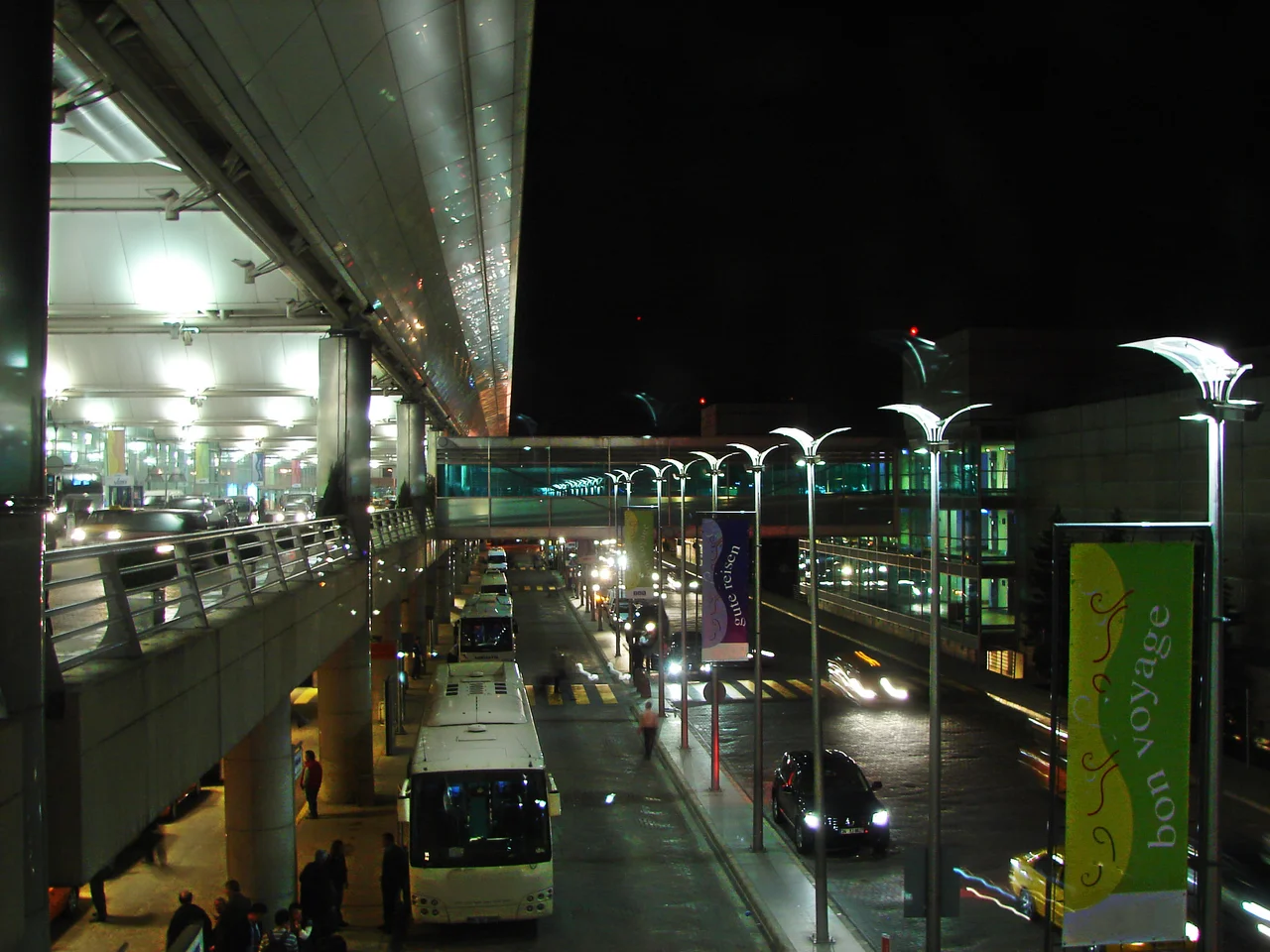

2016 Atatürk Airport Attack
The evening of 28 June 2016 was a Tuesday, shortly before 10 o'clock at night, and Istanbul's Atatürk Airport was full. It was the holy month of Ramadan, and Terminal 2 — the international terminal — was crowded with travelers: people returning home, people setting out, people waiting in the particular suspension of an airport at night. At a security checkpoint, three men armed with automatic weapons and explosive belts began their attack. What followed in the next minutes killed 45 people and wounded more than 230 others. Three attackers also died. This is a record of what happened, and a memorial to those who lost their lives.
The Night of the Attack
Shortly before 22:00 Istanbul time, two of the attackers approached the X-ray security checkpoint at Terminal 2 and opened fire. Police officers returned fire. The attackers detonated explosive devices on their persons. Security camera footage captured parts of the attack. In one sequence, a gunman is shown moving through the terminal, firing at people. He was shot and fell. A security officer approached, then ran — apparently having seen the explosive belt. The belt detonated. Based on the footage, one bomber was approximately 24 meters inside the terminal when he detonated his device, within or near a group of people. A third attacker was also killed, reportedly by security forces. Hundreds of passengers — people who had been checking in, waiting at gates, shopping — hid wherever they could: under benches, in washrooms, behind ticket counters. One witness described it: "We came right to international departures and saw the man randomly shooting. He was just firing at anyone coming in front of him. He was wearing all black. His face was not masked. I was 50 meters away from him." He and others took cover and survived. Others did not.
The People Who Were There
Atatürk Airport was, at the time, one of the busiest airports in Europe — a crossroads connecting East and West, handling millions of passengers each year. The people in Terminal 2 that evening came from many countries. Among the dead were Turkish citizens and foreign nationals from across the world. The final toll — 45 killed, not counting the three attackers — rose in the days following the attack as injuries proved fatal; a child was among those who died later. More than 230 people were wounded. Albanian Prime Minister Edi Rama's plane was landing at the time of the attack; he was evacuated safely. Taxis in the surrounding area carried wounded people to hospitals. The airport and the city absorbed an enormous shock. In the days that followed, public transport ran at full capacity, and locals gathered in market squares — not in defiance, exactly, but in the ordinary insistence of a city's life continuing.
Responsibility and Investigation
Turkey's then-Prime Minister Binali Yıldırım publicly accused ISIL of carrying out the attack. The group did not claim responsibility. CIA Director John O. Brennan stated that the attack bore the hallmarks of an ISIL operation. Turkish authorities confirmed that the three attackers were foreign nationals: according to the BBC, they came from Russia's North Caucasus region, Uzbekistan, and Kyrgyzstan. Two of the three were identified by state-run Anadolu news agency as Rakim Bulgarov and Vadim Osmanov. A trial for forty-six people accused of involvement in the attack began on 13 November 2017 in Silivri. Turkey declared 29 June a day of national mourning. President Recep Tayyip Erdoğan condemned the attack and noted that it had occurred during Ramadan, observing that terrorism "strikes with no regard to faith and values."
Aftermath and Memory
In the hours after the attack, all departing flights from Atatürk Airport were suspended. Arriving flights were diverted to Izmir and Ankara. The FAA briefly suspended Turkish airline flights to and from the United States. Governments around the world condemned the attack; at least 80 countries expressed solidarity with Turkey and the victims. Several landmarks internationally were illuminated in the colors of the Turkish flag. On social media, #PrayForTurkey was used more than 300,000 times on Twitter by 29 June, as people sought ways to express mourning and solidarity across distance. The Turkish government imposed a media blackout on coverage of the attack shortly afterward, banning reporting across broadcast, print, and digital outlets. What the blackout could not suppress was the weight of 45 lives lost — people whose names, families, and futures the official silence left unspoken but could not erase.
The Airport Then and Now
Istanbul Atatürk Airport — formally known as Istanbul Atatürk Airport, ICAO code LTBA — was for decades Turkey's primary international gateway. Named for Mustafa Kemal Atatürk, the founder of modern Turkey, it handled more than 60 million passengers annually in its peak years. Istanbul's new primary airport (Istanbul Airport, LTFM) opened in 2018 on the city's northern outskirts, and commercial operations at Atatürk ceased for airlines in April 2019. The site of the attack is now a quieter place. The terminal where 45 people died on a Tuesday night in June 2016 no longer receives the daily crush of international travelers. The attack is recorded in the public record — in court filings, in journalism, in the grief of families across many countries — as one of the deadliest terrorist attacks in Turkey's modern history.
From the Air
Istanbul Atatürk Airport (LTBA) is located at 40.978°N, 28.820°E on the European shore of Istanbul, approximately 20 km west of the city center, near the Sea of Marmara coastline. The airport's distinctive terminal complex and parallel runways are visible from altitude on approach to Istanbul from the west or south. The airport is no longer in commercial passenger service; the current main hub is Istanbul Airport (LTFM), approximately 40 km to the northeast. At 3,000–5,000 feet, the Marmara coastline and the western Istanbul shoreline are clearly visible, with the Florya beach district to the west and the city spreading eastward toward the Bosphorus.
Nearby Stories
- Istanbul Canal 5 km away
- Polonezköy 8.1 km away
- MV Struma 8.9 km away
- Sea of Marmara 11 km away
- HMAS AE2 42 km away
- Bandırma 75 km away
- Sangarius Bridge 101 km away
- Edirne 135 km away