
Nasher Museum of Art
Botany almost killed it. In the late twentieth century Duke University tried to move its existing art museum from East Campus to a more central location, and the botany professors pushed back hard - the new site, they argued, would destroy a field of plants they used for teaching. The fight delayed the project for years. When the museum finally did move, in 2005, it was thanks in part to a gift from Texas real estate developer Raymond Nasher, a Duke alumnus and one of the most consequential American art collectors of his generation. The new $24 million building, designed by Uruguayan-born architect Rafael Viñoly, opened on Duke's campus that fall. They renamed it the Nasher Museum of Art. Annual attendance settled around 100,000 visitors. The botanical study area is still there too, on East Campus, undisturbed.
From Brummer to Viñoly
Duke's first university art museum opened in 1969 on East Campus, built around medieval art from the Ernest Brummer Collection. For most of its first three decades it was a quiet teaching institution - a few rooms of European objects, used mainly by art history classes. Then came a slow accumulation of forces. Mary D.B.T. Semans, great-granddaughter of Benjamin Newton Duke, became one of the museum's major benefactors. Michael Mezzatesta took over as director from 1987 to 2003 and oversaw the planning of a new building. Raymond Nasher provided the lead gift. Viñoly designed a building organized around a central glass-roofed atrium, with five pavilions radiating outward - a deliberate echo of Duke's connected-pavilion campus architecture. It opened in 2005. Eighteen years later it had become one of the most-watched university art museums in the South.
13,000 Works, 3,300 Pre-Columbian Objects
The collection now numbers more than 13,000 works of art. A surprising portion of it - roughly 3,300 objects - is Pre-Columbian, with particularly strong holdings of Mayan ceramics and Peruvian textiles, much of it acquired through long-standing teaching relationships with Duke's archaeology and Latin American studies programs. The rest of the collection is overwhelmingly contemporary, and almost militantly committed to the artists major museums historically ignored. Kara Walker. Kerry James Marshall. Amy Sherald. Carrie Mae Weems. Wangechi Mutu. Kehinde Wiley. Mickalene Thomas. Lynette Yiadom-Boakye. Njideka Akunyili Crosby. Ai Weiwei. Barkley L. Hendricks. Jaune Quick-to-See Smith. The museum's founding mission, as written in 2005, was to elevate artists who had been historically underrepresented in the canon - and the collection has aggressively followed through. Founding director Kim Rorschach left in November 2012 for the Seattle Art Museum. Sarah Schroth ran the museum from 2013 to 2020.
Three Shows That Mattered
The Nasher has built its national reputation on a handful of exhibitions that genuinely changed conversations. Barkley L. Hendricks: Birth of the Cool (Feb-July 2008) was the first career retrospective of the Black American painter who had revolutionized portraiture in the 1970s and then been mostly ignored for thirty years. The show traveled to the Studio Museum in Harlem, to Los Angeles, Philadelphia, and Houston - and helped Hendricks finally enter the conversation he had always belonged in. El Greco to Velázquez: Art During the Reign of Philip III, opened later in 2008 with the Museum of Fine Arts Boston, was the first American exhibition to focus on Spanish art between 1598 and 1621, with loans from the Prado, the Met, and the Kunsthistorisches Museum in Vienna. It was the result of twenty years of research by Sarah Schroth. And in 2010 The Record: Contemporary Art and Vinyl pulled together forty-one artists - from Laurie Anderson and David Byrne to Christian Marclay and 9th Wonder - around the cultural object of the vinyl LP. The Record was curated by Trevor Schoonmaker, who has built his career making the Nasher an outsized voice in contemporary art.
A Pavilion in the Forest
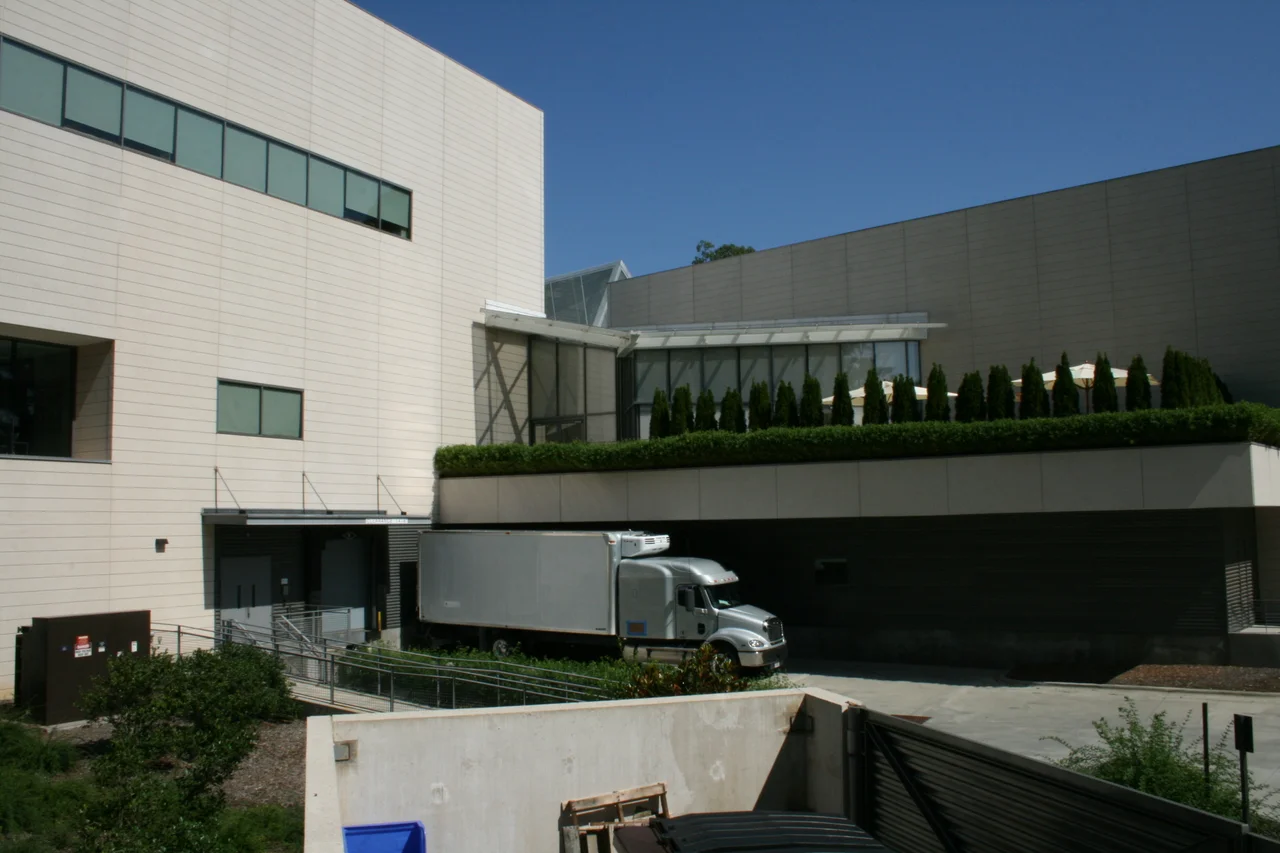
Walk up to the Nasher today and you find Viñoly's building tucked into a wooded stretch of campus along Anderson Street - low, glass-roofed, almost hidden behind pines until you're at the entrance. Inside, the atrium opens upward, and the five pavilions radiate out around it. Light pours in. The building was designed for the work it would hold, and the work it would hold has been chosen with a particular eye toward artists who needed the institutional weight. Duke students come for class. Durham locals come for free First Thursday evenings. School groups come for the Pre-Columbian galleries. Every year around 100,000 people pass through the doors of a museum that, twenty-five years ago, was a few medieval objects in a converted East Campus building, and that almost got blocked by a botany professor's plant collection. The plants are still there. So is the museum.
From the Air
Coordinates 35.999°N, 78.929°W on Duke University's West Campus, Durham, North Carolina. Recommended viewing altitude 1,500-2,500 ft AGL. The Rafael Viñoly building is low and easily missed from above - look for the glass-roofed central atrium tucked into woods near the Anderson Street entrance, just south of Duke Chapel's neo-Gothic spire. Downtown Durham lies about 2 miles east; Duke's main campus and the chapel tower dominate the immediate surroundings. Nearest airport is Raleigh-Durham International (KRDU), 14 nm southeast; the closed Horace Williams Airport (KIGX) at Chapel Hill lies 6 nm southwest.
Nearby Stories
- Orange County Speedway 3.7 km away
- Tobacco Road 8.7 km away
- Haw River 15 km away
- Johnston County, North Carolina 18 km away
- Soul City, North Carolina 25 km away
- Chinqua Penn Plantation 29 km away
- North Carolina Aviation Museum 40 km away
- Cherry Hill Plantation 45 km away