.jpg)
National Archives of Ireland
Ernie O'Malley described what he saw on the afternoon of 30 June 1922 in The Singing Flame: "A thick black cloud floated up about the buildings and drifted away slowly. Fluttering up and down against the black mass were leaves of white paper; they looked like hovering white birds." What he was watching was the Irish Public Record Office at the Four Courts in Dublin going up in a single enormous explosion. The Anti-Treaty IRA garrison he commanded had stored its munitions inside the records building, and Free State army shellfire had reached them. The white birds drifting through the black cloud were seven centuries of Irish documents - parish registers, court rolls, wills, deeds, military returns, manuscripts from the thirteenth century forward - being incinerated above the city.
Before the Archive
For most of Irish history, official papers were considered the personal property of the officials who wrote them, and were often carried off when officials left office. In 1702, near the end of the reign of William and Mary, the State Paper Office was established in Dublin Castle to begin requisitioning these documents and treating them as the property of the Crown. The State Paper Office was housed at Dublin Castle, where the Lord Lieutenant of Ireland lived and where the administrative business of British rule in Ireland was conducted, and it concentrated on records of security, finance, trade, land ownership, military matters, and ecclesiastical affairs. It would remain at the castle, undisturbed, for nearly three centuries. In 1867 a separate Public Record Office of Ireland was established by Act of Parliament under Queen Victoria, given a purpose-built home at the Four Courts complex on the north bank of the Liffey, and tasked with collecting administrative, court and probate records over twenty years old. The Master of the Rolls was its statutory custodian. Two parallel archive operations would now run side by side, one in the castle for state papers and one at the Four Courts for everything else.
30 June 1922
The Irish Civil War broke out in late June 1922 when Anti-Treaty IRA forces under Rory O'Connor seized the Four Courts complex. The Free State government under Michael Collins demanded their surrender. When they refused, the new National Army began shelling the buildings on 28 June, using artillery borrowed from the British. The fighting continued for three days. Inside the Public Records Office, the Anti-Treaty garrison had stored their munitions. As fires spread through the complex on 30 June, one reached the powder. The explosion that followed was heard across the city. The fragments of records, charred and unburnt alike, blew over the rooftops of Dublin and settled in gardens for miles around. The Public Records Office's holdings - census returns, parliamentary records, ecclesiastical records, court records, much of the documentary memory of the island of Ireland from the medieval period onwards - were almost entirely destroyed. The Office took years to rebuild and did not reopen until 1928. The loss to Irish history and genealogy was incalculable, and it remains the great wound in the country's documentary record.
A Single Archive
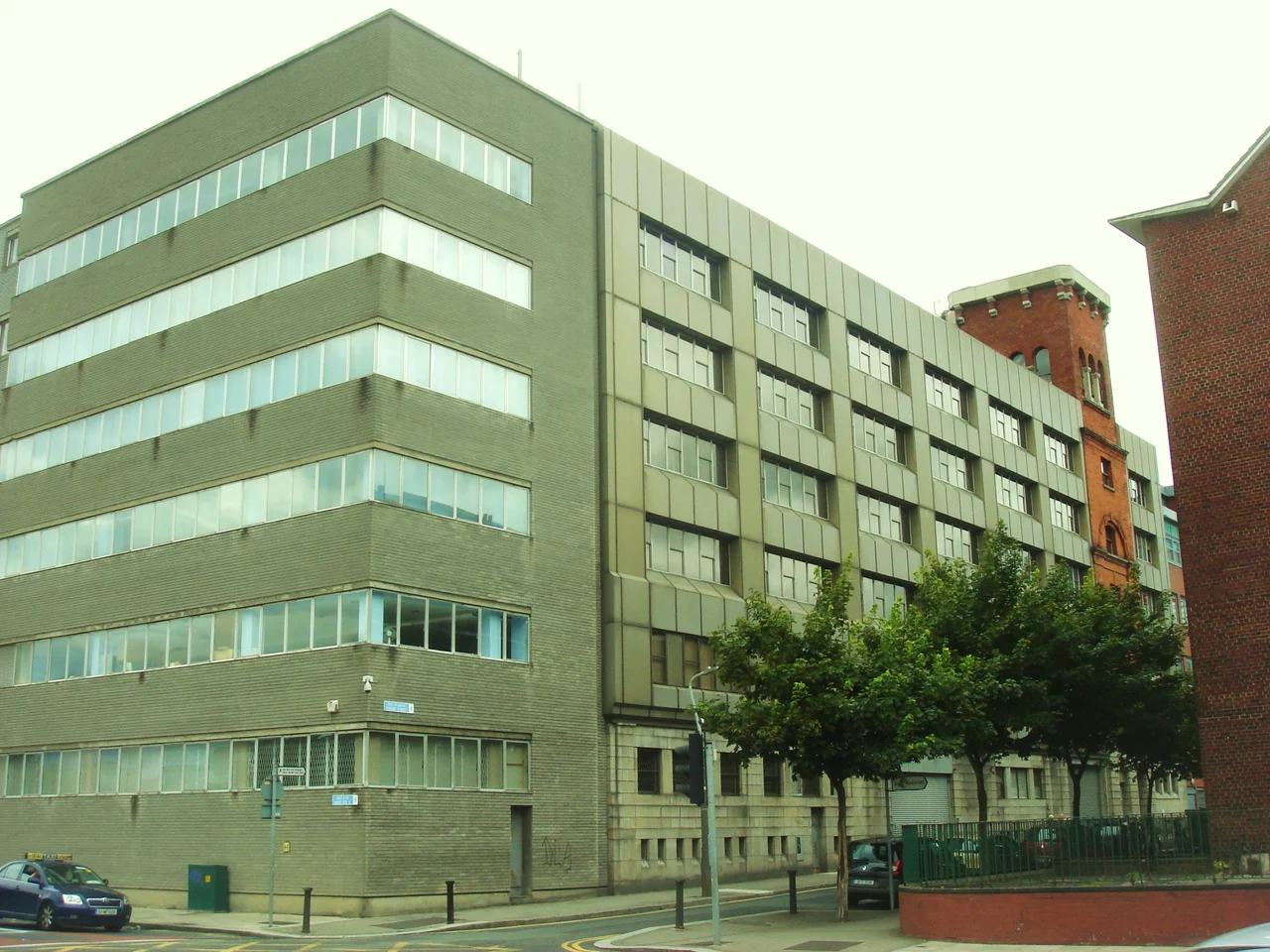
The State Paper Office at Dublin Castle and the Public Record Office at the Four Courts continued to operate as separate institutions for another six decades, even though by the 1970s the logic of combining them was overwhelming. The National Archives Act of 1986 finally merged the two organisations into a single National Archives of Ireland, officially established on 1 June 1988. A new home was assigned at Bishop Street in Dublin, in what had been the W. and R. Jacob biscuit factory - itself a site of historical resonance, having been one of the buildings held by the Irish Volunteers under Thomas MacDonagh during the 1916 Easter Rising. The State Paper Office moved its holdings out of the Record Tower at Dublin Castle in August 1991. The former Public Record Office moved from the Four Courts in September 1992. For the first time in nearly three centuries, Irish state records lived under one roof. Under the 1986 Act, government departments must transfer records to the archives once they are thirty years old, and any records withheld from public inspection must be reviewed every five years.
The 1901 and 1911 Census Online
What survives in the archives today is partly compensation for what was lost in 1922. Particularly precious are the household returns from the censuses of 1901 and 1911, which were taken after most other manuscript census returns had already been destroyed. (The manuscript returns for 1861, 1871, 1881 and 1891 were lost or never preserved; the surviving fragments for 1821, 1831, 1841 and 1851 cover only scraps of the country.) The 1901 and 1911 returns survive complete, for all thirty-two counties of Ireland, and in a partnership with Library and Archives Canada the National Archives digitised them all - household by household, name by name - into a free, fully searchable online resource. According to the archives, the online census has received hundreds of millions of hits. For diasporic descendants tracing Irish ancestry in the United States, Canada, Australia, Britain, and elsewhere, the 1901 and 1911 returns are often the single most important documents that connect a family to its parish of origin.
What an Archive Does
Visitors who come to the Reading Room on Bishop Street first apply for a Reader's Ticket - valid for three years, requiring photo ID and proof of address - and then begin to work. The Records Acquisition and Description Division handles the ingestion of new files, conforming to the International Standard on Archival Description for finding aids. The Archives Storage and Preservation Division maintains the physical environment, runs reprographic services, and keeps a careful disaster plan - because no one in Irish archives ever quite forgets what fires can do. The Special Projects Division runs the long-form digitisation projects: the Tithe Applotment Books from 1823 to 1837, the Bureau of Military History oral histories of the revolutionary period, the Chief Secretary's Office registered papers. Government records flow in from twenty-odd departments. Private collections arrive as donations or deposits. The cumulative effect, three decades on from the 1988 merger, is something close to the archive Ireland never quite had before - a single national memory, kept against fire, kept against forgetting.
From the Air
The National Archives of Ireland stand at Bishop Street in Dublin, approximately 53.3385 degrees N, 6.2688 degrees W, in the Liberties just south of St Stephen's Green and west of Aungier Street. From the air the building sits in a dense Victorian street grid south-west of the city centre. Dublin Airport (EIDW) is about 10 km north. The Liffey provides the most useful east-west reference line.
Nearby Stories
- Wicklow Mountains 12 km away
- Mornington 14 km away
- German submarine U-1051 16 km away
- Abbey of Kells 18 km away
- Irish Military Intelligence Service 20 km away
- HMS Manners (K568) 37 km away
- Templemore 42 km away
- Irish Sea Bridge 43 km away