
National Glass Centre
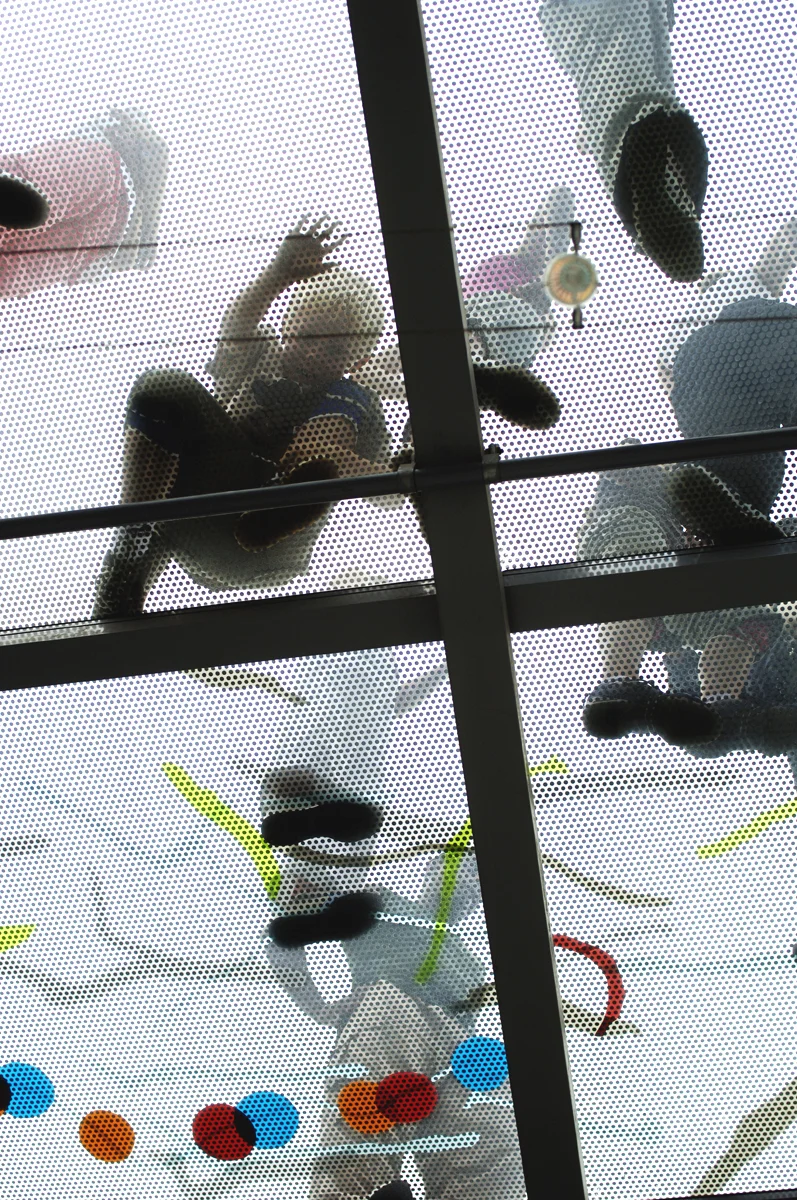
You can walk on the roof. That is the first thing to understand about the National Glass Centre - the roof is the exhibit. 3,250 square metres of glass panels, each six centimetres thick, rated to hold 460 people at once. Step out onto it and the building falls away beneath your feet, the glassblowers in the studio below working metal blowpipes in glowing orange while you stand on six centimetres of transparent floor watching them. It is one of the most disorienting visitor experiences in Britain. It is also, possibly, on borrowed time.
The Place Where Glass Began
Twenty metres from the Glass Centre's entrance stands St Peter's Church, Monkwearmouth - or what remains of the seventh-century monastery built by Benedict Biscop in 674. Biscop's contribution to British architecture was not modest. He went to Rome, saw glass windows for the first time, and decided his Northumbrian foundation needed them too. So he sent for French glaziers, men trained in a craft that had been lost in Britain since Roman times. They came north and lit furnaces on this riverbank to make the windows for his new church. The choice of site for a National Glass Centre was therefore not arbitrary. The first British window glass was made within sight of where the centre now stands, thirteen and a half centuries ago.
Sunderland's Glass Century
The eighteenth century turned the thread into an industry. Cheap Wearside coal fired the furnaces. High-quality sand arrived as ballast in colliers returning from London. Sunderland glass - bowls, drinking vessels, the famous lustreware - travelled the country in the names of small workshops nobody now remembers. The industry survived into the twentieth century in altered form. The Pyrex brand of borosilicate glassware was manufactured at the Jobling works in Wearside for decades. The last two firms to make glass in Sunderland - Corning Glass Works and Arc International - announced their closure in 2007. By then the National Glass Centre, opened in 1998 with £17 million from the Arts Council and partners, was already telling the story they were leaving behind.
Walking on the Roof
The building rises on the former J.L. Thompson and Sons shipyard, with the curve of the river immediately below. Architects Gollifer Langston wrapped the structure in steel and glass, putting the public spaces on the upper floor and the working studios beneath the great transparent roof. Walking on it is the trick that defines the visit. You arrive at the deck, hesitate, and step out anyway - because everyone else is doing it, because the panels are clearly engineered to take the load, because the only way to know you can stand on a roof made of glass is to stand on a roof made of glass. Below you, glassblowers gather molten material on iron rods and shape it with breath and timing. Light streams down through your feet onto their work.
A Future in Question
In December 2024 the University of Sunderland announced that the building - now twenty-six years old - faced repair costs the institution could not afford. The roof that defines the experience also turns out to be expensive to maintain in coastal North Sea weather. Closure of the present building is scheduled for 2026, with plans being examined for a replacement venue to open in 2028. Whether the next building will continue the centuries-long thread - Biscop's French glaziers, the Georgian furnaces, Pyrex on a kitchen shelf - depends on choices being made now. The history of glass in Sunderland is not finished yet. But this particular chapter is closing.
From the Air
Located at 54.9129 degrees north, 1.371 degrees west, the National Glass Centre stands on the north bank of the Wear about half a mile inland from the river mouth. From 1,500 feet AGL the great rectangular glass roof reflects sun and stands out against the water and the redbrick of surrounding streets. The white-and-red Roker Pier Lighthouse is one nautical mile east. Nearest major airport is Newcastle International (EGNT), 12 nautical miles north-northwest. Durham Tees Valley (EGNV) is 22 nautical miles south. Approach down the river from the east for the most dramatic view of the building's transparent crown.
Nearby Stories
- Seaton Carew 2.7 km away
- HMS Unity (N66) 6 km away
- George Stephenson's Birthplace 6.1 km away
- Raby Castle 9 km away
- Cragside 15 km away
- Whitby Abbey 21 km away
- German submarine U-2367 46 km away
- Alexander L. Kielland (Platform) 277 km away