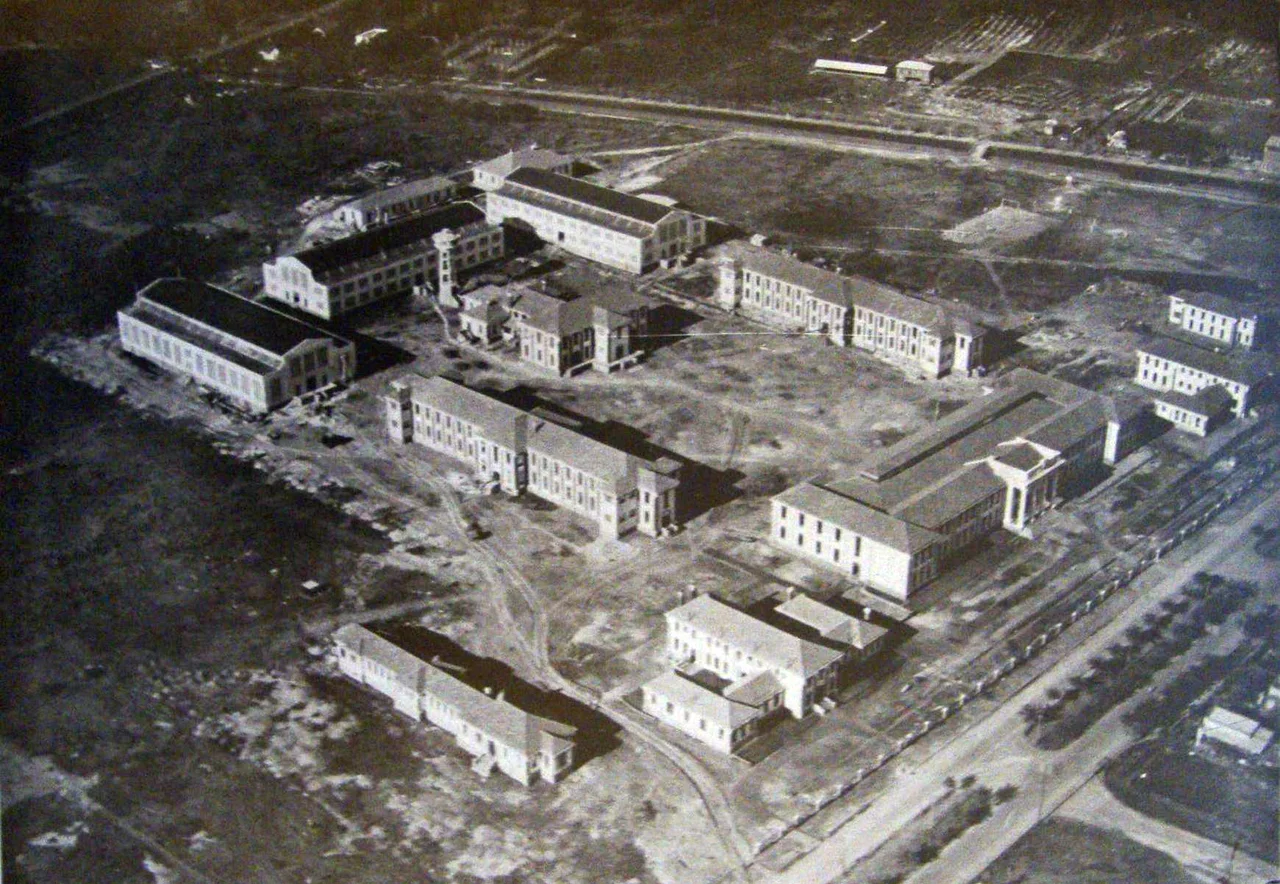

ESMA Museum and Site of Memory
From the street, it looks like nothing terrible could have happened here. A handsome colonnaded building set back behind lawns on a leafy avenue in the Núñez district, the kind of dignified institutional architecture that anchors a respectable neighborhood. For decades it was exactly that: a school where the Argentine Navy trained its mechanics. Then, between 1976 and 1983, while ordinary life continued on the sidewalks outside, the buildings became the most notorious clandestine detention center in Argentina. Roughly five thousand people were brought through its doors during those years. Almost none of them came out. Today the site is preserved, deliberately and unflinchingly, so that the country can never claim it did not know.
The People Who Were Taken
They were students, union organizers, journalists, lawyers, teachers, the young and the pregnant, anyone the regime decided to brand a threat. They were seized from homes and streets by men under strict orders to hide their identities, then driven to this building and made to vanish. Their families were left with nothing: no charge, no trial, no body, only the unbearable not-knowing that the Spanish language gave a single chilling word, los desaparecidos, the disappeared. Held in the cramped attic spaces the captors nicknamed the Capucha, the hood, prisoners lay hooded and shackled on thin mattresses, denied even the dignity of seeing the faces of the people deciding whether they would live. These were not abstractions or statistics. They were people with names, and the recovery of those names has been the work of decades.
The Death Flights
When guards announced that a prisoner was to be transferred, the other detainees came to understand what the word concealed. The transfers were killings. People were taken to the basement, sedated, and then, in a practice the navy carried out methodically, loaded onto aircraft and flown out over the Río de la Plata or the open Atlantic, where they were thrown alive from the planes into the water. The drugged victims were often still conscious. In the years that followed, bodies washed ashore on beaches far to the south, returning the regime's secret to the surface. The world learned the details largely because one participant, Adolfo Scilingo, confessed publicly in 1995 to the journalist Horacio Verbitsky, describing flights he had taken part in himself. A senior officer had once assured his men this was a Christian way to die. It was murder, organized and industrial.
The Stolen Children
Among the cruelest crimes committed here was aimed at the youngest victims of all. Pregnant women held at the site were kept alive until they gave birth, and more than thirty babies are known to have been born inside its walls. Then the mothers were killed, and the infants were taken, their identities erased, and handed to military families or regime associates to raise as their own. The children grew up never knowing who they truly were. Against this, a group of women refused to stay silent: the Grandmothers of the Plaza de Mayo, searching for decades for the grandchildren stolen from their murdered daughters. Working with forensic geneticists, they have so far restored the true identities of around 140 of these children, many now adults meeting their birth families for the first time. The search continues to this day.
Honesty as a Monument
Argentina chose not to bury this place. In 2004 the National Congress passed a law converting the complex into the Space for Memory and for the Promotion and Defense of Human Rights, and in 2023 UNESCO inscribed it as a World Heritage Site under a name that refuses all euphemism: the ESMA Museum and Site of Memory, a former clandestine center of detention, torture, and extermination. Survivors have testified in court and led visitors through the rooms where they were held. There have been trials, and convictions reaching the highest ranks of the navy, continuing into recent years against those who carried out the crimes. The truest title of this site is the one carried by the foundational report on the disappeared: Nunca Más. Never again. The building stands open so that the promise has somewhere to live.
From the Air
The ESMA Museum and Site of Memory stands at 34.538 degrees south, 58.464 degrees west, on Avenida del Libertador in the Núñez district of northern Buenos Aires, near the Río de la Plata. From the air the campus reads as a set of low institutional buildings within landscaped grounds, set back from the broad Libertador axis. The nearest field is Aeroparque Jorge Newbery (SABE), roughly 3 km south along the waterfront; Ministro Pistarini International (SAEZ, Ezeiza) lies about 33 km southwest. This is a place of mourning and remembrance rather than spectacle; it is noted here as a site of grave historical significance, best approached with the seriousness it is owed.
Nearby Stories
- Ezeiza Massacre 1.9 km away
- Luján, Buenos Aires 5.1 km away
- Curutchet House 13 km away
- Colonia del Sacramento 17 km away
- Martín García Island 28 km away
- Atucha Nuclear Power Plant 37 km away
- Lobos 43 km away
- Cry of Asencio 87 km away