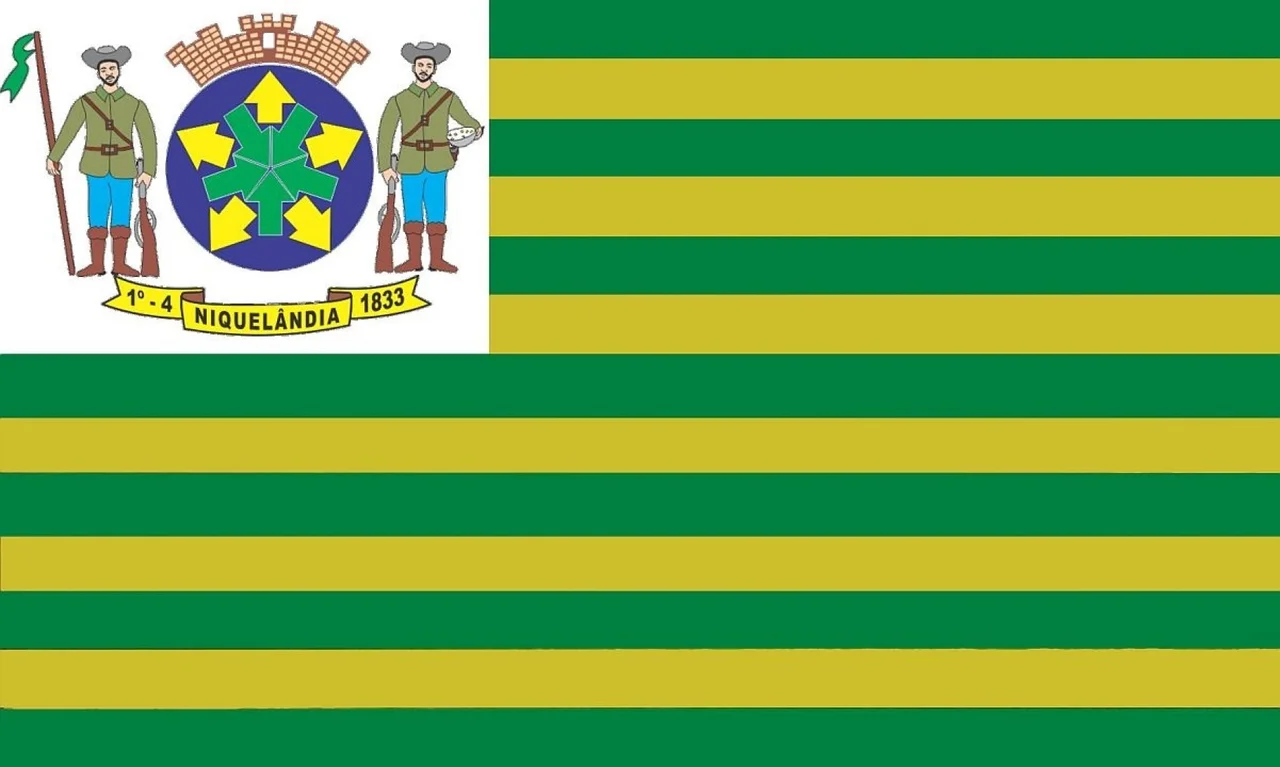

Niquelândia
Freimund Brockes was looking for gold. In 1938 the German miner was panhandling the streams that crossed this stretch of northern Goiás - the same streams that Portuguese bandeirantes had been working since 1735 when they founded the settlement called São José do Tocantins. Gold was the reason anyone came to this part of Brazil. Gold was why the town existed. But Brockes noticed something else in his pan, something heavy and silvery that was not gold. What he had found was the second-largest nickel deposit in the world. In 1943 the town changed its name from São José do Tocantins to Niquelândia, which translates roughly as Nickeland. The bandeirante past disappeared into the name of the metal that would define everything for the next eighty years.
The Size Of A Country
Niquelândia is the largest municipality in Goiás by area - so large that, measured against nations, it falls between Lebanon and Cyprus. It sprawls 370 kilometers from the state capital Goiânia, reached by a chain of highways that thread through Nerópolis and São Francisco and Jaraguá before finally arriving. The town itself sits at 650 meters elevation, and the tropical humid climate holds an average temperature of 32 degrees Celsius. Within those vast boundaries are 12,000 kilometers of municipal roads, the kind of infrastructure you need when your economic geography is spread across an area the size of a small country. Much of that land is pasture, forest, or scrubland. The population is concentrated in a few clusters near the mines and the old colonial center.
Nickeland
Two mining companies extract nickel here. Companhia Níquel Tocantins belongs to Votorantim, the Brazilian industrial conglomerate. Codemin belongs to Anglo American, one of the largest mining companies on Earth. Between them they work reserves that rank among the largest globally. The extraction process is brutal. Ovens heat the raw ore to one thousand degrees Celsius, and highly toxic ammonia is used to process the nickel out of its matrix. For workers and residents living near the plants, this has consequences: damage to skin, kidneys, digestive and respiratory tracts. The mines brought jobs to a town that would otherwise be marginal. They also brought a public health cost that has never been fully reckoned with. Nickel is what Niquelândia is, and nickel is also what Niquelândia pays to be.
More Than Nickel
Mining is the headline, but not the whole story. Geologists have catalogued more than 120 types of mineral in the municipality - gold, crystal, platinum, copper, mica, iron, manganese, diamonds, quartz, marble, cobalt, asbestos, even uranium. The region sits on a geological seam that concentrates almost everything useful. Beyond mining, 250,000 head of cattle graze the natural pasture. Soybeans cover 20,000 hectares. Corn takes another 5,000. Rice adds 2,000 more. Small transformation industries, commerce, and public administration employ the rest of the workforce. Niquelândia is a mining town that also happens to be a ranching town and an agricultural town - the interior Brazilian economy in compressed form.
Serra Da Mesa
When the Serra da Mesa Dam was built at the end of the 1990s at nearby Minaçu, the Maranhão, Tocantinzinho, and Bagagem rivers were combined into a single vast reservoir. Fifty-seven percent of the resulting lake lies within the Niquelândia municipality. The lake surface reaches 1,784 square kilometers and in the rainy season stretches 22 kilometers across at its widest. This is one of the largest concentrations of fresh water in Brazil. For a landlocked mining town in the cerrado, having an inland sea on its doorstep transformed the local economy. Fishing, boating, lakeside resorts - Serra da Mesa gave Niquelândia a tourist identity that its industrial character could not provide. The shoreline is still developing, and many of the coves have yet to see their first weekend house.
A Town Still Old
Niquelândia is one of the oldest municipalities in Goiás, founded in 1735 during the first wave of bandeirante expansion north from São Paulo. What remains of that colonial past is scattered through the historical center - churches, narrow streets, stone foundations that long predate any mine. Five hospitals with 167 beds serve the population. Forty schools teach 14,365 students. There is even a university presence through the state system. The infant mortality rate in 2000 was 26.40, better than the national average. Literacy sits at 84.4 percent. It is an ordinary Brazilian town built on top of an extraordinary geological accident - a place where the Portuguese came looking for gold and found instead the metal that would power a different kind of future.
From the Air
Coordinates: 14.47 S, 48.46 W. Best viewing altitude: 4,000-6,000 feet AGL. Nearest airport: Brasília International (SBBR), approximately 160 nautical miles south-southeast; closer regional access via Serra da Mesa area. The municipal area is vast - the Serra da Mesa reservoir dominates the landscape west of the urban center, and the mining complexes create distinctive scarring visible from altitude. Cerrado scrubland extends in every direction.
Nearby Stories
- Chapada dos Veadeiros National Park 23 km away
- Uruaçu 30 km away
- Mara Rosa 42 km away
- Alto Paraíso de Goiás 52 km away
- Cerrado 75 km away
- Planaltina, Goiás 79 km away
- Ceres, Goiás 99 km away
- Contagem Biological Reserve 109 km away